
Understanding MRI Reports: A Patient-Friendly Guide
Talk to Health Expert

Dr. Nikunj Jain
Co-Founder and HOD - Nuclear Medicine ,MBBS, DRM, DNB, FEBNM, FANMB, Dip. CBNC
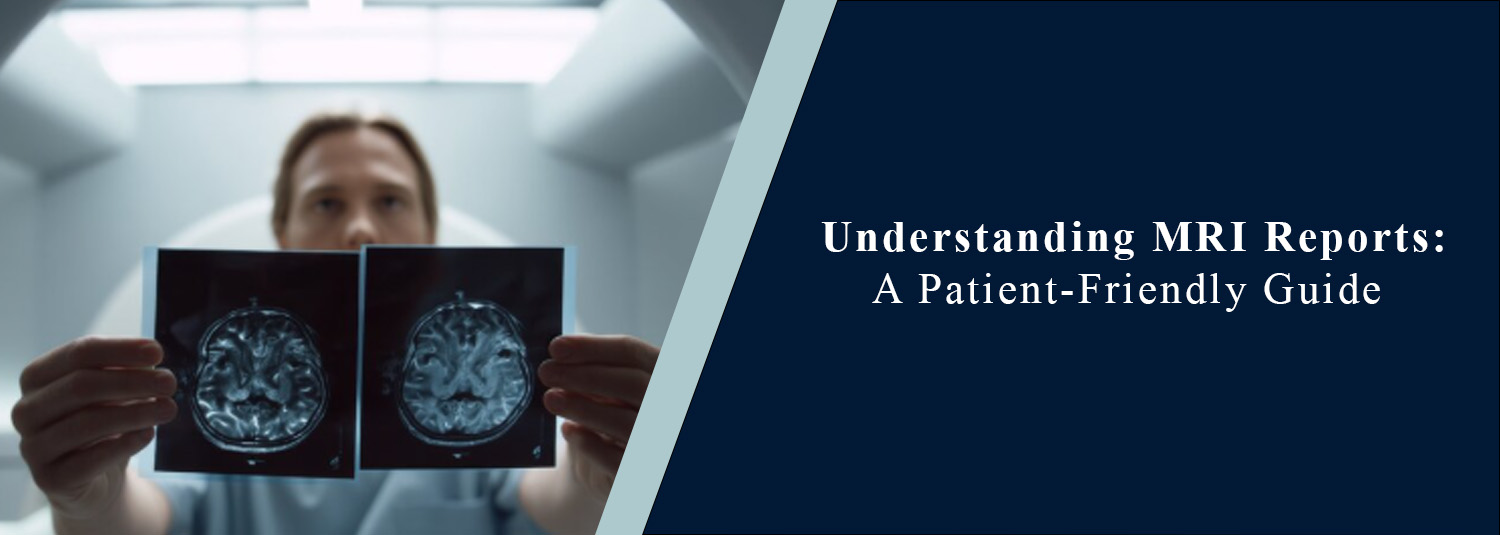
Magnetic Resonance Imaging (MRI) is among the latest diagnostic imaging tools for examining organs and other structures inside the body, including soft tissues, joints, brain, spinal cord, and blood vessels. Once the procedure is done, patients are provided with the MRI report, which has several medical findings. Reading an MRI report may pose a challenge for many due to the use of hard-to-understand terminology.
It is necessary to keep in mind that an MRI report is made with the purpose of informing the referring physician about the patient's condition. It gives an account of what was seen by the radiologist while performing the MRI procedure. One should understand that an MRI report is to be understood together with your symptoms, medical history, physical examination results, etc. Molecular Diagnostics and Therapy provides accurate MRI imaging reports.
What Is an MRI Report?
An MRI report is an official medical record created by the radiologist based on their careful analysis of your MRI pictures. This report describes whether your body part under examination looks normal or shows signs of any deviations. An MRI report is a good tool for your physician to get insight into the possible causes of your complaints.
Common Sections of an MRI Report
MRI reports typically have a uniform format. The report generally starts with details regarding the patient, followed by the type of MRI study conducted and the reason why it was done. This is followed by the description of what was observed during the image analysis, and it ends with the impression/conclusion of the most important findings.
Understanding the Findings Section
This section comprises specific details relating to the area scanned. The radiologist gives an account of the bone, muscle, joint, ligament, nerve, blood vessel, or organ in question, based on the nature of the MRI conducted. This section may contain measurements, specific descriptions of tissue features, or the presence or absence of any abnormality. The findings are descriptive and do not necessarily show the presence of a disease.
What Does the Impression Mean?
Impression is the most crucial element of the MRI report. This gives a short description of the significant results, which include abnormalities related to your complaints. The physician looks at this part of the report first when reading it.
Common Terms You May See in an MRI Report
Some of the terminology used in MRIs can sound scary, but in fact, it refers to natural processes related to aging. Terminology such as normal, mild, moderate, severe, degenerative changes, disc bulge, inflammation, edema, cyst, lesion, tear, compression, or enhancement simply refers to what was found on the images but does not mean a diagnosis.
Does Every Abnormal Finding Mean a Serious Disease?
Not necessarily. MRI scan results often show small findings related to age or incidental findings that do not cause any symptoms and do not require any treatment. Sometimes, such abnormalities can be found even in healthy people and may be just a normal process of aging. The doctor diagnoses you based on MRI results along with the rest of your data.
Why Is Clinical Correlation Important?
MRI images are very detailed; however, sometimes just by looking at images, we cannot figure out the exact cause of your problem. It is important to correlate MRI findings with your symptoms, physical examination, blood tests, etc. In this way, unnecessary treatments are prevented.
When Additional Tests May Be Needed?
In some situations, your doctor may recommend additional investigations after reviewing the MRI report. These may include blood tests, Computed Tomography (CT), Ultrasound, X-rays, biopsy, or follow-up MRI examinations, depending on the condition being evaluated. Additional testing does not necessarily mean that a serious disease has been found. It often helps clarify uncertain findings or monitor changes over time.
Why Accurate MRI Reporting Matters?
MRI reports have to be accurate in order for patients to receive effective care. This is because MRI reports help diagnose several conditions, such as injuries, infections, inflammation, tumors, nerve compression, joint conditions, and many more. They also help the surgeons prepare for surgery and know how the patient is responding to treatment. At Molecular Diagnostics and Therapy, experienced radiologists use advanced MRI technology to deliver high-quality imaging reports that support precise diagnosis and personalized patient care.
What Should You Do After Receiving Your MRI Report?
Avoid interpreting the report on your own or relying solely on internet searches. Schedule a consultation with the doctor who requested the MRI. Your doctor explains the findings, discusses whether treatment is necessary, answers your questions, and recommends any additional investigations or follow-up if needed.
Conclusion
An MRI report is one of the key diagnostic tools that offers useful information concerning your health. Though the language of the report seems sophisticated, in most cases, the reports just list the results of imaging without confirming any diseases. The diagnosis is based on a combination of MRI results, physical examination, and symptoms.
Knowing the use of an MRI report eases any additional worries and allows patients to be more active participants in the process of making health-related decisions. Using modern MRI equipment, highly qualified radiologists, and accurate reporting, Molecular Diagnostics and Therapy continues its work of providing diagnostic imaging services.
Frequently Asked Questions
In News
Get Our Mobile App
for Easy Access
Book tests, view reports, and manage your health records on the go. Experience convenient healthcare with Molecular Diagnostics and Therapy.
- ✔ Book tests & home collection
- ✔ View reports instantly
- ✔ Track health history
- ✔ Get notifications & reminders
- ✔ Easy appointment management
