Dengue Fever: Warning Signs and Blood Tests Explained
Talk to Health Expert

Dr. Nikunj Jain
Co-Founder and HOD - Nuclear Medicine ,MBBS, DRM, DNB, FEBNM, FANMB, Dip. CBNC
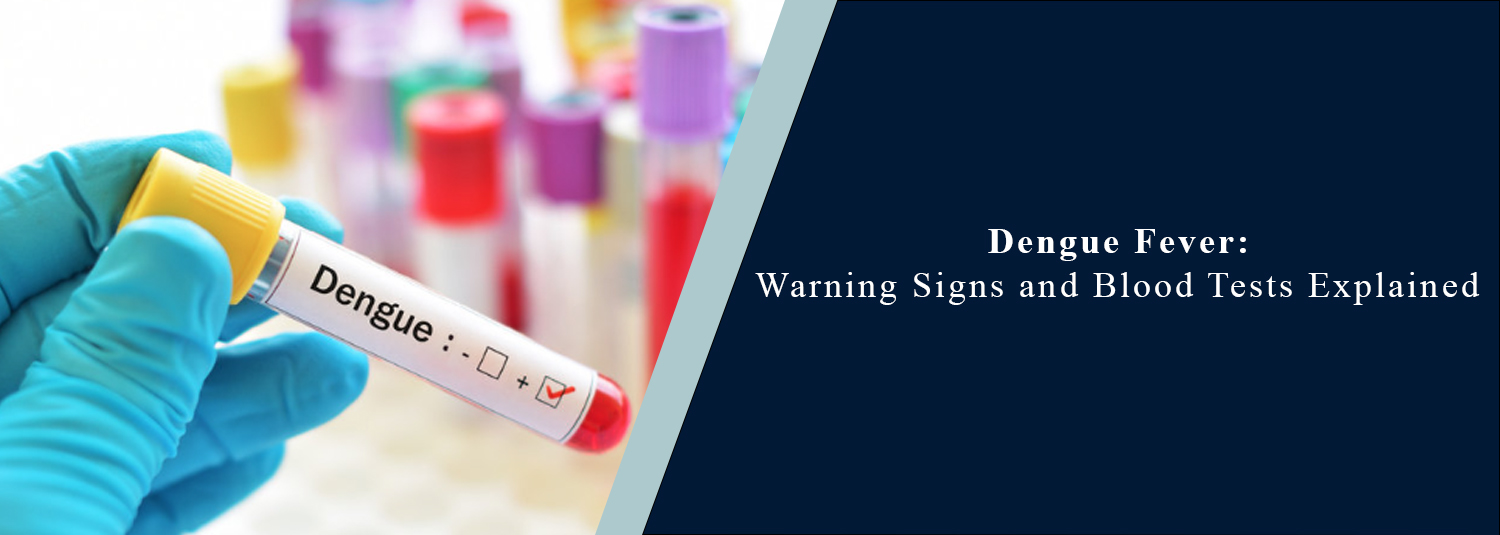
Dengue fever is a viral illness that has the ability to spread extremely fast, particularly in tropical and subtropical nations such as India. It is brought about by the sting of contaminated mosquitoes like Aedes aegypti. Cases of dengue are high in the monsoon and post-monsoon seasons. This is why awareness and early detection are very important. The dengue cases that arise are mostly mild, but others may be severe and life-threatening unless they are properly treated.
What Causes Dengue Fever?
There were red flags as the disease progressed, which could be
regarded as some of the signs of a severe form of dengue. Unstopping vomiting,
abdominal agonizing pains, and breathlessness are life-threatening symptoms and
medical attention. Bleeding may also be experienced by bleeding moist gums,
nose bleeding, or bleeding/easy bruising.
Early Symptoms of Dengue
Such symptoms can be the signs of complications like Dengue
Hemorrhagic Fever, which can cause bleeding of internal organs and shock. A
sharp deviation towards a low number of plates is another essential indication.
Patients may feel very weak, agitated, or sleepy. In severe instances, it can
lead to dengue shock syndrome, which is a health crisis.
Warning Signs You Should
Not Ignore
As the disease advanced, there were some red flags that could be taken as evidence of a serious form of dengue. Incessant vomiting, excruciating pain in the abdomen, and breathlessness are life-threatening symptoms that should prompt medical intervention. Symptoms of bleeding, such as nose bleeding, bleeding gums, or easy bruising, can also be experienced.
These symptoms may be indicative of complications such as Dengue
Hemorrhagic Fever that may cause bleeding of the internal organs and shock.
Another critical sign is a sudden change towards a low number of plates.
Patients can experience a great sense of weakness, agitation, or drowsiness. In
extreme cases, it may develop into dengue shock syndrome, which is a health
emergency.
Importance of Early
Diagnosis
Dengue diagnosis needs to be done early to avoid complications.
Its symptoms are similar to those of other viral infections, and as such,
laboratory tests are necessary to confirm. Soon, the doctors can identify the
level of platelets in the circulation, treat the symptoms, and make sure that
the disease does not become serious. Late diagnosis may pose a danger to
possible complications and recovery.
Key Blood Tests for
Dengue
NS1 Antigen Test
Despite the numerous tests available to detect dengue infection,
one of the most used tests is the NS1 Antigen Test. It determines a particular
protein secreted by the dengue virus into the blood. The test tests best in the
first 1-5 days of infection, and it aids in the early diagnosis of the
infection before antibodies develop.
IgM and IgG Antibody Tests
Dengue IgM Test and Dengue IgG Test
are tests that detect antibodies that the body produces due to vulnerability to
the virus. IgM antibodies tend to appear 4-5days after infection and will show
the recent infection. IgG antibodies are late to develop and can indicate
previous infection or secondary infection with dengue.
Complete Blood Count (CBC)
CBC is a common test
that is very critical in the management of dengue. It assists in checking the
level of platelets and white blood cells, as well as hematocrit. A
characteristic of dengue is a serious reduction in the number of platelets (
thrombocytopenia ). A rise in hematocrit level can be an indicator of plasma
leakage, which is a symptom of severe dengue.
Platelet Count Monitoring
They should closely check the platelet levels of the dengue patients.
Although the low number of platelets is alarming, it cannot be the only factor
in the severity. Physicians also evaluate clinical symptoms and other blood
parameters, which they use to determine treatment.
Who is at Higher Risk?
Some are more vulnerable to severe dengue. Those who are the most
at risk are children, the elderly, and those who have weakened immunity. The
individuals who have suffered past dengue infections have higher chances of
contracting complications in the latter infections. Residing in places with
poor sanitation and stagnant water elevates chances of being exposed to
breeding grounds of the mosquitoes, and this further increases the chances of
contracting the disease.
Prevention and Safety
Measures
You should avoid mosquito bites and their breeding as the first
step in preventing dengue. You can do this by using mosquito repellents,
wearing full-sleeved clothes, and bed nets, etc. You should remove stagnant
water from your surroundings, such as in coolers, flower pots, containers,
etc., and any other places where mosquitoes can breed. To prevent dengue,
awareness and hygiene at the community level are important.
Conclusion
Dengue fever is a preventable, serious, and manageable disease
when detected early. Early warning signs and blood investigations can be
instrumental in the results of treatment. Knowing the use of diagnostic tests,
such as NS1 antigen, antibody tests, and CBC, will aid in confirming and
successfully tracking the disease at an early stage. Through proper care and
awareness, preventive strategies can help avoid dengue effects, which brings
about better health and security to the people and society.
Frequently Asked Questions
In News
Get Our Mobile App
for Easy Access
Book tests, view reports, and manage your health records on the go. Experience convenient healthcare with Molecular Diagnostics and Therapy.
- ✔ Book tests & home collection
- ✔ View reports instantly
- ✔ Track health history
- ✔ Get notifications & reminders
- ✔ Easy appointment management