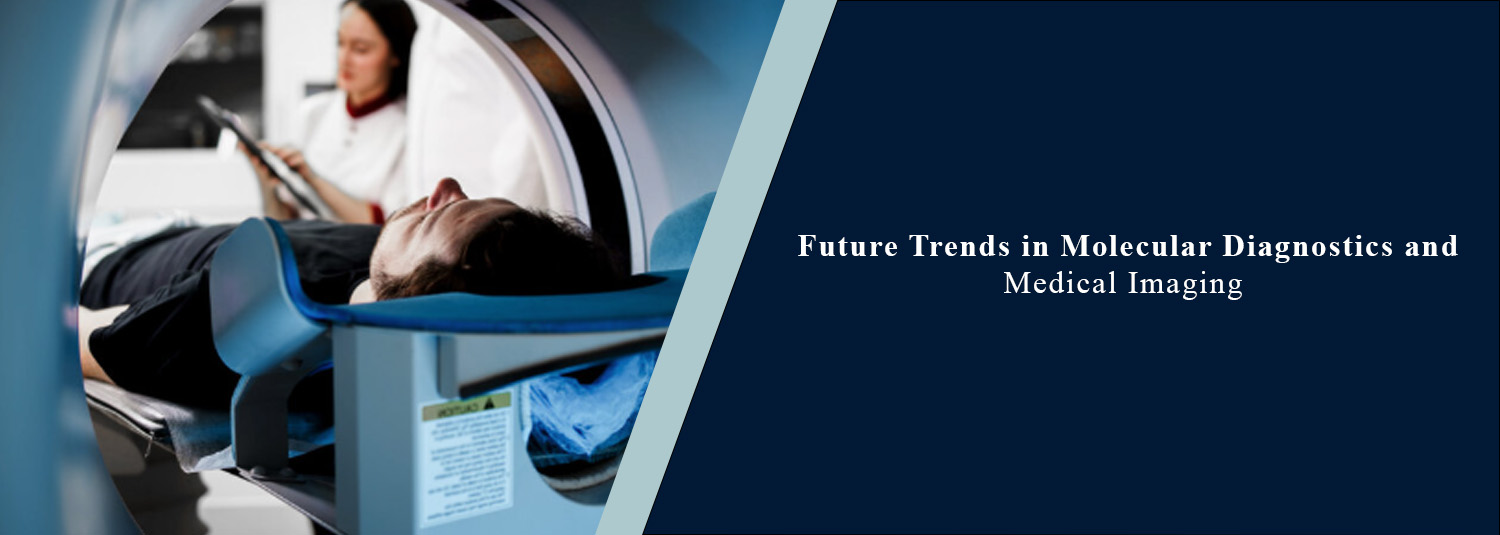
Future Trends in Molecular Diagnostics and Medical Imaging
Talk to Health Expert

Dr. Nikunj Jain
Co-Founder and HOD - Nuclear Medicine ,MBBS, DRM, DNB, FEBNM, FANMB, Dip. CBNC
The world of medical diagnoses has undergone
drastic transformations in the last couple of decades. In the past, doctors
primarily relied on symptoms, physical exams, lab work, X-rays, and simple
imaging to understand what was happening in the body. New methods of molecular
diagnosis, nuclear medicine, and medical imaging are bringing diseases into
closer study today.
The future of healthcare lies in the
personalization of diagnosis, early detection of disease, improved treatment
planning and more frequent follow-up of patient response to treatment. PET-CT,
FDG PET-CT, nuclear medicine scans, sophisticated MRI scanning, artificial
intelligence, and molecular testing are likely to be important technologies as
well. In Molecular Diagnostics and Therapy, the latest technologies in
diagnostics are applied to guide physicians in understanding disease and making
the right treatment choices for their patients.
What Is Molecular
Diagnostics?
Molecular diagnostics is aimed at
molecular detection of changes. These tests can, instead of just examining the
organ's appearance, give information about physical material (DNA, proteins, or
other biological material) related to a disease. This can assist the physician
in learning more specifically about some diseases. Under certain circumstances,
molecular information may also be used to identify a more appropriate treatment
strategy to tailor for an individual patient's benefit. With increasing
technological advances, molecular diagnostics services can increasingly be
linked to imaging and other clinical data.
How Is Medical
Imaging Changing?
Medical imaging is transitioning from
just creating a picture of the body's structure. With modern imaging
techniques, we can obtain information about the functioning of organs, tissue,
and how some biological processes are going on. For instance, PET imaging can
be used to depict the distribution of PET tracers in the body. It can, combined
with CT, be used to give functional and anatomical information. Future imaging
systems will have even better image quality, scanning speed, and usefulness of
information, with appropriate regulation of radiation exposure.
The Growing Role of
PET-CT
Currently, PET-CT plays an important
role in oncology and nuclear medicine. It integrates information on biological
activity with rich detail from CT. The result of this mixture may help doctors
see regions of abnormal activity and have a higher level of awareness of
precisely where the alterations are within the body. In certain clinical
contexts, PET-CT can be employed for cancer evaluation, staging, treatment
monitoring and suspected cancer recurrence. PET-CT could potentially be used in
the future to more effectively detect and characterise disease-related change
and to make examinations more efficient.
Advances in FDG
PET-CT
FDG PET-CT involves radiodeoxyglucose
(FDG), which is a radioactive glucose analogue. Increased FDG uptake can occur
in areas of increased glucose metabolism. FDG PET-CT is extensively used to
evaluate several cancers and has been found to have higher uptake in some
inflammatory or infectious processes.
Improvements such as those in the mouse
are anticipated; additional developments might involve improvements in the
scanners, more advanced techniques for image reconstruction, the speed of the
examination, and more powerful techniques for analysis of the PET images. This
could assist physicians in acquiring more information using the same
examination. Despite the fact that there is a lack of cancer-specific uptake of
FDG, the imaging findings, in conjunction with the patient's medical history
and other investigations, are still subject to interpretation.
Theranostics:
Connecting Diagnosis With Treatment
Theranostics is one of the important
developments in nuclear medicine where similar molecular targets can be
targeted in imaging and therapy. A radiotracer may be used for diagnosis to
determine if a specific target is found in a patient's disease. If the target
is appropriate for therapy, a related therapeutic radioactive substance may
then be considered. It is especially relevant in the treatment of certain cancers,
and is shifting to more specific therapies than those given the same way to all
cancers.
Personalised Medicine
and Molecular Imaging
The shift towards personalised medicine
in healthcare has become more pressing than ever. Rather than assume the treatment
of every patient with the same disease is appropriate, physicians can take
individual patients' biological factors into account when devising a treatment
plan.
By imaging particular biological
processes in vivo, molecular imaging can play its part in this. Imaging,
together with laboratory results, pathology, genetic and clinical data, can
give a better picture of an individual patient's disease.
Artificial
Intelligence in Medical Imaging
AI is predicted to play a growing role
in medical imaging. Computer-based systems can be used to help with image
processing and pattern recognition; to organise a vast array of imaging data;
and to identify regions which may merit closer examination.
AI shouldn't replace radiologists,
nuclear medicine physicians, or other types of healthcare specialists. It can
be used instead, however, as an added tool to aid image interpretation and
workflow. As these systems evolve and become more sophisticated, they could
facilitate more efficient imaging analysis and enable experts to focus on
clinical interpretation and patient treatment.
Better Image Quality
and Faster Scans
Another big area of medicine that is
focused on improving imaging is to enable high-quality images in as little time
as possible. When patients don't like the idea of lying still or have anxiety
associated with imaging, faster scans can be beneficial. A more accurate image
can also allow specialists to more precisely inspect smaller or subtler
properties. This can add to progress, where detector technology, image
reconstruction, and computer processing will become increasingly efficient in
the future.
Reducing Unnecessary
Radiation Exposure
Radiation safety will remain an important consideration as imaging
technology develops. CT and many nuclear medicine examinations involve ionising
radiation, so examinations should be performed when medically justified. Future
systems are expected to continue focusing on obtaining useful diagnostic
information while managing radiation exposure appropriately. The goal is not
simply to use the lowest possible radiation dose regardless of image quality.
The aim is to achieve the necessary diagnostic information while avoiding
unnecessary exposure.
New Radiotracers for
Nuclear Medicine
Nuclear medicine depends heavily on radiotracers that target specific
biological processes. Research into new tracers is opening possibilities for
imaging different diseases and molecular targets. New radiotracers may allow
doctors to study different types of cancer, neurological disorders, cardiovascular
conditions, and other diseases at the molecular level. As more targets are
identified, the range of conditions that can potentially be evaluated through
molecular imaging may continue to expand.
Combining Different
Sources of Health Information
The future of diagnosis is unlikely to depend on one test alone. Doctors
may increasingly combine imaging, blood tests, molecular information, genetics,
pathology, and clinical history. Bringing these sources together can provide a
broader understanding of a patient's condition. This approach may help doctors
make more informed decisions about diagnosis, treatment, and follow-up.
Digital Technology
and Remote Collaboration
Digital imaging allows medical images to be stored, transferred, and
reviewed electronically. This can make it easier for specialists to access
previous examinations and compare current images with older studies. Digital
systems may also support collaboration between healthcare professionals,
especially when a patient requires opinions from specialists in different
locations.
What Could Future
Nuclear Medicine Scans Offer?
Future nuclear medicine scans may become increasingly focused on
specific biological targets rather than simply showing general organ activity.
More specialised radiotracers, improved scanners, better image reconstruction,
and advanced computer analysis could help doctors obtain more detailed
information about disease biology. These developments may be especially
important in oncology, where understanding the biological characteristics of a
tumour can influence both diagnosis and treatment planning.
Will Technology
Replace Doctors?
Despite rapid technological progress, medical specialists will continue
to play a central role. A machine can produce images or test results, and
computer systems can assist with analysis, but medical decisions require
clinical judgement. Doctors consider symptoms, medical history, physical
examination, laboratory results, imaging findings, and treatment goals
together. Technology is most valuable when it helps healthcare professionals
make better-informed decisions and provide more appropriate care.
Molecular Diagnostics
and Therapy: Looking Towards the Future
Molecular Diagnostics and Therapy focuses on bringing advanced
diagnostic technologies together to support modern healthcare. PET-CT, FDG
PET-CT, nuclear medicine, molecular diagnostics, and other imaging technologies
can provide different types of information about disease.
As diagnostic technology continues to develop, the focus will
increasingly be on obtaining meaningful information that can support earlier
detection, personalised treatment planning, and monitoring of disease response.
The combination of modern equipment, specialised expertise, and careful
interpretation remains essential for making diagnostic technology useful to
patients.
Conclusion
Molecular diagnostics and medical
imaging are rapidly progressing towards individualised, targeted, and
information-rich healthcare. This will likely drive an evolution with PET-CT,
FDG PET-CT, nuclear medicine scans, molecular testing, artificial intelligence,
and new radiotracers.
Additional technologies could be faster, clearer, and provide more disease-specific information. Meanwhile, radiation safety, appropriate testing methods, and accurate interpretation of results will remain crucial. The biggest target isn't just to create more sophisticated machines. It is having the power to deliver information that is meaningful to doctors and serve the best interests of patients in diagnosis, treatment, and follow-up at the appropriate time.
Frequently Asked Questions
In News
Get Our Mobile App
for Easy Access
Book tests, view reports, and manage your health records on the go. Experience convenient healthcare with Molecular Diagnostics and Therapy.
- ✔ Book tests & home collection
- ✔ View reports instantly
- ✔ Track health history
- ✔ Get notifications & reminders
- ✔ Easy appointment management