Contrast MRI vs Normal MRI: Which One Is Better?
Talk to Health Expert

Dr. Nikunj Jain
Co-Founder and HOD - Nuclear Medicine ,MBBS, DRM, DNB, FEBNM, FANMB, Dip. CBNC
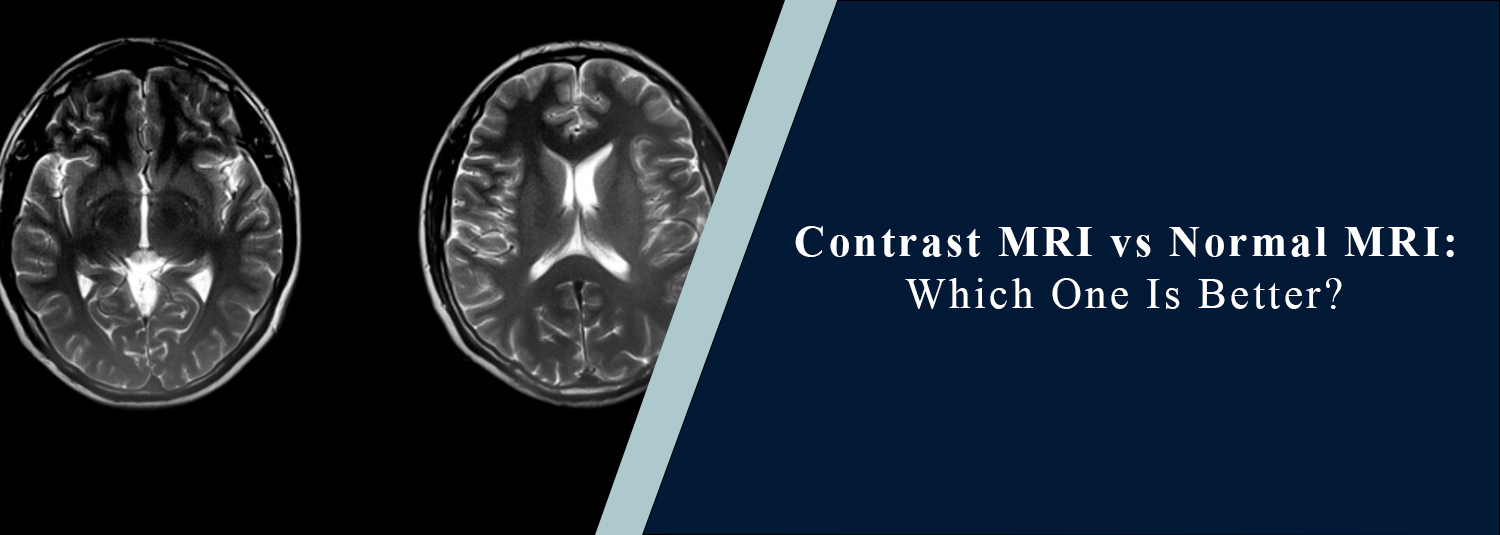
MRI imaging is among the most advanced and common diagnostic imaging modalities in modern medicine. Many physicians order an MRI to look at the brain, spine, joints, blood vessels, and internal organs in great detail. However, when those terms are used, such as ‘contrast MRI' and ‘normal MRI', many patients become confused.
Knowing the difference between these two types of scans can help patients have greater confidence and be prepared for their imaging service. Whether you're looking for an “MRI scan near me” or simply want to know about MRI scan preparation and MRI scan cost, you must know how these scans work to make informed healthcare decisions. High-resolution MRI imaging systems and meticulous radiology care at Molecular Diagnostics and Therapy allow patients to receive accurate imaging with personalised diagnostic care.
What is a Normal MRI?
A non-contrast MRI (also known as a normal MRI) is also a type of MRI that takes detailed images of the structures inside the body with powerful magnets and radio waves. Unlike other types of MRI, no dye or injection is necessary during the scanning procedures. Normal MRI scans are commonly used for evaluating:
Joint injuries.
Spine disorders.
Damage to muscles and ligaments.
Brain abnormalities.
Disc problems.
Sports injuries.
An MRI scan without iodine dye can offer a good amount of picture detail of the soft tissues and may be adequate for diagnosing several health conditions. MRI is one of the least uncomfortable forms of imaging, and the procedure poses no such threat of radiation exposure.
What is an MRI Contrast Scan?
With MRI contrast dye, a special dye, typically gadolinium-based, is injected into the patient's vein before or during the scan. The dye enables certain tissues, such as the blood vessels, inflammation, or any abnormal growths within the body, to be enhanced. This helps to bring the image into better focus and helps the doctor more accurately identify certain conditions. MRI contrast scans are sometimes used for:
Tumour detection.
Cancer evaluation.
Blood vessel imaging.
Brain disorders.
Infections and inflammation.
Liver abnormalities.
Certain spinal conditions.
The contrast helps the radiologists know the difference between normal and abnormal tissue on the images.
Main Difference Between Contrast MRI and Normal MRI
The difference between the two scans is that one uses contrast dye. MRI makes images that don't require any injected material, and an MRI using contrast uses a contrast agent to make abnormalities and certain structures more visible.
In most normal situations, an ordinary MRI is sufficient. In more complex cases, however, some contrast information is useful to add to increase diagnostic accuracy. Whether to use contrast dye is decided based on the patient's symptoms, medical history, and the condition under investigation.
Which MRI is Better?
It cannot be determined whether there is a single answer – both contrast and MRI are used for different things. A normal MRI is considered:
Assessing simple orthopedic injuries
A look at spinal disc issues
Evaluation of muscle or ligament injury.
Monitoring non-complex conditions
An MRI contrast scan may be more useful if:
Identification of tumours or cancer
Evaluating infections
Examining blood vessels
Identifying inflammation
Assessing neurological disorders
One word goes to describe the best type of MRI; it depends on everybody's clinical needs. Use of a particular scan is at the doctor's discretion based on the diagnostic information that needs to be gathered, particularly for each patient.
MRI Scan Preparation
Depending on the need for contrast, there are various ways to prepare for MRI scans.
Typically, a normal MRI requires minimal preparation. Patients may only need to remove metallic objects before being transported to the scan room. Additional instructions for an MRI contrast scan might suggest:
Fasting for several hours before the scan.
Let the doctor know of any allergies.
Sharing experiences of kidney function history.
Mentioning pregnancy or medical implants.
Individuals with pacemakers, metal implants, or medical devices should always inform the imaging team before the procedure. To maintain the credibility of the MRI scan and to keep the patient safe, they should prepare them properly.
Is MRI Contrast Safe?
Most patients are safe to use MRI contrast agents. Healthcare professionals carefully regulate and monitor the correct quantity of usage. A few patients might experience minor side effects, including:
Nausea.
Headache.
Temporary metallic taste.
The risk for serious reactions is low, and those who have a decline in their kidney function may need further evaluation prior to getting contrast dye. Contrast MRI can only be used when there are potential advantages to having enhanced imaging over possible risks.
MRI Scan Cost
One of the most common concerns among patients is the MRI scan cost. Pricing varies depending on:
Body part being scanned
Type of MRI machine
Use of contrast dye
Diagnostic centre expertise
Scan complexity
Generally, MRI contrast scans cost more than normal MRI scans because they involve additional medicines and monitoring. Patients searching for “MRI scan near me” should consider not only pricing but also technology quality, radiologist expertise, and reporting accuracy. At Molecular Diagnostics and Therapy, advanced MRI systems and expert imaging support help provide high-quality diagnostic services with accurate reporting.
Benefits of Advanced MRI Technology
Modern MRI technology offers several advantages:
Highly detailed soft tissue imaging
No radiation exposure
Better diagnostic accuracy
Improved patient comfort
Faster scan times
Using advanced MRI systems, doctors can also minimise artefacts caused by the movement of the patient and facilitate the clarity of the image, particularly in complicated cases. The improvements will aid earlier diagnosis and better informed treatment planning.
Choosing the Right Diagnostic Centre
Choosing a trusted and reliable MRI centre is essential in getting perfect results. Patients should seek out:
Advanced MRI technology
Experienced radiologists
Proper safety protocols
Accurate and timely reporting
Patient-focused care
Molecular Diagnostics and Therapy is a state-of-the-art imaging infrastructure and patient-centric diagnostic facilities, ensuring precise MRI examinations and high-quality assistance to patients.
Conclusion
Both kinds of MRI are useful for the diagnosis of a condition, and each has a separate use based on the condition being investigated. MRI contrast scans are used for better detail in areas of tumours, inflammation, infections, and abnormalities of the blood vessels, whereas regular MRI can be used for many routine scenarios.
The understanding of these two different types of scans can help patients better prepare for and make informed choices about healthcare. If you're looking for information on MRI scan procedures, MRI scan preparation, MRI scan cost, or you're looking for an “MRI scan near me,” it is crucial that you choose a trusted diagnostic centre to get accurate results and care. Molecular Diagnostics and Therapy still performs high-quality MRI diagnostics for complete patient care, using state-of-the-art imaging technology and leading radiology expertise.
Frequently Asked Questions
In News
Get Our Mobile App
for Easy Access
Book tests, view reports, and manage your health records on the go. Experience convenient healthcare with Molecular Diagnostics and Therapy.
- ✔ Book tests & home collection
- ✔ View reports instantly
- ✔ Track health history
- ✔ Get notifications & reminders
- ✔ Easy appointment management