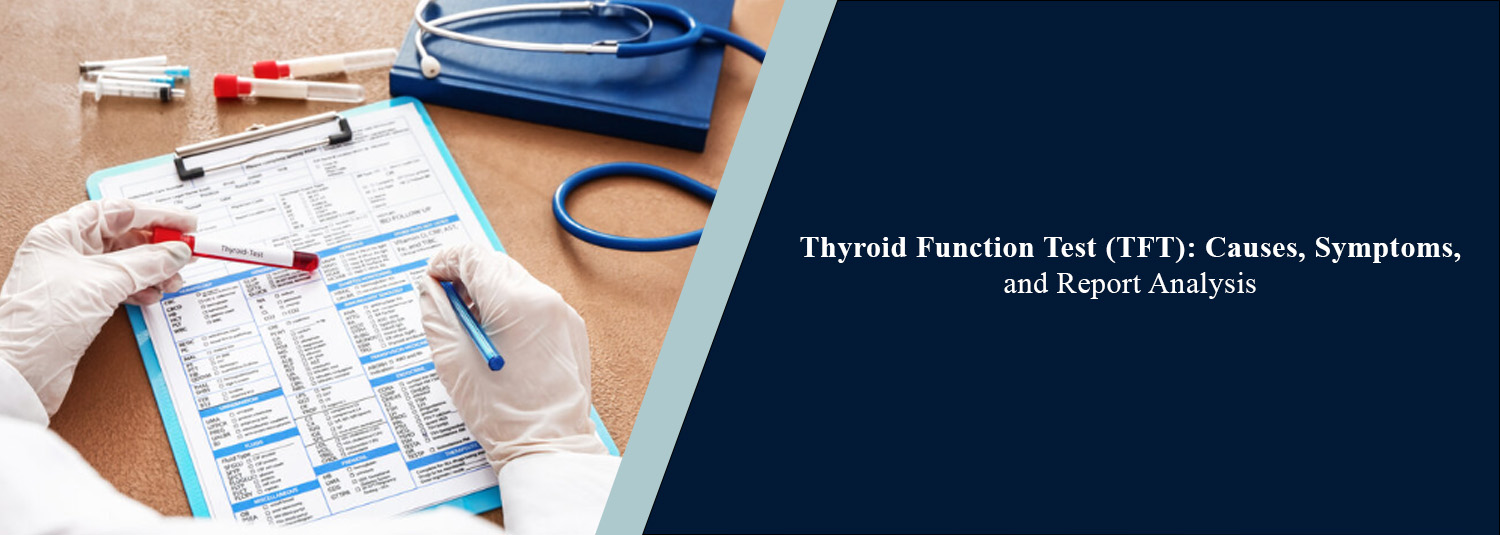
Thyroid Function Test (TFT): Causes, Symptoms, and Report Analysis
Talk to Health Expert

Dr. Nikunj Jain
Co-Founder and HOD - Nuclear Medicine ,MBBS, DRM, DNB, FEBNM, FANMB, Dip. CBNC
The thyroid controls body temperature,
metabolism, and other metabolic activities, such as heart rate and energy
expenditure. Thyroid hormone levels can either be over- or underproduced and
can affect overall health. The Thyroid Function Test (TFT) is a set of blood
tests that determines the levels of thyroid-related hormones and therefore the
thyroid gland's function. Molecular Diagnostics and Therapy is a diagnostic
centre that provides services of molecular laboratory testing for the
evaluation of different health conditions.
A TFT test is typically performed in
individuals with an unexplained loss or gain of weight, fatigue, hair loss, or
difficulty with mood, as well as those with an irregular heartbeat (pulse).
Knowing what the thyroid test levels of TSH, T3, and T4 are normally is very
beneficial to patients in the interpretation of their thyroid test results and
when discussing results with their doctor.
Why Is a TFT Test
Recommended?
A TFT test may be ordered if a person
has symptoms that might be a sign of an underactive or overactive thyroid
gland. A TFT may also be recommended during pregnancy when clinically
indicated, as part of selected health assessments, or to monitor an existing
thyroid condition. A test can assist with the investigation of unexplained
weight change (loss or gain), loss of energy, irregular periods, increasing or
decreasing heart rate, hair thinning, and more. It is also important for
monitoring responses to thyroid medications and deciding if necessary
adjustments of treatment are needed.
Causes of Thyroid
Hormone Imbalance
Medical disorders can cause levels of
thyroid hormone to become abnormal. When the thyroid gland does not make
sufficient amounts of hormone, it is called hypothyroidism. Common causes are
Hashimoto's thyroiditis, an autoimmune disorder of the thyroid, iodine
deficiency in some instances, thyroid surgery, and some medications.
Hyperthyroidism occurs when the thyroid produces more hormones than are needed.
Hyperthyroidism can be caused by Graves' disease, overactive thyroid nodules,
or certain forms of thyroid inflammation. Even taking more thyroid hormone
medicine than directed will also alter hormone levels. In a few cases,
pregnancy, some medications, and problems with the pituitary can affect thyroid
blood measurements. Doctors consider a patient's medical history, symptoms,
physical examination, and thyroid test results together to identify the
possible cause of a hormone imbalance.
Common Symptoms of
Thyroid Problems
Symptoms are affected by whether the
thyroid is underactive or overactive. Individuals with hypothyroidism may feel
tired, gain weight, have dry skin, constipation, hair loss, feel cold more of
the time, and struggle to concentrate. There may also be other changes to the
menstrual period in some people. Symptoms of hyperthyroidism include weight
loss, sweating, anxiety, shaking hands, frequent stools, insomnia, and/or a
more rapid pulse. Some people with hyperthyroidism may experience increased
appetite and heat intolerance rather than feeling cold more easily. There are
also other medical conditions that can have these symptoms. The thyroid
function test is used to give the doctor a reason to suspect that thyroid
hormone imbalance is contributing to their symptoms.
How to Read a Thyroid
Test Report?
Thyroid test results should be
interpreted together, particularly TSH and free T4, while T3 measurements may
provide additional information when clinically indicated. When TSH is elevated
and T4 is low, it is often a sign of primary hypothyroidism, or an underactive
thyroid gland. A low level of TSH coupled with an elevated level of T3 or T4
can be an indication of hyperthyroidism. In subclinical hyperthyroidism,
however, low TSH levels with normal T3/T4 occur. Again, if the TSH is elevated
and T4 is normal, subclinical hypothyroidism is suspected. Not all abnormal
findings are life-threatening. However, repeated testing along with thyroid
antibody testing and other tests may be suggested based on results and
symptoms.
Preparation for a TFT
Test
Generally, a thyroid screening test
does not need to be done while fasting. Instructions on how to prepare may,
however, change, depending on the tests to be performed. Thyroid medication,
supplements, and other medications may affect the results of these tests and
should be mentioned to a doctor. Do not discontinue medication without a
healthcare provider's instruction.
Conclusion
Thyroid function tests (TFTs) help doctors assess thyroid hormone levels in the blood and investigate symptoms that may be related to thyroid disorders. For an individual to be an active participant in their own healthcare, it is beneficial to understand the normal ranges of measurement for their thyroid tests: TSH, T3, and T4. Molecular Diagnostics and Therapy provides diagnostic testing services that support the investigation and monitoring of thyroid-related health conditions. Follow-up thyroid tests may be indicated by a doctor if any thyroid hormone levels need to be monitored, the treatment result is being assessed, or there may be a need for additional treatment.
Frequently Asked Questions
In News
Get Our Mobile App
for Easy Access
Book tests, view reports, and manage your health records on the go. Experience convenient healthcare with Molecular Diagnostics and Therapy.
- ✔ Book tests & home collection
- ✔ View reports instantly
- ✔ Track health history
- ✔ Get notifications & reminders
- ✔ Easy appointment management