Why Doctors Recommend the CRP Blood Test During Infection?
Talk to Health Expert

Dr. Nikunj Jain
Co-Founder and HOD - Nuclear Medicine ,MBBS, DRM, DNB, FEBNM, FANMB, Dip. CBNC
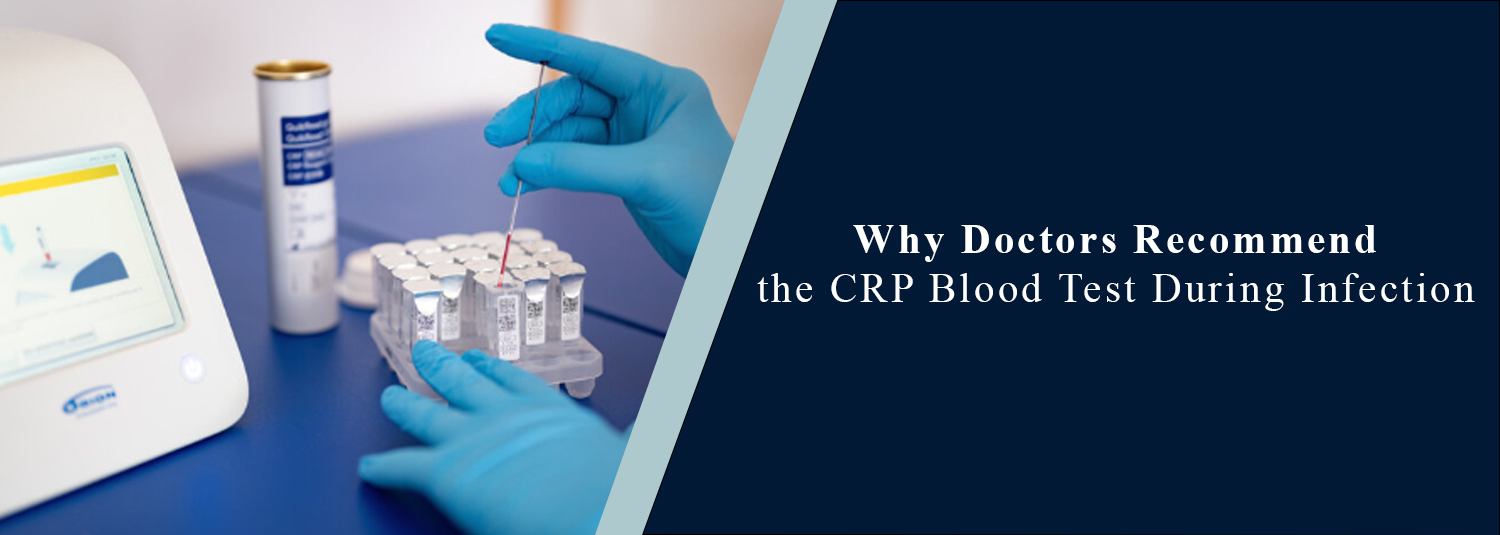
In the situation of infection or inflammation, physicians may prescribe specific blood tests to assess the severity of the disease and keep track of the body's response. The CRP Blood Test is one of the most recommended tests during infections. This easy-to-perform test is very useful for doctors to assess levels of inflammation throughout the body and to aid in quicker diagnosis and treatment planning.
When patients hear the word "CRP test" as part of a medical assessment due to a fever, infection, "flu", or inflammation, they are likely to hear the word but be unclear on why it is important. The CRP Blood Test is a key component when determining whether or not an infection is active and the magnitude of the infection. At Molecular Diagnostics and Therapy, cutting-edge laboratory services and precise diagnostic testing aid physicians in determining the state of infections and inflammatory diseases.
What is a CRP Blood Test?
CRP, or C-Reactive Protein, is a protein that is created by the liver in response to an infection that causes inflammation in the body. In cases of infection, injury, or inflammation, the concentration of CRP increases in the blood.
The CRP Test is used to measure the level of C-Reactive Protein in the blood. A higher CRP level is indicative of inflammation or infection in the body. The test is straightforward, and only a small amount of blood is drawn into the test tube. It's frequently ordered since it supplies prompt and helpful details regarding the body's inflammatory reaction.
Conditions Where the CRP Test is Commonly Recommended
A CRP Blood Test is often ordered in cases of infection or inflammation, as seen in several medical conditions. It is widely utilised at the time of:
Show signs of fever and unexplained infections.
Bacterial infections.
Respiratory infections.
Pneumonia.
Urinary tract infections.
Joint inflammation.
Autoimmune disorders.
Post-surgical infections.
CRP testing is also commonly performed when a patient is hospitalised to monitor the severity of the infection and the effectiveness of treatment. It is important to ensure that the diagnosis is made in time and the management is appropriate through accurate CRP testing.
CRP Levels and What They Mean
Healthy people tend to have low levels of CRP. If there is any inflammation or infection, levels of CRP can rise markedly. In mild infections or inflammation, the CRP levels may be slightly increased. High levels of CRP are typically linked to serious bacterial infection, severe inflammation, or significant tissue injury.
CRP doesn't, however, reveal the precise cause of the infection. A CRP test is used in combination with other lab tests, a thorough history, and physical examination to help diagnose the underlying cause of an infection. For instance, if a patient has a fever, cough, and elevated CRP, further tests may be necessary to diagnose pneumonia or any other upper respiratory infection.
CRP Test in Bacterial vs Viral Infections
One noteworthy benefit of CRP is that it can distinguish between bacterial infections and viral infections.
Many bacterial infections result in higher elevations of the CRP than do many viral infections. This information may be useful in determining antibiotic therapy.
But CRP is not an independent test. Further examinations may be arranged to give a more accurate diagnosis of the nature and site of infection. Nonetheless, the use of CRP has proven to be a great tool for determining the type of treatment a patient requires and for assessing how well the disease responds to treatment.
Monitoring Recovery and Treatment Response
CRP Blood Tests are not for diagnosis alone, but also can be used to check for recovery. Generally, after a good improvement in the infection and a lowering of inflammation, CRP gradually decreases. The test might be repeated throughout the course of treatment to determine if the treatment is effective. A persistently elevated or rising CRP level could be a sign of an active infection or problems.
It is relevant particularly for hospitalised patients, patients with chronic inflammatory diseases, and during serious infections. Laboratory testing at Molecular Diagnostics and Therapy offers accurate and dependable results for a physician to monitor patient recovery and effective treatments.
CRP Test in COVID-19 and Respiratory Infections
The COVID-19 pandemic made CRP testing well known as a diagnostic tool to measure the severity of the inflammation in patients with the actual infection. Often, a higher level of CRP was accompanied by a more severe illness and lung inflammation. CRP tests are helpful for serious infections, such as very high viral infections and pneumonia, even today. The test can assist doctors in measuring levels of inflammation and tracking patients and their progress throughout treatment.
Is the CRP Blood Test Safe?
The CRP Blood Test is usually very safe and easy to take. Only a normal blood sample taken from a vein in the arm is needed. The process lasts about minutes and typically doesn't need special preparation, unless recommended by the physician. The patient can resume normal activities after the blood sample is taken.
Limitations of CRP Testing
Many forms of inflammation result in a rise in CRP levels, not only infections. Other things like autoimmune conditions, injuries, surgery, or chronic inflammatory diseases may also cause the levels of CRP to rise.
This means that CRP should be analysed in conjunction with the clinical history and any other laboratory test data by a health care professional. The test is used to determine if the inflammation is present, but not to confirm a particular disease. Further tests will likely still need to be performed.
Conclusion
The CRP Blood Test is a significant diagnostic tool that medical professionals use to identify inflammation, see the severity of an infection, and monitor its recovery. When the body is infected, CRP rises quickly, which helps health care professionals better determine the level of inflammation in the body.
CRP testing has become a critical tool in modern medicine for the diagnosis and monitoring of many diseases, including infectious diseases such as bacterial infections and respiratory disorders like pneumonia, as well as conditions with a chronic inflammatory basis. The test can't tell the actual cause of illness, but it helps with making timely decisions for treatment. Molecular Diagnostics and Therapy's emphasis on quality healthcare and patient care continues with reliable CRP Blood Testing services, with accurate laboratory services, and expert diagnostic support.
Frequently Asked Questions
In News
Get Our Mobile App
for Easy Access
Book tests, view reports, and manage your health records on the go. Experience convenient healthcare with Molecular Diagnostics and Therapy.
- ✔ Book tests & home collection
- ✔ View reports instantly
- ✔ Track health history
- ✔ Get notifications & reminders
- ✔ Easy appointment management