Diagnostic Technologies Changing Cancer Detection
Talk to Health Expert

Dr. Nikunj Jain
Co-Founder and HOD - Nuclear Medicine ,MBBS, DRM, DNB, FEBNM, FANMB, Dip. CBNC
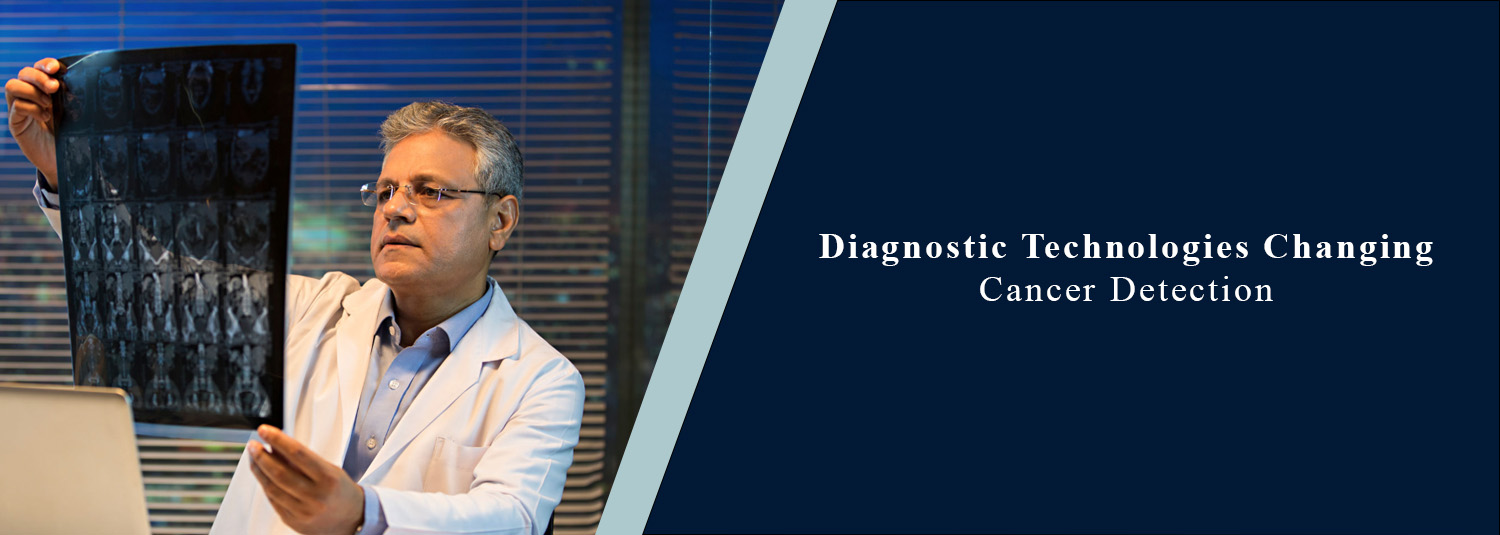
Cancer is responsible for the death of many millions of people annually and indeed is one of the biggest causes of death overall. While there have been great strides in treatment, early detection remains an important element of a patient's outcome. If cancer is detected early, treatment may be more effective, less invasive, and have a higher success rate in survival.
Conventional cancer diagnosis techniques have saved many lives to date, including physical exams and symptom assessments. Many cancers, however, do not give any symptoms and would only be noticed when at a later stage in development.
There are currently some great leaps in diagnostic technologies, and this is changing the cancer detection landscape altogether. A few innovations in tools and techniques are also aiding in the diagnosis of cancers at an early stage, increasing the accuracy of diagnosis and developing more personalized treatment methods.
The Shift Toward Early Detection
Emphasis is being increasingly placed on ‘health prevention' and 'early diagnosis' in modern healthcare. Doctors are now employing cutting-edge screening techniques to detect potential abnormalities, rather than waiting for them to show up before they become life-threatening.
Besides helping to increase survival rates, early detection can also mean shorter health-care expenses and avoiding less intensive treatments. Now, thanks to technological advancements, doctors are able to spot the smallest of changes happening in the body that previously were hard or even impossible for them to detect with traditional diagnostic techniques.
Advanced Imaging Technologies
Medical imaging continues to play a crucial role in cancer detection and diagnosis. Organs and tissues are shown in great detail with techniques like magnetic resonance imaging (MRI), computed tomography (CT), mammography, ultrasound, and positron emission tomography-computed tomography (PET-CT).
These imaging tools enable doctors to detect cancer, determine the size or position of a tumour, and find out if the cancer has reached other parts of the body. Current imaging technology systems are more accurate, have better resolution, and can scan more quickly for abnormalities. The low-dose computed tomography allows lung cancer to be located in patients at risk, and digital mammography makes it possible to diagnose breast cancer earlier.
The Role of PET-CT in Cancer Detection
PET-CT is now a vital tool in modern oncology. PET-CT uses information from a spinning positron emission tomography scan and detailed images from computed tomography to give a complete picture of the activity of cancer in the body.
PET-CT can detect abnormalities at the cellular level that precede changes in the structure, which is not the case with conventional imaging studies. A lot of cancer-related diagnostic, therapeutic, staging, and recurrence-disease indicator uses rely on this technology. PET-CT also provides more information to healthcare providers when deciding on treatment plans and managing their patients.
Liquid Biopsies: A Less Invasive Approach
Liquid biopsy technology is one of the best promises of cancer diagnostics. Traditional tissue biopsies involve either surgical procedures or needle biopsy, whereas liquid biopsies use blood to identify cancer biomarkers.
These tests may detect circulating tumour cells, tumour DNA fragments, and other tumour-associated molecules. The benefits of liquid biopsies are that they result in less pain, are faster to get the results, and can help you track if the treatment is working over time. The research on the potential of liquid biopsies in early cancer detection and personalized medicine is still ongoing.
Molecular and Genetic Testing
The knowledge about cancer as a disease whose etiology is genetic and molecular in nature has been growing rapidly. The goals of a cancer diagnosis achieved through molecular and genetic testing are to assess specific genetic changes and markers that are linked to specific types of cancer.
These tests can be used to detect people who might be at increased risk for developing cancer and can have important information that can be used about cancer tumors. Knowing the genetic makeup of a tumor can help doctors choose treatments that are more likely to work for a specific person. More outcomes are being achieved, and unnecessary treatments are being avoided using personalized treatment strategies developed from molecular testing.
Artificial Intelligence in Cancer Detection
The field of cancer diagnostics is being revolutionized by artificial intelligence (AI). AI algorithms can process vast amounts of data on imaging data, pathology slides, lab results, and much more within seconds that would conventionally require hours of human effort. AI algorithms can sift through vast amounts of medical information, such as imaging data, pathology slides, lab results, and more, in mere seconds that can take hours to days for humans.
For imaging system applications, AI tools can be useful in identifying minor abnormalities that might go undetected while manually interpreting an image. AI also benefits healthcare providers by making work simpler, decreasing medical mistakes, and aiding the group's decision-making. AI is not a replacement for medical professionals, but rather a valuable tool that can help them.
Digital Pathology and Automation
Pathology continues to be the treatment standard for the accurate diagnosis of many cancer cases. Digital Pathology is the conversion of the traditional microscope slide into high-resolution digital images that can be subsequently analysed electronically.
This technology aims to enable pathologists to work together remotely, exchange their experience, and employ sophisticated software tools to enhance their diagnostic accuracy. Using automation and digital analysis can make patterns and abnormalities more easily visible, thus speeding up the turnaround time and facilitating quicker treatment decisions.
The Future of Cancer Detection
The future for cancer diagnostics is to utilise a combination of technologies to report more extensive, more personal cancer diagnostics. The use of genomics, wearable health devices, knowledge of biomarkers, and machine learning should further enhance early detection.
In pursuit of this goal, scientists are still trying to create a way to detect multiple cancers in a single blood test. With the continued advancements of these technologies, cancer detection is likely to improve in precision, access, and be more patient-centric.
Conclusion
The way cancer is diagnosed is changing. There is significant innovation in advanced imaging technologies, PET-CT, liquid biopsy, molecular testing, AI, and digital pathology, helping to enhance the ability to initiate cancer detection at an early stage and deliver more personalized treatment planning.
One of the biggest weapons in combating cancer is early diagnosis, when outcomes improve, and quality of life is better. At Molecular Diagnostics and Therapy, individuals receive advanced diagnostics, cutting-edge technologies, and personalized medical care to empower them to take proactive measures towards their health and well-being.
Frequently Asked Questions
In News
Get Our Mobile App
for Easy Access
Book tests, view reports, and manage your health records on the go. Experience convenient healthcare with Molecular Diagnostics and Therapy.
- ✔ Book tests & home collection
- ✔ View reports instantly
- ✔ Track health history
- ✔ Get notifications & reminders
- ✔ Easy appointment management