MRI: Purpose, Procedure, Price in Delhi
Talk to Health Expert

Dr. Nikunj Jain
Co-Founder and HOD - Nuclear Medicine ,MBBS, DRM, DNB, FEBNM, FANMB, Dip. CBNC
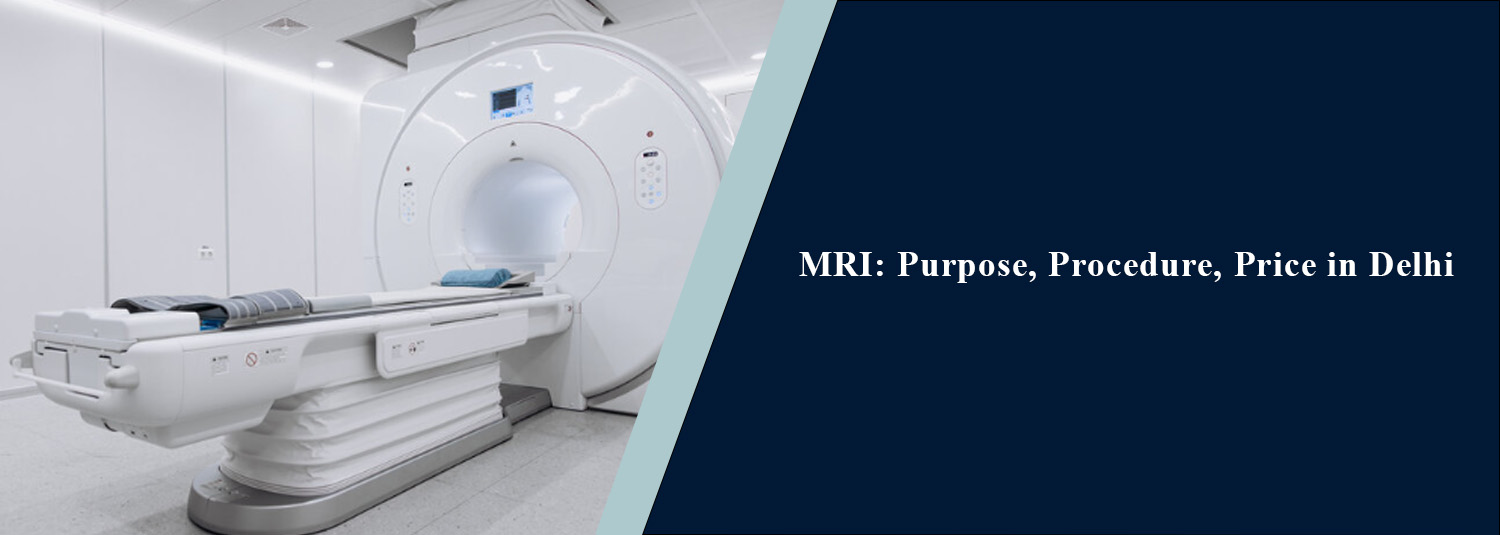
Magnetic Resonance Imaging (MRI) is an
advanced medical imaging technique that helps doctors to look at the internal
organs, soft tissues, bones and other structures in the body. MRI scans in
Delhi are often recommended to help doctors identify any abnormalities,
investigate symptoms, and monitor certain conditions. An MRI scan can be used
to investigate issues with the brain, spine, joints, abdominal area, and other
parts of the body.
At Molecular Diagnostics and Therapy,
we offer advanced MRI technology as part of our NABL & NABH-accredited
diagnostic centre. Knowing what an MRI scan is for, how it’s performed, and how
much it costs in Delhi can help prepare patients for their investigation.
What Is an MRI Scan?
MRI stands for Magnetic Resonance
Imaging. It uses a strong magnetic field along with radio waves and computer
technology to produce detailed images of internal parts of the body. Unlike
X-rays and CT scans, it doesn’t use ionising radiation. This makes it ideal for
looking at soft tissues such as the brain, spinal cord, muscles, ligaments,
cartilage and internal organs. You may be offered an MRI scan without contrast
or with contrast depending on your medical needs. Contrast is usually a
gadolinium-based dye and helps doctors see certain areas of tissue, blood
vessels, and abnormalities.
Why Is an MRI Scan
Recommended?
An MRI scan may be recommended in Delhi
to provide detailed information about a specific part of your body or to
investigate symptoms.
1. Brain and
Neurological Conditions
MRI brain scans can be used to
investigate a variety of neurological conditions, including tumours, stroke
changes, multiple sclerosis, infections, and some seizure-related
abnormalities. It may also be recommended if you’re experiencing regular
headaches, unexplained neurological symptoms, or vision and balance changes.
2. Spine-Related
Problems
MRI scans of the cervical, thoracic, or
lumbar spine can be used to look at the spinal cord, vertebrae, intervertebral
discs, and surrounding soft tissues. This can help identify disc herniation,
nerve compression, spinal stenosis, infections, and certain tumours.
3. Joint and
Musculoskeletal Conditions
MRI scans can be used to investigate
injuries and conditions affecting the knees, shoulders, hips, ankles, and other
joints. This can help identify ligament tears, cartilage damage, muscle
injuries, tendon issues and joint abnormalities.
4. Abdominal and
Pelvic Conditions
MRI scans of the abdomen and pelvis can be used to look at the liver,
kidneys, pancreas, uterus, ovaries and prostate. This can help investigate
certain tumours, cysts, inflammatory conditions and other abnormalities.
5. Cancer Evaluation
MRI can help to identify where and how
big certain tumours are and how they relate to surrounding tissues. It can also
be used to monitor how well treatments are working or to investigate suspected
relapse in certain patients. The type of MRI you have depends on your symptoms,
findings, and what your doctor recommends.
Types of MRI Scans
Available
An MRI scan can be performed to look at
different parts of the body depending on your condition. Common types include:
- MRI
Brain:
Examines the brain and surrounding structures.
- MRI Spine: Evaluates the cervical, thoracic, and lumbar
regions of the spine.
- MRI Knee: Helps assess ligaments, cartilage, tendons,
and other joint structures.
- MRI Shoulder: Evaluates rotator cuff injuries and other
shoulder abnormalities.
- MRI Abdomen: Examines abdominal organs and surrounding
tissues.
- MRI Pelvis: Helps assess pelvic organs and soft tissues.
- MR Angiography (MRA): Evaluates blood vessels and helps identify
selected vascular abnormalities.
- MRCP:
Provides detailed images of the bile ducts, gallbladder, and pancreatic
ducts.
Your doctor recommends the appropriate scan based on the condition being
investigated.
MRI Scan Procedure:
Step-by-Step
An MRI scan is usually painless, and
you won’t need any injections unless contrast is required.
1. Before the Scan
The radiology team checks your doctor's
prescription and asks you some questions about your medical history, previous
operations, implants, and any metal objects in your body. You are usually asked
to remove any jewellery, watches, hearing aids, or other metal items before
entering the MRI room. If you need contrast, you may receive extra
instructions.
2. During the Scan
You lie on a movable table that slides
you into the MRI scanner. The technologist positions the area they need to look
at. Special coils may be used to provide detailed images. You hear tapping,
thumping, or buzzing noises whilst your images are being taken. You may be
given earplugs or headphones. It’s important to stay as still as possible to
ensure the best quality images. The technologist talks to you throughout your
scan.
3. After the Scan
Once your images have been taken, you
can usually go about your usual activities. Your images are looked at by a
radiologist who writes a report. Your doctor then explains the results and any
further investigations or treatments you may need.
How to Prepare for an
MRI Scan
Depending on what part of your body is
being scanned and whether contrast is required, you may or may not need to
fast. Many brain, spine, and joint scans don’t require you to fast. However, if
you’re having an abdomen/pelvis scan or certain contrast scans, you may need to
prepare. Before your appointment, let the diagnostic team know if you have:
- A
pacemaker or implanted electronic device.
- Metal implants, surgical clips, or artificial
joints.
- A history of kidney disease.
- A previous reaction to MRI contrast agents.
- Pregnancy or a possibility of pregnancy.
- Claustrophobia or difficulty remaining still.
Always follow the instructions provided by the MRI centre and your
doctor.
MRI Scan Price in
Delhi: What Does It Depend On?
The cost of an MRI scan in Delhi varies
depending on what type of scan you’re having, what part of your body is being
scanned, what protocol is used, and the diagnostic centre. There isn’t one set
price for all patients. Factors that may affect the cost include:
- Body
Part Being Examined:
Brain, spine, knee, shoulder, abdomen & pelvis scans may all have
different prices as different protocols are used.
- Plain or Contrast MRI: Scans without contrast may be cheaper than
scans with contrast. Contrast can incur extra charges.
- Machine Technology: The strength of the scanner may affect the
price. However, not all scans require a high-strength machine such as a
1.5 Tesla or 3 Tesla. The correct machine and protocol can be used
depending on your clinical needs.
- Diagnostic Centre: Prices can vary between independent imaging
centres and hospital radiology departments.
- Additional Services: The final quote may depend on whether the
radiologist's report, digital images, films, or other services are
included.
As a general guide, single-region scans
in Delhi can range from around ₹3000 to ₹10000+ in 2026. More specialised
multi-region and contrast scans can be more expensive. These are just general
guides, and Molecular Diagnostics and Therapy does not guarantee these prices.
Ask for a full quote.
Choosing the Right
MRI Scan Centre in Delhi
When choosing an MRI scan centre in
Delhi, it’s important to consider more than just the price. Choose a centre
that offers high-quality imaging, well-maintained equipment, experienced radiology
staff, and safe patient procedures. Choose a diagnostic centre that can provide
the right MRI technology, has quality standards in place, and experienced
radiology staff. Make sure they can fit you in for your appointment, what
preparation is required, how long reports take, and whether the price includes
everything.
At Molecular Diagnostics and Therapy,
we have a Siemens MAGNETOM Sempra 1.5T MRI system, which can provide detailed
imaging. We aim to provide diagnostic services to help your doctor investigate
your condition and provide the right care.
Conclusion
MRI is an important diagnostic tool that allows doctors to look at internal parts of the body without using ionising radiation. It can be used to look at a wide variety of conditions, including the brain, spine, joints and abdomen. Knowing what an MRI scan is for, how it’s performed, what preparation is required, and what factors affect the cost can help you feel more confident when having your scan. Always follow your doctor's recommendation and choose a diagnostic centre that provides high-quality imaging, safe patient procedures, and professional reports.
Frequently Asked Questions
In News
Get Our Mobile App
for Easy Access
Book tests, view reports, and manage your health records on the go. Experience convenient healthcare with Molecular Diagnostics and Therapy.
- ✔ Book tests & home collection
- ✔ View reports instantly
- ✔ Track health history
- ✔ Get notifications & reminders
- ✔ Easy appointment management