Mammography vs Breast Ultrasound: Which Is Better?
Talk to Health Expert

Dr. Nikunj Jain
Co-Founder and HOD - Nuclear Medicine ,MBBS, DRM, DNB, FEBNM, FANMB, Dip. CBNC
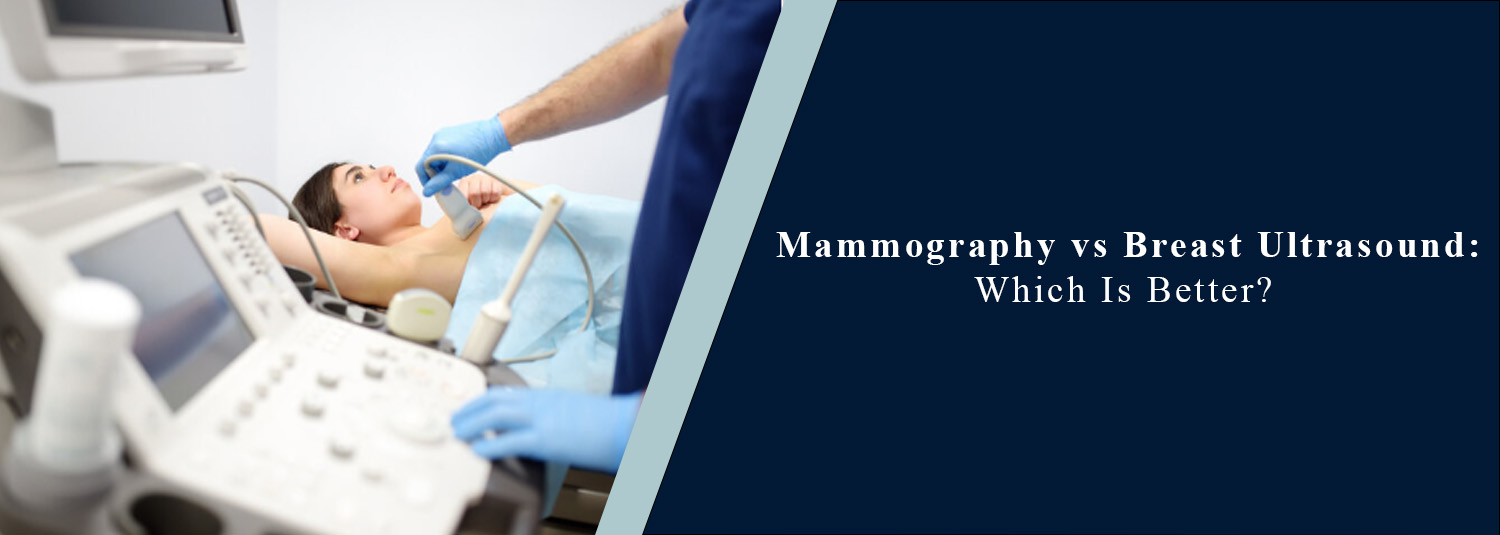
Good health of the breast is a key component of women's health care, particularly because the likelihood of the breast being the source of health problems increases as people get older. Early recognition of breast abnormalities can help improve treatment outcomes and minimise complications. Some of the most widely employed diagnostic imaging procedures for the breast are referred to as Mammography and Breast Ultrasound.
Many women get confused when doctors recommend using one or two tests, or both. Others feel you should always get a mammogram, as the other is supposedly safer and more accurate. In actual practice, both tests have different applications and are often used in conjunction to give a comprehensive measure of breast health.
Women can make suitable decisions about their healthcare after understanding the differences between Mammography and Breast Ultrasound. At Molecular Diagnostics and Therapy, cutting-edge breast imaging technology and state-of-the-art diagnostic imaging services contribute to proper breast cancer screening and detection.
What Is Mammography?
Mammography is a special type of X-ray that uses a low dose of X-rays to look at the breast tissue. It is believed to be one of the most effective screening tests for the early detection of breast cancer. It can detect very small tumours or abnormal breast tissue at an early stage before they're large enough to feel manually. Women over 40 years of age are widely recommended to have regular mammograms and breast cancer screening. There are two kinds of mammograms:
Screening Mammography
Diagnostic Mammography
Screening mammography is done to screen the breast and is therefore performed in women with no symptoms, while a diagnostic mammogram is performed when symptoms like lumps, breast pain, discharge from the nipple, or abnormal findings are found in the breast.
What Is Breast Ultrasound?
Breast Ultrasound is an imaging procedure that produces images of the breast tissue through the use of sound waves. There is no radiation exposure with ultrasound as opposed to mammography. This test is frequently performed on breast lumps or cysts, breast swelling, and abnormalities detected during physical examination or mammography.
Ultrasound is particularly useful to help identify structures in women who may have dense breast tissue, which can sometimes interfere with mammograms. X-rays and breast ultrasound can assist doctors in determining whether there are fluid-filled cysts or solid masses within the breast.
How Does Mammography Work?
Mammogram equipment will gently compress your breast between 2 plates and take texture photos from various angles. Compression improves the quality of the image and makes smaller abnormalities more visible. The test typically takes only a few minutes but may cause a little discomfort to some women. Mammography can detect:
Tiny tumours
Early-stage breast cancer
Calcium deposits
Abnormal tissue changes
In many instances, the diagnosis of cancer comes from an X-ray of the breast (mammography) long before any symptoms are seen.
How does a breast ultrasound work?
In a breast ultrasound, a gel is placed on the skin, and a machine (transducer) is scanned over the area of the breast. The instrument emits sound waves into the tissue and produces images in real time on the screen. Use of ultrasound for evaluating:
Breast lumps
Breast pain
Cysts
Dense breast tissue
Fluid collections
During breast biopsy procedures, ultrasound guidance can be used by doctors, too.
Which Test Is Better for Breast Cancer Screening?
Mammography is the recommended cancer-detecting technique for detecting breast cancer, especially in women over age forty. It can identify changes early on that can lead to cancer, such as microcalcifications and small tumours. In women who have dense breast tissue or breast symptoms, however, breast ultrasound could also be used to give more information. Often, ultrasound is employed as an adjunct to mammograms. In Molecular Diagnostics and Therapy, modern mammography and ultrasound imaging help to accurately evaluate breast health and make preventative screening easier.
Mammography for Dense Breasts
Some women generate more glandular tissue and less fat tissue in their body that makes it tricky to see the images clearly on a mammogram. Occasionally, mammograms may be unclear and not detect a small tumour within dense tissue. Sometimes, an ultrasound is ordered with mammography in women who have dense breasts because the ultrasound might detect changes that are not seen on mammograms.
Advantages of Mammography
Mammography offers several important advantages:
Early cancer diagnosis
Proven screening method
Detects tiny abnormalities
Lowers the risk of breast cancer death
Recommended for routine screening after age 40
Regular mammography has been a major success in the early detection of breast cancer globally.
Advantages of Breast Ultrasound
Additionally, breast ultrasound has several advantages:
No radiation exposure
useful for dense breasts
Suggests treatment for cysts and lumps
Painless and non-invasive
Safe during pregnancy
For women, breast evaluation is required; ultrasound is frequently recommended for pregnant women and younger women.
Who May Need Earlier Breast Screening?
Breast imaging may sometimes be necessary before the age of 40 in some women who have:
Having a family history of breast cancer.
Genetic risk factors
Previous breast abnormalities
Dense breast tissue
Persistent breast symptoms
Treatment guidelines for screening are based on personal medical history and risk factors.
Importance of Early Detection
Early diagnosis often leads to more treatment options and possibly better outcomes from breast cancer. In some cases, women may never have symptoms or pain, and that is why breast cancer screening is so important, especially for women with early cancer. Any changes in breast tissue, lumps, discharge from the nipples, swelling, or persistent breast pain can be a warning sign for women that something is wrong.
Conclusion
While Mammography and Breast Ultrasound are valuable imaging modalities for the breast, they are not mutually exclusive. Mammography continues to be the principal method of screening for early breast cancer detection, particularly for women over the age of 40. Breast ultrasound is used to supplement the evaluation of dense breasts, cysts, lumps, and other abnormalities.
The specific imaging technique used will vary from patient to patient depending upon breast density, symptoms, age of the patient, and patient history. Doctors may order both tests in some cases when they wish to perform a thorough breast evaluation. Through high-tech diagnostic and imaging tools and trusted diagnostic skills, Molecular Diagnostics and Therapy is on the frontline of breast screening and women's health, committed to assuring early detection and care.
Frequently Asked Questions
In News
Get Our Mobile App
for Easy Access
Book tests, view reports, and manage your health records on the go. Experience convenient healthcare with Molecular Diagnostics and Therapy.
- ✔ Book tests & home collection
- ✔ View reports instantly
- ✔ Track health history
- ✔ Get notifications & reminders
- ✔ Easy appointment management