Kidney Creatinine Test: Normal Range by Age
Talk to Health Expert

Dr. Nikunj Jain
Co-Founder and HOD - Nuclear Medicine ,MBBS, DRM, DNB, FEBNM, FANMB, Dip. CBNC
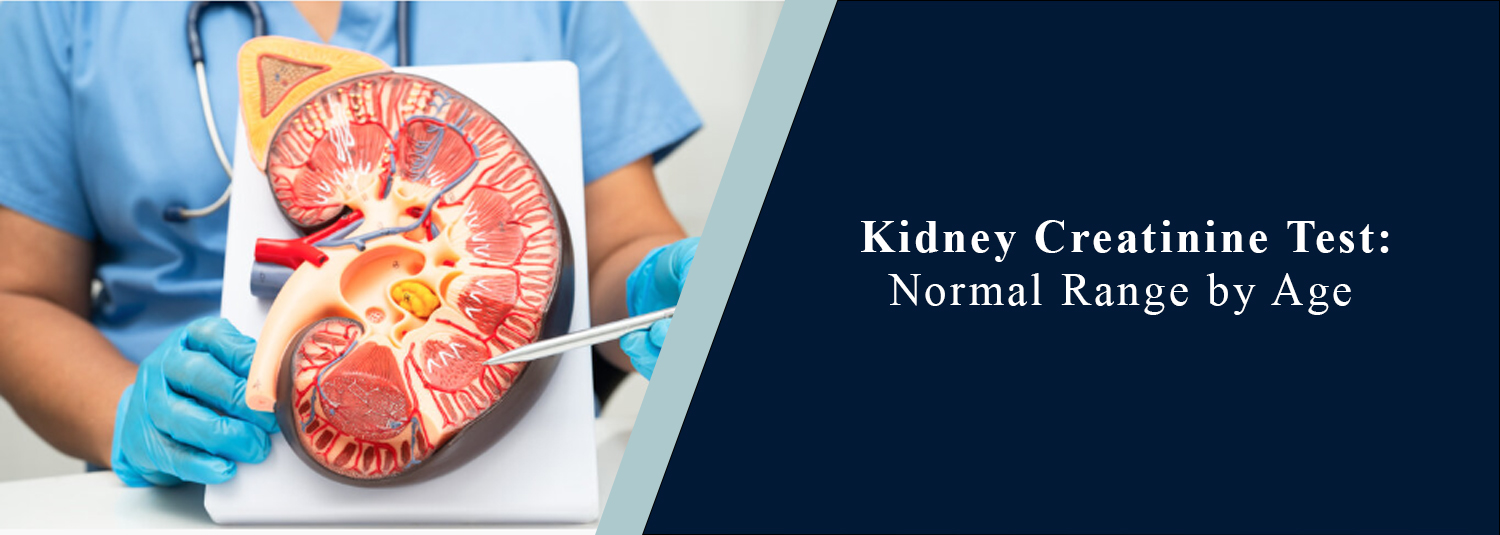
The kidney's function is significant in overall health, as it
filters out waste products and excess fluid from the blood. If the kidneys'
function is impaired, toxic chemicals can start to build up in the body. The
most common and important kidney urine analysis test is the creatinine test,
which is used to get an overview of the state of the kidney.
A Kidney Creatinine Test is ordered in routine examination, in the
diagnosis of diabetes, hypertension, and the presence of suspected kidney
disease. Knowing the healthy range of Creatinine in the blood of different age
groups is useful in identifying kidney disease at an early stage. Molecular Diagnostics and Therapy provides advanced lab testing and precise diagnostic
services to assist in the reliable evaluation of kidney function and early
detection of disease.
What is a Kidney Creatinine Test?
A Kidney Creatinine Test is a blood test to determine the amount
of creatinine in the blood. A test to measure kidney function. Various other
tests of kidney function may be ordered to work with the creatinine test: Blood
Urea Nitrogen (BUN), the estimated Glomerular Filtration Rate (eGFR), and urine
analysis (UA). The test is fairly simple and is very commonly performed in
hospitals, clinics, etc., and diagnostic laboratories.
Why is the Creatinine Test Important?
Kidney disease may be mild and only involve the kidneys and not
cause any symptoms at all. Many people may not realize their kidneys are not
working optimally until they have some degree of kidney dysfunction.
A creatinine test is carried out by doctors to identify early
signs of kidney damage and therefore prevent serious problems. Early diagnosis
allows for the initiation of treatment at the right time and makes lifestyle
changes, which improve kidney health in the long term and can help to determine
the cause of kidney failure.
A creatinine test should be ordered in individuals who have
diabetes, high blood pressure, kidney disease, dehydration, and those with a
family history of kidney disease or urinary tract conditions.
What Causes High Creatinine Levels?
If blood creatinine levels are high, it could indicate some
problems with the kidneys or blood circulation. But a high level of creatinine
isn't necessarily a sign of serious kidney disease. Any medical condition that
can increase blood pressure can raise the level of creatinine in the blood
(such as dehydration, urinary blockage, kidney stones, chronic kidney disease,
uncontrolled diabetes, kidney infection, and high blood pressure).
Additionally, certain medicines can alter the levels of creatinine
temporarily. For some people with lots of muscle mass or who exercise heavily,
some creatinine may be present due to normal bodily processes. Creatinine is
used along with other tests, symptoms, and medical history to help determine a
diagnosis.
Symptoms of Kidney Problems
At the first stages of kidney disease, there may be no signs or
symptoms at all. A person with advanced kidney disease might get tired, use the
bathroom less, and feel unwell, have muscle cramps, have no appetite, or feel
like he or she does not have an appetite.
Can Low Creatinine Levels Be a Concern?
Low levels of creatinine are of less concern but may be related to
decreased muscle mass, malnutrition, medical diseases, or age-related factors.
This is also because of a temporary rise in the blood flow and kidney filtering
during pregnancy, which may cause a temporary decrease in creatinine levels.
Low Creatinine levels are evaluated by physicians according to the person's
health and clinical status.
How is the Test Performed?
The Kidney Creatinine Test is a simple blood test. Blood is taken
from the veins of the arm, and the blood is tested in a lab. This normally
takes less than a couple of minutes. Fasting is not indicated for everyone; it
is only needed if other tests are also being used at the same time. The
state-of-the-art laboratory systems in Molecular Diagnostics and Therapy allow
for the correct assessment of the kidneys' function and for reliable reports.
Importance of Early Detection
Kidney disease doesn't always cause noticeable symptoms, but
symptoms can begin to appear after several years if kidney disease occurs.
Checking the creatinine allows doctors to help treat the diabetes before any
permanent damage has been done.
The right treatment at the right time can help slow the
progression of the disease, avoid the complications of illness, and maintain as
high a quality of life as possible. Routine kidney function testing is a major
component of preventative health care.
Conclusion
One of the most important kidney tests performed, the Kidney
Creatinine Test is effective in evaluating the function of the kidneys and also
helps to diagnose kidney disease at an early stage. Creatinine levels can vary
due to factors such as body size, gender, and age, but will be below or above
normal if the patient has a kidney disease or other condition.
Periodic monitoring of the creatinine level is especially
significant for individuals with diabetes, hypertension, urinary tract illness,
and a family history of kidney disease. Early diagnosis and proper treatment
can help to prevent complications and maintain kidney health. With
sophisticated laboratory technology, Molecular Diagnostics and Therapy provides
reliable information and diagnostic support, along with accurate, early testing
of kidney function.
Frequently Asked Questions
In News
Get Our Mobile App
for Easy Access
Book tests, view reports, and manage your health records on the go. Experience convenient healthcare with Molecular Diagnostics and Therapy.
- ✔ Book tests & home collection
- ✔ View reports instantly
- ✔ Track health history
- ✔ Get notifications & reminders
- ✔ Easy appointment management