What Is Contrast Allergy and How Is It Managed?
Talk to Health Expert

Dr. Nikunj Jain
Co-Founder and HOD - Nuclear Medicine ,MBBS, DRM, DNB, FEBNM, FANMB, Dip. CBNC
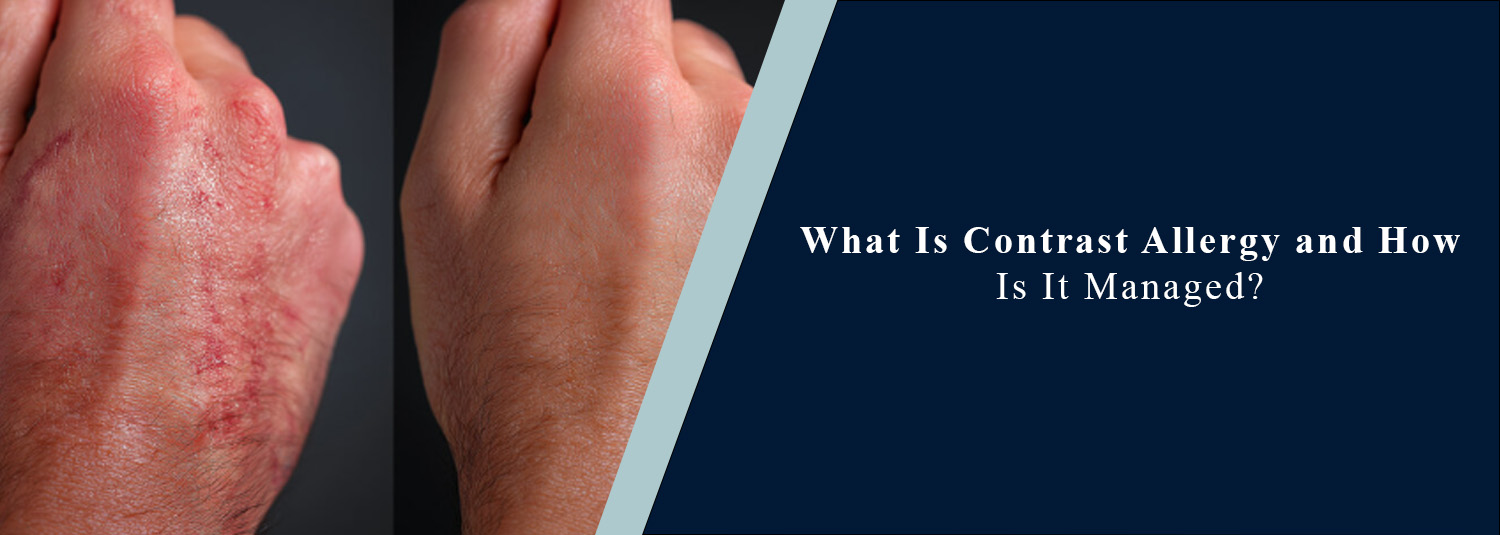
Patients may need to be given a substance called contrast during
some imaging tests to get more detailed information. In some blood vessels,
organs, and tissues, contrast makes them stand out better on the scan. This
might be used if a contrast exam with CT or MRI is performed, depending on the
type of scan and information sought. Most people do not have serious problems
with the use of contrast. However, for some, if you do give contrast, you can
have a reaction. This is sometimes referred to as a "contrast
allergy," but not all contrast reactions are "true" allergies.
Clearly explaining a temporary reaction and a potentially serious
allergic-type reaction helps patients understand what to expect. It is
important to inform the doctor and those who perform the next imaging procedure
of any previous reaction before repeat contrast studies. Proper screening and
the safety of patients are done at Molecular Diagnostics and Therapy before
contrast-enhanced imaging examinations.
What Is Contrast in Medical Imaging?
In some imaging, contrast is a special material that makes the
image of certain areas more visible. Sometimes iodinated contrast can be used
during a CT to make blood vessels, organs, and some abnormalities more visible.
This is frequently known as 'contrast dye' when the CT scan is used.
In some MRI procedures, a second kind of contrast agent might be
employed to give more information. This is commonly called an MRI contrast
test. Contrast agents vary depending on the type of scan. Contrast agents
should not be confused with CT and MRI contrast agents, which are different
substances. Contrast can be administered intravenously or by injection into a
vein. Depending on the body area being examined, contrast may also be
administered orally in some types of CT.
What Is a Contrast Allergy?
The term contrast allergy is used frequently when someone has an
allergic-like reaction following the use of a contrast. But allergic reactions
to contrast are not always true allergies. Reactions have some connection to
how the body reacts to the dye being used. Reactions are mild to severe. If any
reactions do occur, they are mild. Severe response occurs very rarely and must
be treated promptly. Reaction to previous contrast is important because if this
reaction then increases the risk of a reaction during future imaging.
What Symptoms Can Occur?
Depending on the nature and intensity of the reaction, symptoms
may be present. A mild reaction might include swelling, mild nausea, itching,
or a rash. A severe reaction can include difficulty breathing, swelling of the
face and/or throat, severe dizziness and/or a significant drop in blood
pressure levels.
Some may also get a temporary sensation which is not a reaction.
For instance, some people experience a metallic taste in their mouth, warmth,
or flushing during injection of iodinated CT contrast. This is often temporary
and not necessarily indicative of a patient being allergic to a contrast dye.
Patients should alert the imaging personnel right away if they develop an
adverse reaction before or after the contrast has been given.
CT Scan Contrast Test Details
Before a contrast-enhanced CT scan, the imaging team takes a
history and understands the purpose of the scan. Some questions may include
whether the patient has ever had a contrast dye before, allergies, kidney
issues, thyroid issues, and any medications the patient may be taking.
Sometimes blood tests have to be performed to determine the normal function of
the kidney before administration of contrast.
This contrast is often given intravenously (IV). This is followed
by scanning at the proper time to get the desired images. Depending on the
examination, some patients may require special preparation (e.g., fasting). The
level of instructions may differ, and patients are advised to follow their
doctor's or imaging centre's instructions.
What Happens During an MRI Contrast Scan?
Some MRI contrast imaging may require gadolinium contrast dye.
This is a contrast that is different than the iodinated contrast that is often
used for CT scans. The imaging team checks the patient's up-to-date medical
history, such as any kidney or other contrast reaction issues, before the exam.
Contrast medium is almost always injected into a vein during the
MRI examination. It can take longer than an MRI, as images are captured for
each sequence. The patient is asked not to move during the scan to help ensure
clear images. Similar to that with contrast administered using CT, if any
abnormal symptoms are noticed, they are to be reported to the medical team
right away!
How Is Contrast Allergy Managed?
The management of a
contrast reaction depends on its severity. For mild symptoms, the medical team
may monitor the patient and provide appropriate treatment if needed. If a more
serious reaction occurs, trained medical professionals provide immediate
emergency treatment. This may include medicines, oxygen, fluids, or other
emergency measures depending on the patient's symptoms. Imaging centres that
administer contrast should have trained staff and appropriate emergency
arrangements for managing contrast reactions. After a reaction, the patient
needs to inform healthcare providers about it before any future contrast
examination.
Can You Have Another Contrast Scan After a
Reaction?
A previous contrast
reaction does not always mean a person can never receive contrast again. The
decision depends on the type and severity of the previous reaction and the type
of contrast needed for the new examination. The doctor and imaging specialist
may consider whether another imaging test without contrast would provide the
required information. In some cases, a different contrast agent or a
premedication plan may be considered. Patients should never hide a previous
contrast reaction. Sharing this information allows the medical team to plan the
safest approach.
Who May Need Extra Care Before Contrast?
Some patients may
require additional assessment before receiving contrast. This may include
people with a previous moderate or severe contrast reaction, certain kidney
problems, or other medical conditions that may affect the use of a particular
contrast agent. The medical team considers the patient's individual health
condition and the expected benefit of the examination. Having an allergy to
food, pollen, or other substances does not automatically mean a person has a
contrast reaction. However, patients should provide a complete medical history
so the team can make an informed decision.
How Can Patients Prepare for a Contrast Scan?
Patients should tell
their doctor or imaging team about any previous reaction to CT or MRI contrast,
kidney problems, current medicines, pregnancy, or breastfeeding. Follow any
instructions regarding food, water, and medicines before the scan. Do not stop
prescribed medicines unless a doctor tells you to do so. During the
examination, inform the staff immediately if you develop itching, difficulty
breathing, dizziness, swelling, or any other unusual symptoms. Good
communication with the medical team is one of the most important parts of
preparing safely for a contrast examination.
Contrast Imaging at Molecular Diagnostics and
Therapy
Patients at the Molecular Diagnostics and Therapy are checked
according to the needs of the examination they are about to undergo, during
which they undergo the imaging process. Medical staff analyze relevant medical
data and give instructions according to their scan type. Contrast is given when
necessary to provide the doctor with further information for diagnosis. If
patients are having a CT scan or an MRI with a contrast dye, they should tell
the health care team about all of their medical history and any other contrast
dye they might have been given.
Conclusion
After contrast is given, it is sometimes referred to as a contrast
allergy. But not all reactions are an actual allergy. Most contrast reactions
are no more dangerous than a mild headache, but when the reaction is serious,
it is rare and must be treated immediately. If symptoms occur, they may include
a feeling of warmth or a metallic taste after having a CT scan with contrast
dye injection - this doesn't mean that it is an allergy.
Patients can feel better knowing the details of the CT scan contrast test and what happens during an MRI scan contrast test. Always share any information that may be relevant with the medical staff before any contrast exam, such as a history of contrast-related reaction, renal disease, use of any medications, pregnancy, or other pertinent medical information.
Frequently Asked Questions
In News
Get Our Mobile App
for Easy Access
Book tests, view reports, and manage your health records on the go. Experience convenient healthcare with Molecular Diagnostics and Therapy.
- ✔ Book tests & home collection
- ✔ View reports instantly
- ✔ Track health history
- ✔ Get notifications & reminders
- ✔ Easy appointment management