What Happens After Your Diagnostic Scan?
Talk to Health Expert

Dr. Nikunj Jain
Co-Founder and HOD - Nuclear Medicine ,MBBS, DRM, DNB, FEBNM, FANMB, Dip. CBNC
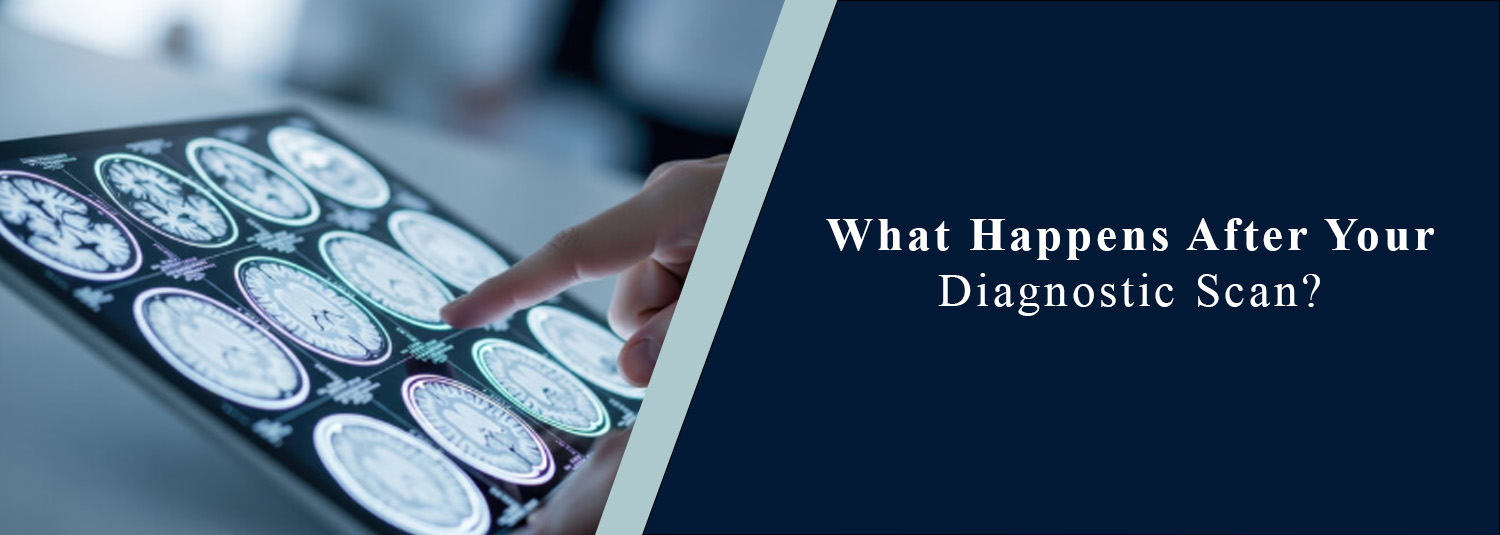
A scan is used to produce detailed images inside the body. Examination of the images is undertaken by a radiologist who is suitably qualified or a specialist where applicable, and a report is prepared outlining the findings. The scan results are thereafter factored into your evaluation, along with physical examination, your symptoms, your medical history, and other test results. At Molecular Diagnostics and Therapy, the use of modern diagnostic services aids in accurate diagnosis and offers insightful data that assists physicians in future evaluation or treatment planning.
What Happens Immediately After the Scan?
After the scan, the health care team might require you to wait briefly, depending on the type of study that is being performed. Scans can be performed, and no restrictions are placed on activity for some of them. Depending on whether contrast was used or a special medicine, you need to stay at the centre for a brief time so that the medical team can monitor you. Instructions are different for people.
How Is the Scan Reviewed?
A trained radiologist or medical professional with the radiation field undergoes a careful examination of the pictures taken from the scan. They search for evidence of:
Changes in organs or tissues
Swelling or inflammation
Injuries
Abnormal growths or masses
Changes in blood vessels
Signs of infection
Other abnormalities that may explain your symptoms
The findings are then documented in a medical report.
What Is a CT Scan Report? A report from your CT scan describes what the radiologist views on the CT images. The report refers to the condition of organs, bones, blood vessels, or soft tissues, depending on which portion of the body is being studied. Two important parts appear in the report:
Observations: This section should record the things that can be seen on the photographs.
Impression: Summary of key findings. Your doctor tell you what the results state about – in terms of your symptoms and medical history.
What Is an MRI Scan Report?
A report from an MRI scan provides information about structures visible on an MRI scan. MRI is able to give detailed images of soft tissues and is used to examine the brain, spine, joints, muscles, and organs. A report might discuss abnormal, injured, inflammatory or other changes that require treatment. When it comes to interpreting an MRI report, that needs to be done within a wider context. It is taken into account with your symptoms and physical exam.
What Is an Ultrasound Scan Report?
An ultrasound scan report provides a detailed picture using sound waves. Body parts, including the liver, gall bladder, kidneys, thyroid, and reproductive organs, can be inspected with ultrasound. It can also be performed during pregnancy and to study some soft tissues and blood flow. The report tells about the size, shape, and what the structures looked like, along with other characteristics evaluated.
What Is a PET-CT Scan Report?
The PET-CT scan report uses both the PET imaging and the CT imaging information. PET-CT provides information about raised metabolization and detailed anatomical data from CT. This helps to monitor cancers and other health issues.
PET-CT scan report identifies regions of abnormal activity and provides information about their location. The report also offers a comparison of the present scan results with past scans, depending on the purpose of the scan. If the PET-CT results suggest that your doctor needs more information to make a diagnosis, then other tests are recommended by the doctors.
Does an Abnormal Scan Always Mean Cancer?
No, but the abnormal result on the scan doesn't necessarily indicate cancer. There are often numerous mechanisms behind the changes that are observed on imaging, such as inflammation, infection, injury, benign growth, or other processes. If your doctor finds an area of the body that requires further investigation, he or she uses other types of imaging, other blood tests, follow-up imaging, or you might have a biopsy.
What Happens If the Scan Is Normal?
While a normal scan is usually most reassuring, there are still some health problems that are not excluded by a normal scan. There are different types of scans; for some conditions, they are not seen on the specific type of scan. Your doctor wants to consider your symptoms and other test results when determining if additional testing is required.
Will the Doctor Explain the Report?
Yes. Some medical terms are unfamiliar in the radiology report since it's primarily written for health care providers. Your doctor can explain:
What the findings mean
Whether anything requires attention
Whether additional tests are needed
Whether treatment is required
Whether follow-up imaging is recommended
It is better to discuss confusing terms with your doctor rather than trying to interpret the report alone.
What If the Report Recommends Further Testing? The scan report sometimes suggests repeat scans, lab tests, a specialist's advice, or further tests. This does not indicate that there is some serious problem. Sometimes more tests are done just to clarify or confirm a result. Your healthcare provider tells you why he has recommended this test.
Can Scan Reports Be Compared With Older Reports?
Yes. You have a lot of benefit from being able to see a comparison of a new scan to previous scans or imaging. For instance, if the doctor has received a previous CT scan report, MRI scan report, ultrasound scan report, or PET CT scan report, they can compare it with the current report to determine if there are any changes over time. This can aid in determining if the disease is worsening, getting better, or remaining unchanged.
How Long Does It Take to Receive a Scan Report?
This depends on the type of scan, the difficulty of the scan, and the diagnostic centre. More intricate examinations require more review time, though some reports might be obtained relatively quickly. Molecular Diagnostics and Therapy gives information about when your report is ready.
What Should You Do After Receiving Your Report?
After getting your report, discuss it with your primary care doctor who booked the scan. The report is reviewed by your doctor and considered with your symptoms, medical history, physical exam, and other test results. If the report suggests a follow-up, be sure to consult your health care provider about what that means.
Why Is Accurate Reporting Important?
Correct interpretation of diagnostic images is a crucial component of medical decision-making. Proper imaging, scanning protocol, and review by an expert can yield valuable information regarding the patient's condition. Molecular Diagnostics and Therapy provides up-to-date diagnostics, planned to facilitate an accurate health assessment and enable healthcare professionals to make informed choices.
Conclusion
Once the images have been captured, they are reviewed, and a medical report is prepared. If you received a PET-CT scan finding, CT finding, an MRI finding, or ultrasound finding, the results need to be interpreted in relation to your overall health. For any testing, treatment, or follow-up, choose Molecular Diagnostics and Therapy, which serves patients and healthcare professionals with modern diagnostic services and reliable reporting so that they can help evaluate a patient's health promptly.
Frequently Asked Questions
In News
Get Our Mobile App
for Easy Access
Book tests, view reports, and manage your health records on the go. Experience convenient healthcare with Molecular Diagnostics and Therapy.
- ✔ Book tests & home collection
- ✔ View reports instantly
- ✔ Track health history
- ✔ Get notifications & reminders
- ✔ Easy appointment management