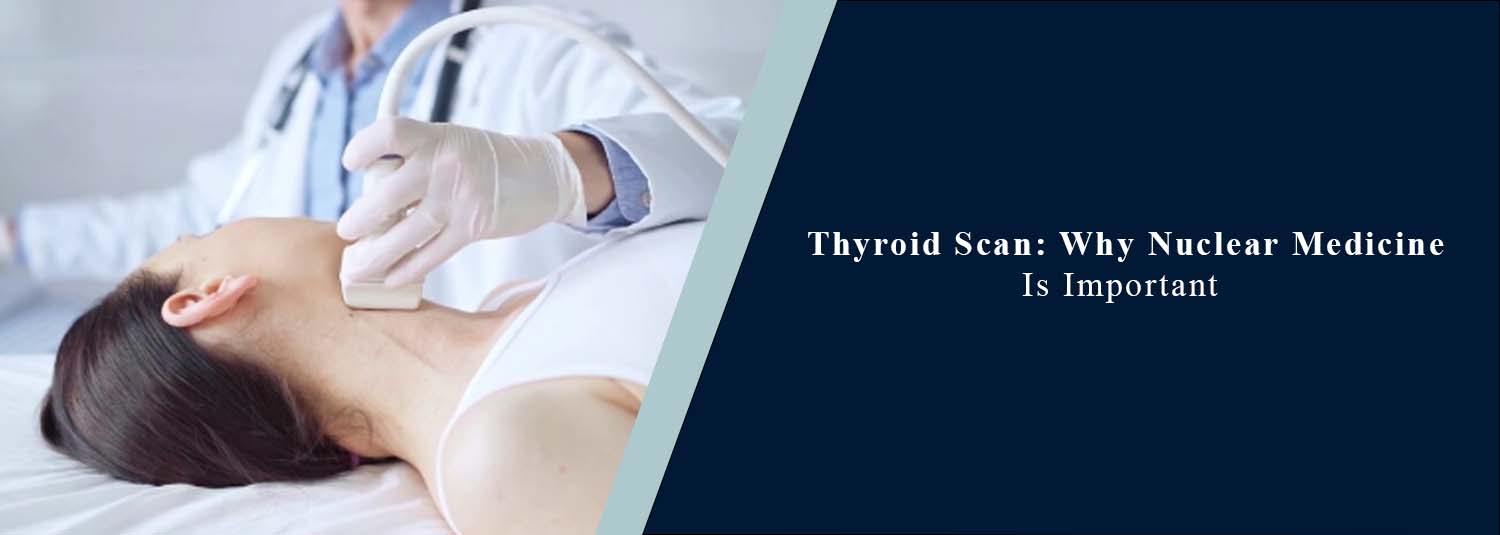
Thyroid Scan: Why Nuclear Medicine Is Important
Talk to Health Expert

Dr. Nikunj Jain
Co-Founder and HOD - Nuclear Medicine ,MBBS, DRM, DNB, FEBNM, FANMB, Dip. CBNC
As a tiny, butterfly-shaped endocrine organ at the front of the neck, the thyroid affects metabolism, body temperature, heart rate, energy levels, and hormone levels. Inadequate functioning of the thyroid can result in problems like hyperthyroidism, hypothyroidism, thyroid nodules, or thyroid cancer. Doctors may order a thyroid scan to understand how the gland works, although this is usually not part of an evaluation of thyroid disorders; blood tests and ultrasound are other tests commonly ordered.
An imaging procedure of the thyroid gland conducted using nuclear medicine is called a thyroid scan. While an ultrasound or CT scan primarily visualizes the thyroid gland's structure, the nuclear medicine thyroid scan can also offer information about how the thyroid is functioning. A thyroid uptake scan is sometimes also recommended to determine the amount of radioactive substance the thyroid takes up, which assists in the diagnosis of overactive or underactive thyroid conditions. Molecular Diagnostics and Therapy’s team employs cutting-edge nuclear medicine technology to achieve high-standard thyroid scanning services to address thyroid-related issues and help in effective treatment planning.
What Is a Thyroid Scan?
A thyroid scan is a nuclear medicine imaging procedure that measures the size, position, shape, and activity of the thyroid gland. A little radioactive substance (tracer) is taken by mouth or given into the body during the examination. The radioactivity is taken up into the thyroid, and a special type of camera records the thyroid's image. During the scan, physicians can determine if any parts of the thyroid are underactive, overactive, or normal.
What Is a Thyroid Uptake Scan?
A thyroid uptake test is a blood test that determines the amount of radioactive iodine or tracer absorbed by the thyroid in a set amount of time. It is frequently ordered in combination with the thyroid scan test since it assists in determining if the thyroid produces excessive or insufficient amounts of thyroid hormone. Retention rates are useful to diagnose hyperthyroidism and Graves' disease, toxic thyroid nodules, and some forms of thyroid inflammation.
Why Is a Nuclear Medicine Thyroid Scan Important?
Nuclear medicine thyroid imaging is unique compared to other imaging tests because it assesses thyroid function rather than the structure of the thyroid. For instance, sometimes an ultrasound will reveal thyroid nodules, but not if they are secreting too much thyroid hormone. It helps doctors tell the difference between the hotter (overactive) nodules and the colder (unlikely to cause the problem) nodules, which need additional monitoring. This is information that is necessary for correct diagnosis and treatment planning and is important for functional purposes.
When Is a Thyroid Scan Recommended?
Thyroid scans may be ordered for people with signs of hyperthyroidism, unusual enlargement of the thyroid gland (goiter), nodules in the thyroid, abnormal blood tests of the thyroid, an unusual condition where the thyroid overproduces iodine, causing granulomatous thyroiditis, or swelling of the thyroid from inflammation.
It can also be performed following cancer treatment of the thyroid to assess the function of any thyroid tissue remaining after treatment or to determine if there is any recurrence of thyroid cancer. Whether or not a patient receives a thyroid scan test will depend on their symptoms, medical history, and lab results.
Conditions Diagnosed with a Thyroid Scan
There are a number of thyroid diseases that can be diagnosed through a nuclear medicine thyroid scan. They are hyperthyroidism, Graves' disease, toxic adenoma, multinodular goiter, thyroiditis, ectopically located thyroid tissue, and thyroid cancer. The scan will also be used to help answer the question of whether the thyroid nodules are normal or are overproducing thyroid hormone.
How Is the Test Performed?
The procedure is dependent on the type of tracer being used. A small capsule containing radioactive iodine is most commonly swallowed during the procedure. Several hours later, images are acquired, and standardized uptake measurements can be taken at varying time points.
In certain of the thyroid scanning procedures, the tracer is injected into the vein, and a scan of the thyroid is then started soon after the injection. The patient is flipped onto their back, and an X-ray camera (gamma camera) takes pictures of the thyroid gland during the scan. The procedure is non-invasive, but it's short and easy.
Is the Scan Safe?
For nuclear medicine treatment of the thyroid, very little radioactive iodine is used. Patients have a relatively low chance of being exposed to this radiation, and it is safe. The radioactive tracer is then excreted from the body after some time, typically in urine. The side effects are serious, if any, and the surgery has been safely conducted for many years all over the world.
Advantages of Nuclear Medicine Thyroid Scans
Unlike traditional imaging, a thyroid scan can give data on the structure and function of the thyroid. It aids physicians in accurately detecting an overactive thyroid gland, assessing thyroid nodules, diagnosing complicated thyroid conditions, monitoring the effectiveness of treatment, and using radioactive iodine for treatment when needed. The detailed functional information can often minimise the amount of unnecessary further procedures and facilitate better treatment decisions.
Understanding Thyroid Scan Test Results
After the examination, a nuclear medicine specialist analyzes the images and uptake values. Areas that absorb more tracer than expected may indicate overactive thyroid tissue, while areas with reduced uptake may suggest underactive tissue, inflammation, or certain thyroid nodules. Doctors interpret the results together with blood tests, physical examination, ultrasound findings, and the patient's medical history.
Conclusion
One of the important nuclear medicine imaging tests that helps to assess the function and structure of the thyroid gland is a thyroid scan. A nuclear medicine thyroid scan offers important information about the way the thyroid functions, which is particularly useful for evaluating hyperthyroidism, nodules, Graves' disease, and other thyroid issues, whereas other imaging studies cannot offer as much insight into how these organs work.
A thyroid uptake scan is also used to determine the percent of radioactive iodine absorbed by the thyroid, which helps doctors find the cause of abnormal thyroid activity and to decide on treatment. With early diagnoses and an accurate evaluation, long-term thyroid health is enhanced. Molecular Diagnostics and Therapy offers reliable thyroid scan test services by utilizing advanced nuclear medicine innovations and experts, aiding in correct diagnosis and tailored patient care.
Frequently Asked Questions
In News
Get Our Mobile App
for Easy Access
Book tests, view reports, and manage your health records on the go. Experience convenient healthcare with Molecular Diagnostics and Therapy.
- ✔ Book tests & home collection
- ✔ View reports instantly
- ✔ Track health history
- ✔ Get notifications & reminders
- ✔ Easy appointment management