What Is a Bone Scan? Uses and Benefits Explained
Talk to Health Expert

Dr. Nikunj Jain
Co-Founder and HOD - Nuclear Medicine ,MBBS, DRM, DNB, FEBNM, FANMB, Dip. CBNC
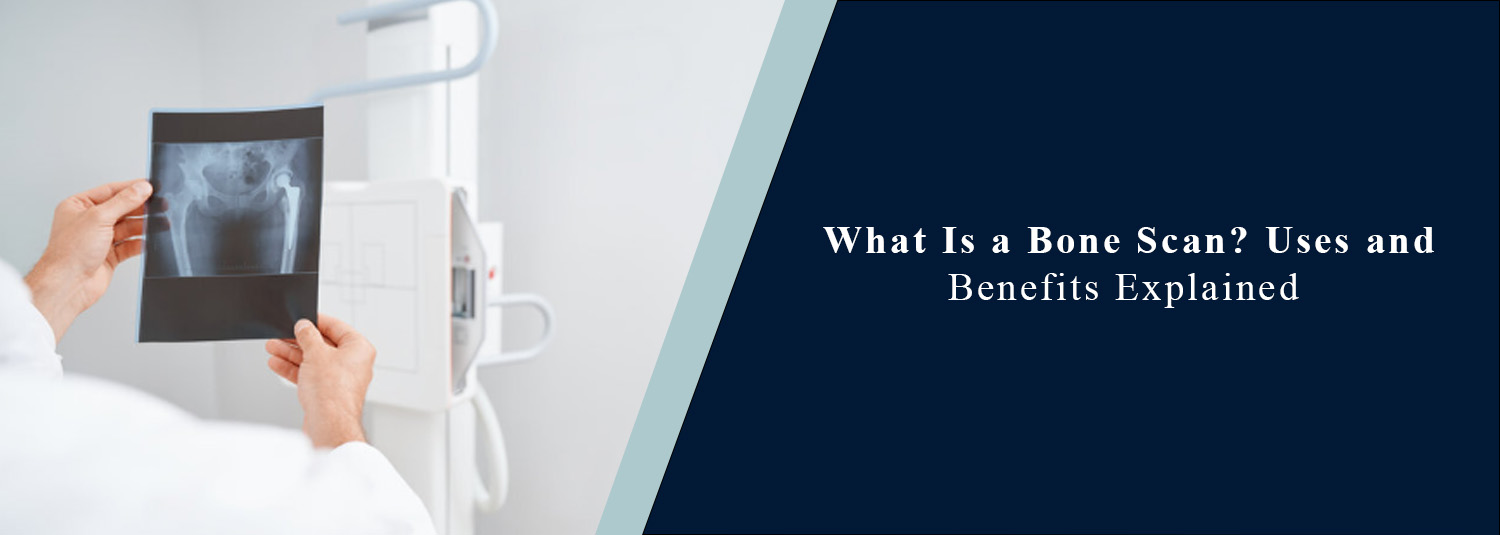
Bone health contributes to mobility, bone strength, and good health. Many problems with bones can be diagnosed with typical imaging tests, such as X-rays, but they may not detect early changes in bones. A bone scan is a special type of nuclear medicine imaging that can be used to diagnose changes in the bone before changes can be seen on standard imaging.
A bone scan is a commonly used test for diagnosing bone fractures or bone infection, arthritis, bone tumors, and the diagnosis of cancer metastasis to the bones. It offers important knowledge that aids physicians in accurate diagnoses and smart treatment plans. Molecular Diagnostics and Therapy is equipped with state-of-the-art nuclear medicine imaging, a skilled team of healthcare professionals, and reliable reporting, ensuring timely diagnosis; this is why, if you are searching for a bone scan test in Ghaziabad, you can book a bone scan test in Delhi here at our centre.
What Is a Bone Scan?
A bone scan is a diagnostic imaging technique that utilizes a small amount of radioactive tracer in order to investigate bone health. Once injected into a vein, the tracer is circulated through the bloodstream and accumulates in areas where the bone level is above normal.
A bone scan can be helpful in the diagnosis of several bone and joint diseases. It can find issues that normal X-rays can't see (stress fractures) and other conditions, including infection in the bone, arthritis, bone tumours, abnormal blood supply, or metabolic bone disease. It is also one of the best imaging tests to determine if cancer has spread to the bones from other parts of the body.
Why Do Doctors Recommend a Bone Scan?
Patients get a bone scan when other imaging tests aren't quite clear, or they are experiencing pain in bones that don't make sense. It is used for suspected stress fractures, chronic fractures, bone infections, arthritis, joint pain that has no clear cause, and bone tumors.
The test is also often done in people who have some cancers to find out if the cancer has spread to their bones. Doctors can also use a bone scan to see how treatments are working and to make sure that the bones are healing following a treatment.
How Does a Bone Scan Work?
The process starts by introducing a radioisotope into a vein. The tracer moves around the body and is slowly deposited in the bones. Usually, the patient is instructed to wait for 2 to 4 hours to make sure the tracer gets into the bone tissue. This waiting time is generally sufficient for watering, which improves image quality. After an amount of waiting period, the patient is placed in a comfortable position on the imaging table, while a special imaging camera slowly moves around, taking detailed pictures of the skeleton. The process would normally take 30 to 60 minutes and is not painful.
Is a Bone Scan Safe?
A bone scan is a diagnostic test that is relatively safe and reliable. The small amount of radioactive tracer given during the exam is excreted naturally, usually in the urine, within 1-2 days. However, for most people, there are no side effects following the procedure. But pregnant women and nursing mothers should inform their doctors before the exam, as extra measures may need to be taken.
How Should You Prepare for a Bone Scan?
Typically, bone scans do not require any specific preparation. Most physicians advise drinking a lot of water before and after the exam, in general. Patients should make sure that they take off any metal items before the scan (jewelry, watches, belts, etc.). If you are pregnant, if you are breastfeeding, or if you have had another nuclear medicine test recently, please notify your doctor.
What Happens After the Scan?
After this imaging, most patients can return to their normal daily routine on the day of the procedure. It is usually recommended that extra water be consumed for the remainder of the day to increase the elimination of the radioactive tracer from the body. The images are examined carefully by a nuclear medicine specialist, and the person reads a thorough report that is given to your referring physician for review and planning of treatment.
What Do Bone Scan Results Show?
A normal bone scan shows the radioactive tracer distributed evenly around the bones. If there is more tracer than usual in the area, more bone activity, either from fractures, infections, arthritis, tumours, or healing bone tissue, can occur. Regions that show less tracer uptake could indicate decreased blood flow or some type of bone disease. Never use the results alone; always in combination with your symptoms, medical history, lab studies, and other imaging information, in order to reach an accurate diagnosis.
Benefits of a Bone Scan
A major benefit of a bone scan is that it can detect abnormalities in the bone earlier than conventional X-rays. During the examination, the information pertains to the entire skeleton in a single step; doctors thus can be alerted to a variety of abnormalities throughout the body. The test is both an important and highly sensitive non-invasive test, relatively quick to perform, and is used for the diagnosis of a variety of bone diseases, during the monitoring of the response to treatment, and to direct future medical decisions. Enabling early diagnosis, and thus early treatment, allows for better patient outcomes.
Who May Need a Bone Scan?
Patients with chronic arthritis symptoms, cancers that might be spreading to the bones, repeated stress injuries, bone infection, or fractures that have no other explanation may find a bone scan useful to help diagnose their condition. Sometimes, a patient may also be advised by the doctor to get this examination if he or she needs to be followed up after the treatment of cancer or bone disease. The choice of bone scan depends on the patient's symptoms, medical history, and clinical findings.
Conclusion
A bone scan is a useful imaging test to aid in the early detection of bone diseases. It may be employed to diagnose bone tumors, metastasis of cancer into the bones, arthritis, infection, or fracture. If the abnormality is detected early, it could be diagnosed and treated promptly, before it appears in a standard imaging test.
Molecular Diagnostics and Therapy, with its dedicated focus on technology in diagnostics and therapy, not only offers advanced bone scan tests in Ghaziabad but also provides the convenient facility of booking a bone scan test in Delhi to ensure reliable diagnostics that lead to better bone health and outcomes of the treatment.
Frequently Asked Questions
In News
Get Our Mobile App
for Easy Access
Book tests, view reports, and manage your health records on the go. Experience convenient healthcare with Molecular Diagnostics and Therapy.
- ✔ Book tests & home collection
- ✔ View reports instantly
- ✔ Track health history
- ✔ Get notifications & reminders
- ✔ Easy appointment management