Warning Signs of Brain Stroke and Immediate Tests Required
Talk to Health Expert

Dr. Nikunj Jain
Co-Founder and HOD - Nuclear Medicine ,MBBS, DRM, DNB, FEBNM, FANMB, Dip. CBNC
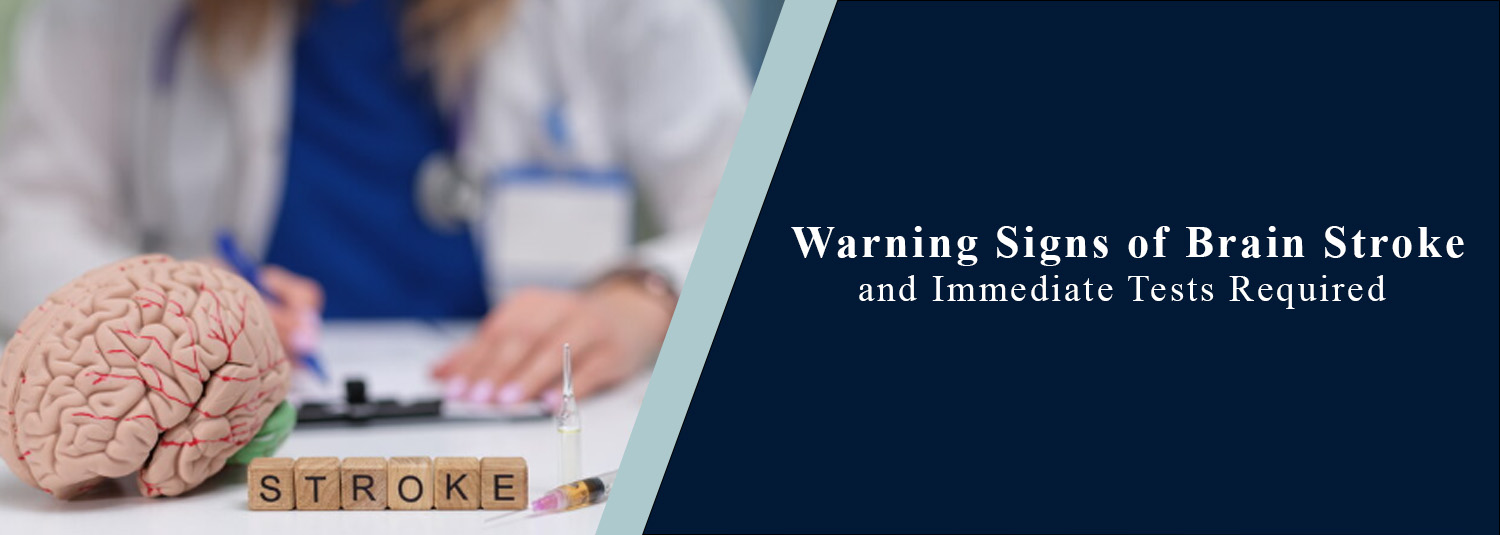
A brain stroke develops when blood flow to the brain is blocked or slowed down in part of the brain. In minutes, hours, or days, brain cells start to lack oxygen and nutrients, resulting in damage or death. Prompt treatment is crucial as early diagnosis and treatment can markedly minimise brain damage and improve recovery.
Stroke is a major killer and contributor to disability globally. It may occur in people of all ages, but age and other health conditions (including smoking, high blood pressure, diabetes, obesity, and heart disease) raise your risk for developing it.
Early detection of stroke symptoms is key. Mild symptoms are not usually recognised, can delay treatment, and potentially lead to complications. Modern imaging or diagnosis can now help doctors detect stroke and begin emergency treatment as quickly as possible. Advanced services for neurological imaging and diagnostics help to evaluate stroke quickly and accurately during emergencies at Molecular Diagnostics and Therapy.
What Is a Brain Stroke?
If blood in the brain somehow stops flowing or a blood vessel bursts, then it is called a brain stroke. There are two major types of stroke:
Ischemic Stroke
A clot stroke is the most prevalent; it is a stroke caused by a blood clot blocking blood to part of the brain.
Hemorrhagic Stroke
This is the case when a blood vessel explodes, leading to bleeding in the brain. Either of them can cause grave brain damage and should be treated immediately.
Why Early Recognition Is Important?
The brain is extremely sensitive to the lack of oxygen. If the flow of blood is not restored to the brain in time, millions of brain cells can suffer damage each minute during a stroke. Early treatment can help:
Reduce brain damage
Improve survival rates
Lower the risk of permanent disability
Improve recovery outcomes
This is why it's very crucial to be able to identify these warning signs and seek emergency medical aid at once.
Common Warning Signs of Brain Stroke
Stroke symptoms tend to come on quickly. The severity may vary depending on the area of the brain affected. Some of the most common warning signs include:
Sudden weakness on one side of the body
Numbness in the face, arm, or leg
Difficulty speaking or slurred speech
Sudden confusion
Difficulty understanding speech
Sudden loss of balance or coordination
Severe dizziness
Sudden vision problems
Severe headache without a clear reason
Some people will also have gait disturbances or even experience fainting spells. Any unusual change in neurological function should be considered an emergency.
Understanding the FAST Warning Signs
FAST is a mnemonic that doctors use to rapidly help identify stroke symptoms.
Face Drooping
This side of the face can look strange or sag when he or she attempts to smile.
Arm Weakness
A person may have anything from a limited arm lift to weakness in one arm.
Speech Difficulty
Speech may be slurred, confused, and difficult to understand.
Time to Seek Help
If you notice any of these symptoms, it's important to get immediate emergency medical attention. The use of FAST recognition can save lives because it decreases the treatment time.
Risk Factors for Stroke
There are certain health problems and lifestyle choices that risk an increase in stroke. Common risk factors include:
High blood pressure
Diabetes
High cholesterol
Smoking
Obesity
Heart disease
Lack of physical activity
Excessive alcohol consumption
Family history of stroke
Control of these risk factors is one of the most important ways to prevent strokes.
Immediate Tests Required for Stroke Diagnosis
Treatment of stroke depends on the diagnosis of its cause and type, which is crucial as it demands a prompt diagnosis. Several emergency tests may be suggested to check the brain and the blood vessels.
CT Scan of the Brain
However, in most cases of suspected stroke, a CT scan is the first imaging test that is carried out. This scan helps doctors quickly identify:
Brain bleeding
Blood clots
Swelling in the brain tissues
Other brain abnormalities
The role of the CT is extremely important because there is a difference in treatment between ischemic and hemorrhagic stroke.
MRI of the Brain
The Magnetic Resonance Imaging (MRI) technique gives a very clear picture of the brain tissues. MRI scans may help detect:
Early brain damage
Small strokes
Areas with reduced blood flow
Brain tissue injury
MRI can be valuable in assessing complicated neurological symptoms. Molecular Diagnostics and Therapy provides a precise diagnosis of stroke through the use of an advanced MRI system, which enables a detailed neurological evaluation.
CT Angiography and MR Angiography
These special imaging tests can be used to help your doctor look at blood vessels that bring blood to the brain. They can identify:
Blocked arteries
Narrowed blood vessels
Aneurysms
Reduced blood circulation
These tests are integral to treatment planning and assessment of the risk of stroke.
Blood Tests in Stroke Evaluation
Blood tests also play a key role in the evaluation during an emergency stroke.
Blood sugar levels
Cholesterol levels
Blood clotting function
Infection markers
Electrolyte balance
These tests are used to help determine the cause of stroke.
Importance of Early Treatment
Stroke treatment is highly time-sensitive. Certain treatments for ischemic stroke are most effective when given within the first few hours after symptoms begin. Delays in treatment may increase the risk of:
Permanent paralysis
Speech impairment
Memory problems
Long-term disability
Death
Rapid diagnosis and imaging, therefore, play a crucial role in emergency stroke care.
Stroke Prevention and Health Monitoring
Many strokes can be prevented in the first place by living healthily and undergoing a proper medical check-up regularly. Important preventive measures include:
Controlling blood pressure
Managing diabetes
Maintaining healthy cholesterol levels
Avoiding smoking
Exercising regularly
Eating a balanced diet
Reducing stress
Regular health checkups help identify stroke risk factors early.
Recovery After Stroke
The recovery will depend on the severity of the brain injury and the timely treatment. Some people go on to make a full recovery, and others may need rehabilitation to help with their speech, movement, or activities. It is critical to start rehabilitation at the onset of the stroke and to monitor stroke patients for an extended period of time.
Role of Advanced Diagnostics
Imaging technology has advanced substantially and improved the diagnosis and prompt care of stroke. Doctors can now quickly locate a stroke with advanced imaging techniques such as computed tomography (CT), magnetic resonance imaging (MRI), and vascular imaging to make quicker treatment decisions. At Molecular Diagnostics and Therapy, state-of-the-art neuro-imaging facilities and comprehensive diagnostic support aid in the proper assessment of strokes and prompt medical appraisal.
Conclusion
Brain stroke is a bad situation that calls for emergency measures to be taken as a matter of life and death. If someone has trouble walking, speaking, seeing, or improving their speech or vision problem, unusual weakness, dizziness, severe headache, or drooping lips, it must not be ignored.
The fast magnetic resonance imaging (MRI), computed tomography (CT) scans, and angiography, in conjunction with lab tests, rapidly make the diagnosis and help doctors start emergency treatment as quickly as possible. Prompt treatment can minimise brain injury and enhance the recovery period. Molecular Diagnostics and Therapy goes on to provide important support to the accurate neurological diagnosis and emergency evaluation of stroke through the use of advanced imaging technology and expert diagnostic support.
Frequently Asked Questions
In News
Get Our Mobile App
for Easy Access
Book tests, view reports, and manage your health records on the go. Experience convenient healthcare with Molecular Diagnostics and Therapy.
- ✔ Book tests & home collection
- ✔ View reports instantly
- ✔ Track health history
- ✔ Get notifications & reminders
- ✔ Easy appointment management