Can Ultrasound Detect Kidney Stones?
Talk to Health Expert

Dr. Nikunj Jain
Co-Founder and HOD - Nuclear Medicine ,MBBS, DRM, DNB, FEBNM, FANMB, Dip. CBNC
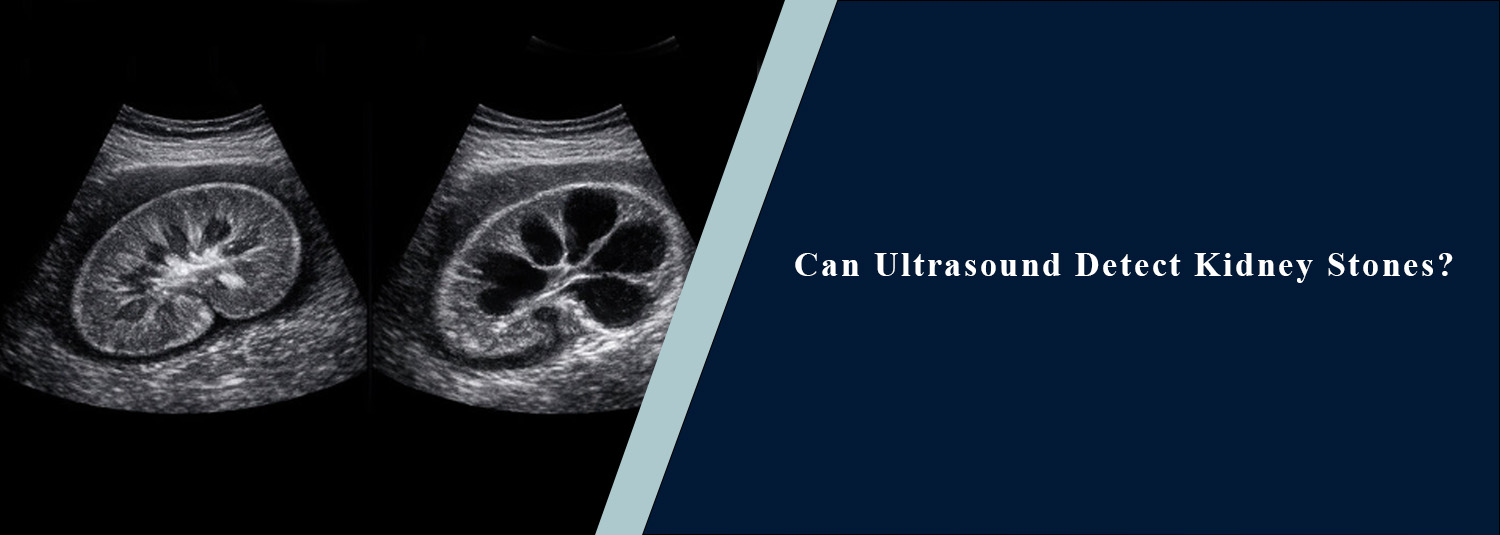
Kidney stones are an extremely common urinary tract disease in all age groups. They are hard deposits formed in the kidneys when some substance becomes concentrated and starts to crystallize in the urine. Kidney stones can vary in size from small to large. They can be very small and pass without any symptoms, or larger, and can lead to a problem of the urinary tract, namely, extreme pain.
Those who experience symptoms such as severe back pain, abdominal or urinary pain, blood in the urine, nausea, or pain on urination are advised to undergo imaging tests to determine the presence of kidney stones. Today, one of the most widely used and safe diagnostic imaging methods is ultrasound imaging.
A single kidney stone patient frequently asks about the accuracy of sonography in the identification of kidney stones and compares it with other imaging modalities. Under most circumstances, ultrasound is excellent for stone detection and for determining kidney health in the absence of radiation effects. Molecular diagnostics and therapy offer advanced ultrasound imaging technology and cutting-edge diagnostic capabilities that help ensure the correct evaluation of kidney stones and UTDs.
What Are Kidney Stones?
The most common description of kidney stones is the accumulation of solid stones of minerals and salts in the kidney that occur in the urine. May contain calcium, oxalate, uric acid, or other matter. With time, the crystals get bigger and can form stones.
Several factors can make it more likely that you'll develop a kidney stone. One of the most common things is dehydration because the lack of water intake results in more concentrated urine. Unhealthy eating and weight, too much salt, diabetes, a family history of kidney stones, metabolic problems, and some medications could also be factors in the formation of stones.
Kidney stones can remain in the kidneys or pass down the urinary tract. When the Ureters (ducts that transport urine from the kidneys to the urinary bladder) become blocked by a stone, it can be very painful and can block the kidneys.
Symptoms of Kidney Stones
The symptoms associated with kidney stones vary depending on their size and location. In some cases, passage of small stones will not result in discomfort. Larger pebbles can give severe symptoms and should be taken care of immediately.
The lower back, side, or abdomen is one of the most common symptoms. This pain can suddenly appear and could move towards the groin area as the stone descends along the urinary tract. Many of the patients say that the kidney stone pain is one of the most painful types of pain.
Additional symptoms could include painful urination or blood in the urine, nausea or vomiting, cloudy urine, frequent urination, fever or chills (if there is an infection). The symptoms may be present in other diseases of the urinary tract; therefore, it is important to perform appropriate imaging studies for proper diagnosis.
What Is Ultrasound Imaging?
Ultrasound is a form of medical imaging which is the use of high-frequency sound waves to produce an image of the internal organs and tissues. Many patients can benefit from ultrasound, since this is not radiation or computed tomography (CT) imaging.
While the procedure is being carried out, a hand-held gadget known as a transducer is used over the skin, close to the abdomen or lower back. The transducer emits sound into the body, and then it is reflected when it comes into contact with internal structures. These signals are then converted to real-time images on the monitor by means of a computer. Ultrasound is painless, non-invasive, and typically takes only a matter of minutes. It's safe and easy to use and is used to assess kidney and urinary tract disease.
Can Ultrasound Detect Kidney Stones?
Yes, ultrasound is able to identify many kidney stones, particularly larger stones, found within the kidneys or high in the urinary tract. Bright specks on ultrasound pictures indicate different kidney stones. In addition to a positive diagnosis, an ultrasound can also be useful to see signs of kidney stones indirectly. An important discovery is the swelling of the kidney due to urine blockage, known as hydronephrosis. The swelling is often a good indicator that a stone is blocking the urinary tract.
Gaining information about the stones using ultrasound technology is especially useful if they are larger stones or if kidney damage or obstruction is occurring. Many doctors will recommend it as the initial imaging test ordered when kidney stones are suspected in many patients. The accuracy may, however, be affected by a number of factors, in particular the size and location of the stone. Small stones or stones in certain areas of the ureters may sometimes not be clearly seen.
Advantages of Ultrasound for Kidney Stones
A big plus of ultrasound is that it does not expose patients to radiation. It can often be particularly necessary for pregnant women, children, and those who might need repeated imaging procedures over time. The use of ultrasound is also broadly accessible, cost-effective, and easy to do. It facilitates the doctors to understand the kidney, bladder, and adjacent urinary system in actuality.
In addition to searching for kidney stones, ultrasound can also be used to locate urinary obstructions, swollen kidneys, cysts, kidney infections, and other anomalous conditions of the kidney. Since it is non-invasive and non-hazardous, ultrasound is used as a useful way to examine the urinary tract. Molecular Diagnostics and Therapy uses cutting-edge ultrasound to effectively visualize the kidneys and provide patients with a safe diagnostic analysis of their urinary symptoms.
Conclusion
Ultrasound is a major test used for identifying kidney stones and checking the status of the urinary tract. It's a safe, painless, non-radiating imaging technique that can be used to detect stones, urinary blockage, and kidney swelling. Advanced imaging technology and expert diagnostic support continue to ensure accurate ultrasound evaluation and reliable kidney stone diagnostic service, grounding it in the advocacy of patient safety and early detection, while supporting Molecular Diagnostics and Therapy.
Frequently Asked Questions
In News
Get Our Mobile App
for Easy Access
Book tests, view reports, and manage your health records on the go. Experience convenient healthcare with Molecular Diagnostics and Therapy.
- ✔ Book tests & home collection
- ✔ View reports instantly
- ✔ Track health history
- ✔ Get notifications & reminders
- ✔ Easy appointment management