When Should You Get a PET Scan for Cancer Detection?
Talk to Health Expert

Dr. Nikunj Jain
Co-Founder and HOD - Nuclear Medicine ,MBBS, DRM, DNB, FEBNM, FANMB, Dip. CBNC
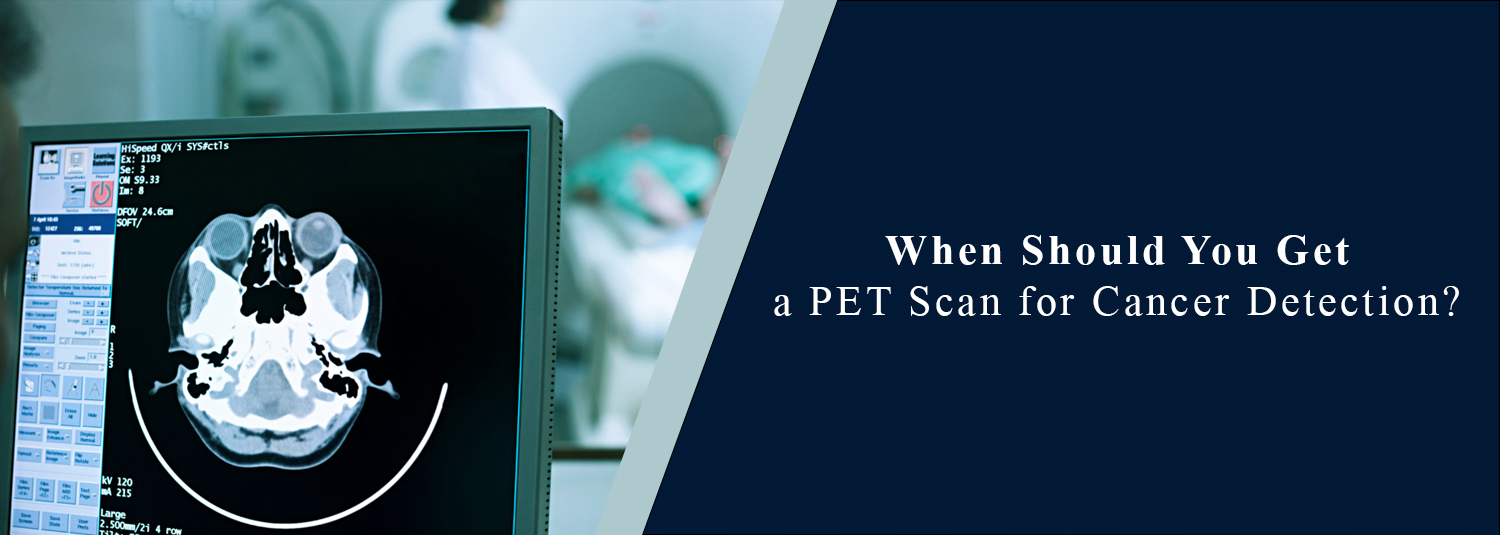
Early and accurate diagnosis of cancer is very important for improving treatment success and survival rates. One of the modern diagnostic equipment that has come up is the PET scan (Positron Emission Tomography), which is excellent in the detection of cancer at a very early stage. Nevertheless, most individuals are not always sure of when a PET scan is necessary and whether this is the appropriate procedure that should be conducted on an individual.
This is because knowing about when you need a PET scan can enable you to make certain healthcare choices as well as prevent unnecessary anxiety and delays in healthcare diagnosis.
What Is a PET Scan?
A PET scan is a form of special imaging procedure that assists physicians in monitoring the functionality of organs and tissues on a cellular scale. It consists of using a small portion of radioactive tracer, which is normally a glucose substance, and is injected into the body. Cancer cells are more metabolically active compared to normal cells and therefore take up a higher amount of this tracer, making them bright spots on the scan.
A PET scan is a scan that brings examinations of metabolic activity, as opposed to other imaging tests like CT or MRI, which focus on the organ's structure. This is very effective in cancer detection, even before the physical changes are noticed.
When Is a PET Scan Recommended?
A PET scan is not the initial type of test to identify cancer. It is typically prescribed under certain special cases where extensive knowledge is needed.
Suspected Cancer After Initial Tests
In case of initial examination, such as X-rays, ultrasounds, or CT scans, indicating that there are abnormalities, a PET scan can be recommended to outline whether or not the abnormalities are cancerous or not. It assists in passing the distinction between benign and malignant conditions with a higher degree of accuracy.
Cancer Staging
After a diagnosis of cancer, the stage of the cancer is often ascertained using a PET scan. The degree to which the cancer has spread throughout the body is called staging. Such facts will help to choose the treatment plan that will be the most appropriate, which can be surgery, chemotherapy, radiation therapy, or their combination.
Monitoring Treatment Effectiveness
A PET scan could be advised to doctors during or after a cancer treatment to provide a measure of the effectiveness of the treatment. Positive responding to the therapy is typically indicated by a reduction of metabolic activity in areas previously affected.
Detecting Recurrence
Cancer may recur even following a successful treatment. A PET scan can reveal recurrence soon before symptoms become evident, or the test can be revealed by other modes of imaging.
Unexplained Symptoms or Elevated Tumor Markers
A PET scan can be used to detect hidden cancer in a patient with persistent symptoms of unexplained weight loss, fatigue, or pain to solve the mystery of such symptoms, even when standard tests provide no information. It can also be applied in cases where blood tests indicate an increase in tumor markers without an apparent known cause.
Types of Cancers Commonly Evaluated with PET Scan
PET scans have been extensively utilized in detecting as well as monitoring numerous types of cancers. These are lung, breast, colorectal, lymphoma, and head and neck region cancers. They are specifically useful with cancers that are known to spread very fast or are metastatic.
A PET scan is particularly helpful in detecting metastasis, or the spread of the cancer in one part of the body to another, because it allows the scanning of the whole body in a single session.
Signs That May Lead to a PET Scan
It is possible that the doctors can suggest a PET scan due to some warning signs, in case of other tests being inconclusive. These symptoms do not necessarily signify cancer, but they might need additional examination.
Weight reduction that has no explanation and is sudden.
Constant feeling of tiredness or weakness.
Abnormal lumps or swelling.
Without any known cause of chronic pain.
Prolonged cough or voice changes.
Consulting a health worker about such symptoms could be advisable to ensure better outcomes by investigating them at an early age.
Benefits of PET Scan in Cancer Detection
These benefits render PET scans a great instrument in contemporary cancer treatment.
Are There Any Risks?
A PET scan is relatively safe, although it comes with some exposure to a minimal amount of radiation. The tracer, which is a radioactive one, is short-lived, and it is usually excreted within 24 hours after being placed in the body. One can expect no side effects in the majority of patients, but mild pain or discomfort at the place of injection is possible.
Nonetheless, some people must take precautions. Pregnant women, breastfeeding women, and patients already endowed with uncontrolled diabetes ought to inform their doctor before they do the test.
How to Prepare for a PET Scan?
They should be prepared in order to have precise outcomes. Patients often have to avoid eating for several hours prior to the scan because the blood sugar levels may influence the absorption of the tracer. It is advisable to wear comfortable clothes without metal objects.
Once the tracer is injected, some waiting time is provided to enable the tracer to diffuse all over the body. The actual scan is not done by itself, and usually the scan alone does not take more than 20-40 minutes.
Conclusion
A PET scan is an advanced and potent imaging method that is important in the detection, staging, and monitoring of cancer. Although not necessary during a regular screening, it is necessary in cases when specific and detailed information is necessary.
When your physician orders a PET scan, the decision is most likely to get a better understanding of your problem and tailor a successful treatment plan. Early and proper diagnosis can help a lot in salvaging a situation and recovery.
Knowing when to take a PET scan can make you proactive about your health. By being promptly diagnosed and given proper care, the life-saving factor in cancer combating can be achieved.
Frequently Asked Questions
In News
Get Our Mobile App
for Easy Access
Book tests, view reports, and manage your health records on the go. Experience convenient healthcare with Molecular Diagnostics and Therapy.
- ✔ Book tests & home collection
- ✔ View reports instantly
- ✔ Track health history
- ✔ Get notifications & reminders
- ✔ Easy appointment management