ECHO Test Advanced Cardiac Imaging for Heart Function Assessment
Talk to Health Expert

Dr. Nikunj Jain
Co-Founder and HOD - Nuclear Medicine ,MBBS, DRM, DNB, FEBNM, FANMB, Dip. CBNC
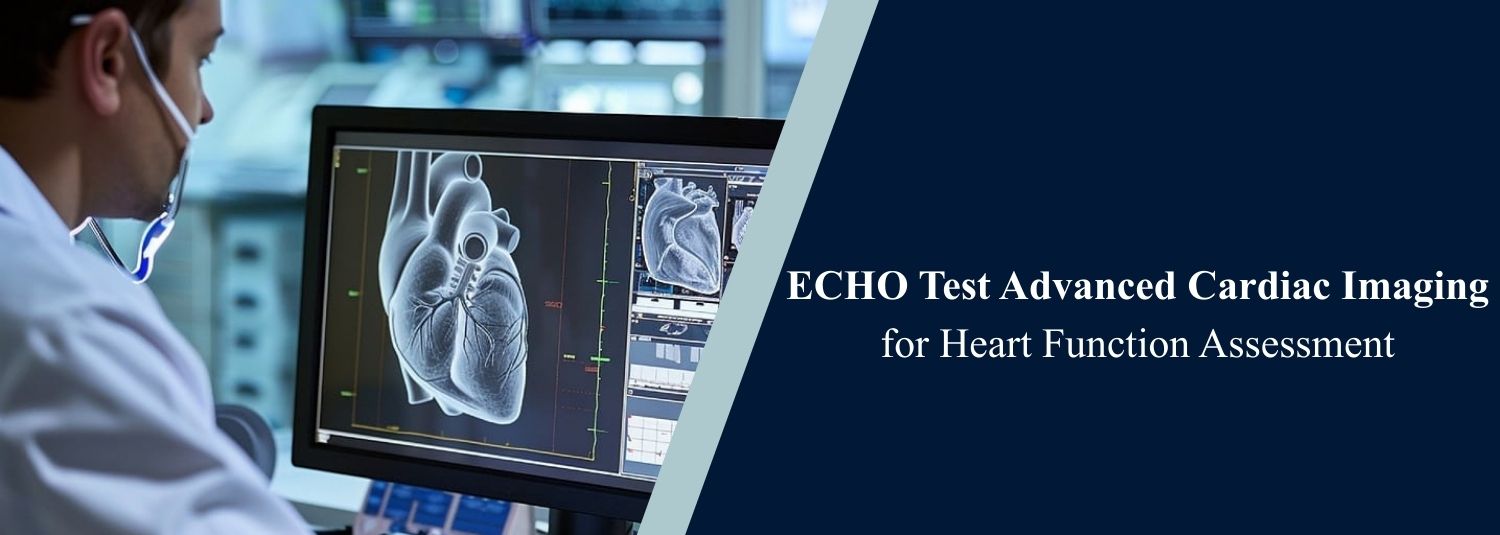
The human heart continuously pumps blood throughout the body, beating over 100,000 times a day. To understand how well the heart is functioning, doctors often recommend an accurate and painless diagnostic test known as Echocardiography (ECHO). This powerful imaging test helps evaluate heart structure and performance without any discomfort to the patient. At Molecular Diagnostics and Therapy, we provide advanced diagnostic tools that play an important role in the early detection and prevention of cardiac diseases.
What Is an ECHO Test?
An ECHO is a painless and one of the best diagnostic tests that uses high-frequency sound waves (ultrasound) to create high-quality images of the heart, which helps to evaluate the heart structures, their functions, and overall performance. Unlike X-rays and CT Scans, the ECHO test is safe for patients. An advanced ECHO Test ensures high-quality imaging that reliably diagnoses.
Why Is the ECHO Test Important?
Heart-related problems grow silently and do not show symptoms early, but only when the condition of the patient becomes severe. An ECHO test helps to identify conditions, such as when the heart becomes weak, valve disorders, and fluid accumulation around the heart. This test helps doctors to detect disease at an early stage before the condition becomes severe, and start the treatment accordingly, which may reduce the risk of heart failure and blockage of blood vessels in the brain.
Key reasons doctors recommend an ECHO test include:
Extreme chest pain or shortness of breath.
Abnormal ECG or blood pressure readings.
Suspected heart valve disease.
Monitoring known cardiac conditions.
Evaluation before or after heart surgery
The ECHO test is an important part of our comprehensive cardiac diagnostic services.
Types of ECHO Tests
Different ECHO techniques are used that depend on the patient’s condition and diagnostic needs. The table below explains the commonly used types:
The above- mentioned types of ECHO tests are conducted with accuracy, which ensures patient comfort and reliability in diagnosis.
How Does an ECHO Test Work?
During ECHO, trained technicians firstly apply gel on your chest and secondly move a small handheld device called a transducer over your chest. The transducer device sends sound waves into our heart, which bounce back and are then converted into moving images on the screen. The whole ECHO procedure usually takes 20-40 minutes, which does not require hospitalisation after the procedure. Our experienced and trained professionals and technicians ensure a smooth, stress-free environment for every patient.
What Can an ECHO Test Detect?
An ECHO test provides clear information about our heart with various aspects of heart health, which includes:-
Heart chamber size and wall thickness.
Pumping strength (Ejection Fraction).
Valve structure and function.
Blood flow patterns.
Congenital heart defects.
Fluid around the heart (pericardial effusion).
Benefits of Choosing an ECHO Test at Molecular Diagnostic and Therapy
Advanced ultrasound tool.
Experienced cardiac imaging technicians.
Accurate, timely reports.
Safe and non-invasive testing.
Integrated diagnostic and therapy approach.
Our focus is not only for diagnosis, but also to guide our patients properly in an accurate manner towards the right therapeutic pathway.
Who Should Consider an ECHO Test?
You may need an ECHO test if you:
Have a family history of heart disease
Experience fatigue, breathlessness, or swelling
Have diabetes, hypertension, or high cholesterol
Are undergoing long-term cardiac therapy
Want a preventive heart health assessment
At Molecular Diagnostic and Therapy, preventive cardiac scanning is encouraged, which supports long-term wellness.
Conclusion
An ECHO test is a painless, safe, and effective diagnostic tool that evaluates heart function and detects problems related to cardiac disease at an early stage. Its real-time imaging provides a detailed and high-quality image of our heart, which plays an important role in healthcare. At Molecular Diagnostic and Therapy, we deliver advanced cardiac imaging services that support accurate diagnosis and improve patient feedback.
If your doctor has recommended an ECHO test, you should trust the diagnostic centre that provides an advanced ECHO test and comprehensive cardiac care, as every heartbeat matters
Frequently Asked Questions
In News
Get Our Mobile App
for Easy Access
Book tests, view reports, and manage your health records on the go. Experience convenient healthcare with Molecular Diagnostics and Therapy.
- ✔ Book tests & home collection
- ✔ View reports instantly
- ✔ Track health history
- ✔ Get notifications & reminders
- ✔ Easy appointment management