Feeling Fine Isn’t Always Healthy: Hidden Diseases a Full Body Checkup Can Detect
Talk to Health Expert

Dr. Nikunj Jain
Co-Founder and HOD - Nuclear Medicine ,MBBS, DRM, DNB, FEBNM, FANMB, Dip. CBNC
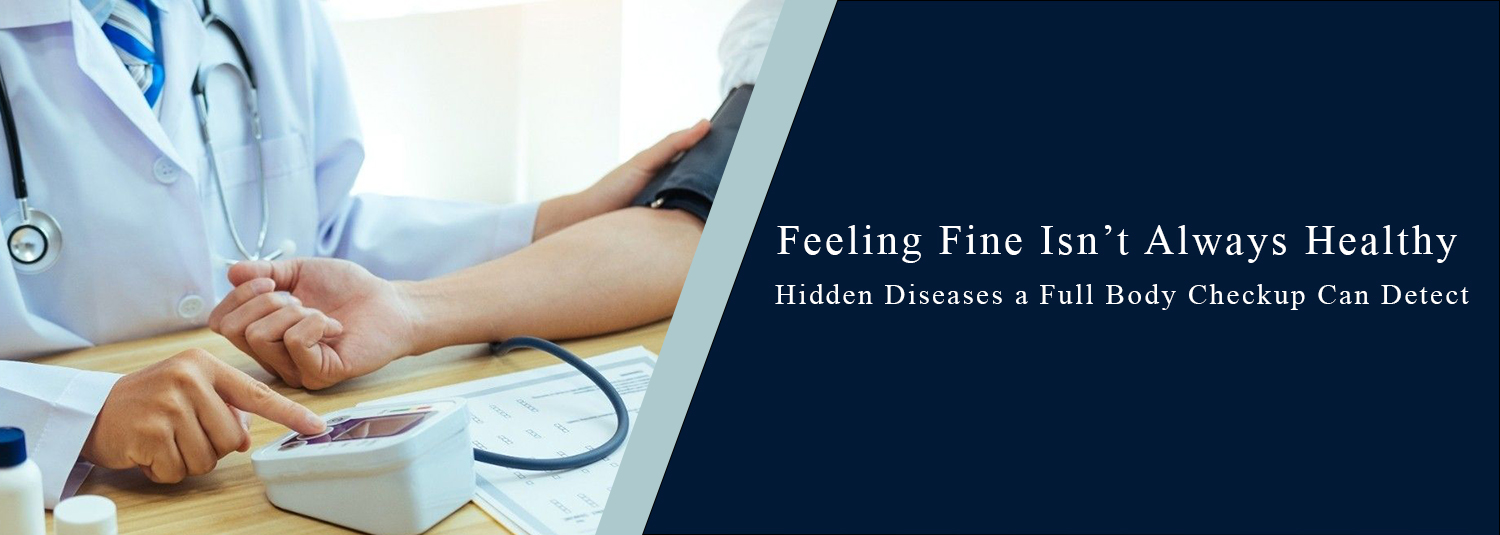
In the contemporary rushed world, a good number of individuals believe that if they feel good, then they are healthy. They cannot observe pain, fatigue, or any apparent symptoms, and everything appears to be normal. However, physicians continue discovering that dangerous health issues have the potential to increase without any indications. This is the reason why complete body examinations have become an important element in preventive services.
A full-body checkup is not only used on sick human beings but also on the healthy ones. It is able to detect unprecedented diseases earlier when they do not show, and thus, you can receive an earlier treatment, which would yield better outcomes.
Why Feeling Fine Can Be Misleading?
The body is very capable of concealing problems over a long period of time. Such illnesses as type 2 diabetes, hypertension, and certain cancers may remain unnoticed for a long time. Even before you get sick, the disease is normally at an advanced stage.
Through routine health check-ups, these silent killers can be revealed early, usually when they are least difficult to cure.
Hidden Diseases a Full Body Checkup Can Detect
1. High Blood Pressure (Hypertension)
High blood pressure has been termed a silent killer since it does not produce symptoms at an early age. Most of them get to know about it when they visit the doctor on a routine check-up. When not treated, it may lead to heart disease, stroke, or destruction of the kidneys.
2. Diabetes
Diabetes type 2 is a common lifestyle disease. High blood sugar might not present any noticeable symptoms at the initial stages, whereas it can silently damage the nerves, kidneys, and eyes. It can be detected early through a mere check-up test of the blood.
3. High Cholesterol
Increased cholesterol level is not painful, but it increases the chances of heart disease. A lipid profile test will identify an unusual state of cholesterol before causing severe issues such as heart attacks.
4. Thyroid Disorders
Diseases like hypothyroidism or hyperthyroidism are gradual. Most of the symptoms, like fatigue, weight gain or loss, or even mood changes, are frequently disregarded or are attributed to stress. These problems can be easily identified through a thyroid functional test.
5. Liver and Kidney Diseases
Liver and kidneys may be damaged without the development of symptoms. Early kidney problems or fatty liver do not exhibit any symptoms. The irregularities can be discovered in blood tests and images before they are severe.
6. Cancer
Some cancers might not exhibit symptoms at an early stage, such as breast, colon, and lung cancer. Such screening procedures as mammograms, colonoscopies, and scanning images can aid in early detection of cancer, and this significantly increases chances of survival.
7. Vitamin Deficiencies
Vitamin deficiencies, such as Vitamin D or B12, are frequently not taken into account as they are common. They can produce such mild symptoms as fatigue, loss of hair, or weakness that people ignore. These deficiencies can be detected by conducting blood tests and corrected within a short period of time.
8. Heart Disease Risk
You might not experience any problem, but could still be up to heart disease. ECG, stress tests, and cholesterol testing are tests that are able to detect signs of cardiovascular issues early enough to prevent worsening of the problem.
Benefits of Early Detection
Detecting diseases early offers several advantages:
Less stressful treatment and improved outcomes.
Lower health‑care costs
Improvement in the quality of life through the prevention of complications.
Reduced anxiety and inner tranquility.
Who Should Get a Full Body Checkup?
While everyone can benefit from regular health screenings, certain groups should prioritize them:
People over 30 years old
With a family history of chronic disease.
People who sit most of the day
All those people with unexplainable fatigue or stress.
tobacco smokers or individuals whose diets are not good.
How Often Should You Get Checked?
For most healthy individuals, a full body checkup once a year is sufficient. However, if you have existing health conditions or risk factors, your doctor may recommend more frequent screenings.
What Does a Full Body Checkup Include?
A comprehensive checkup typically includes:
Sugar, cholesterol, liver, and kidney tests of blood.
Urine analysis
Thyroid function tests
ECG or other heart screening
Imaging in case of necessity: X-ray, ultrasound, etc.
The specific tests can change depending on your age, sex, and health history.
Conclusion
Feeling healthy does not necessarily make one healthy. Numerous grave diseases multiply silently, and they cannot be detected by any apparent signs. When they are discovered, they are likely to have created serious damage.
Complete body check will be a form of a precautionary measure; in that you will be able to detect other hidden diseases at the early stages, so that you can cut the effects of those problems before they get out of control. Considering the increasingly prevalent nature of lifestyle diseases in the world, preventive care is no longer considered an option, but rather a necessity.
A complete checkup once a year, taking a few hours, can determine the difference between a longer, healthier life.
Frequently Asked Questions
In News
Get Our Mobile App
for Easy Access
Book tests, view reports, and manage your health records on the go. Experience convenient healthcare with Molecular Diagnostics and Therapy.
- ✔ Book tests & home collection
- ✔ View reports instantly
- ✔ Track health history
- ✔ Get notifications & reminders
- ✔ Easy appointment management