What Are Radionuclide Therapies and How Do They Treat Cancer?
Talk to Health Expert

Dr. Nikunj Jain
Co-Founder and HOD - Nuclear Medicine ,MBBS, DRM, DNB, FEBNM, FANMB, Dip. CBNC
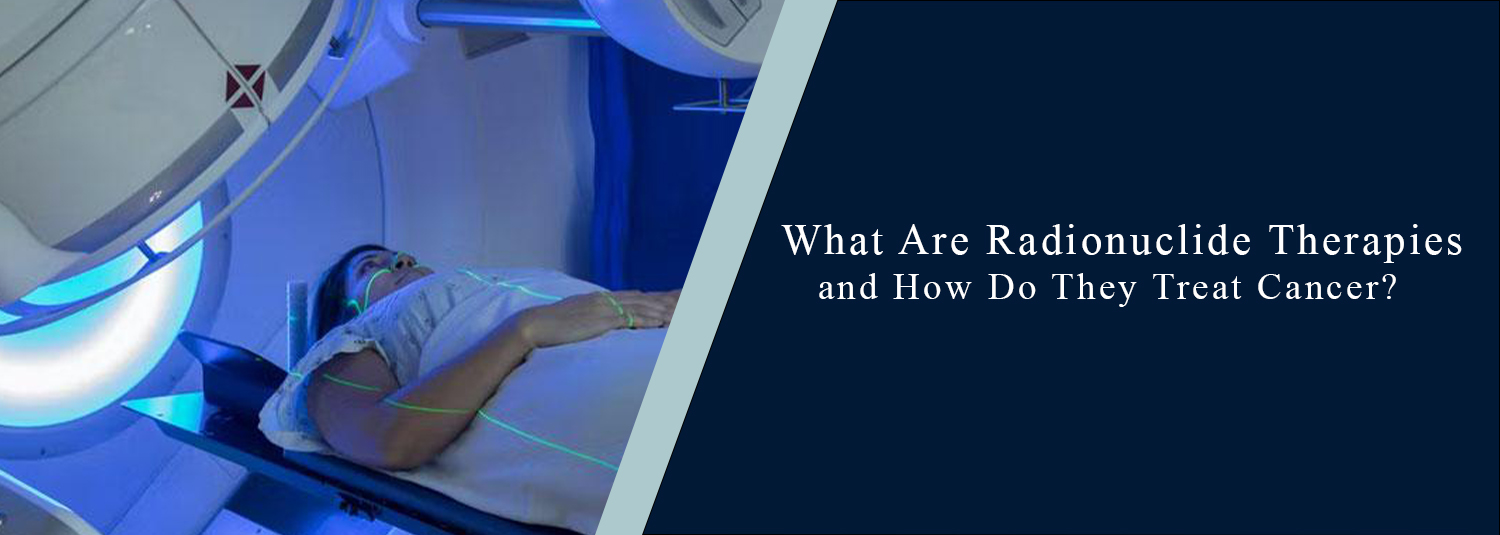
Treatment of cancers has evolved in recent decades. Surgery, chemotherapy, and radiation remain relevant, but the new treatment therapies are more precise and personalized. Radionuclide therapy is a promising new approach, as it directly targets cancer cells by using radioactive drugs whose DNA has been modified to reach them.
In nuclear medicine, imaging and treatment are used together to diagnose and treat disease at the molecular level, with the addition of radionuclide therapies. This new method enables physicians to treat cancer with great accuracy and minimal damage to normal tissue.
Understanding Radionuclide Therapy
Radionuclide therapy involves the use of radioactive substances, also termed radionuclides, in which special molecules that bind to these radioactive substances are used to locate specific cancerous cells. These radioactive molecules circulate in the blood and bind to cancer cells after a patient has been vaccinated by getting an injection or taking a pill.
The radionuclides produce a low level of radiation which destroys DNA contained in the cells when reaching the cancer. As a result of the damage to the DNA, the cells cease to grow and, in the end, die.
Radionuclide therapy becomes special since it has the ability to target cancer cells whilst sparing the majority of the healthy cells. This makes it a highly specialized therapy.
How Radionuclide Therapy Works?
The therapy is effective since the special molecules are able to identify and attach to cancer cells. They behave like transporting trucks that transport radioactive pieces directly to the tumor.
It is normally carried out in the following steps:
Target Identification
The physicians target certain markers or receptors that are present on the cancerous cells.Radiopharmaceutical Administration
The drug given to the patient is a targeting molecule with a radioactive isotope.Selective Binding
The targeting molecule is linked to cancer cells with the particular receptors.Radiation Delivery
The radioactive component emits radiation that destroys the cancer cells internally.
Since the radiation has a very short wavelength, it has a high probability of acting on the tumor and spares other healthy cells.
Types of Radionuclide Therapies Used in Cancer Treatment
There are several radionuclide therapies that are applied in treating various cancers. Some common ones are:
Radioiodine Therapy
Early and very successful therapy for thyroid cancer is radioiodine. Glucomineralocortin iodine is internalized to thyroid cells, and the radiation kills the malignant tissue.
Peptide Receptor Radionuclide Therapy (PRRT)
PRRT is applied in neuroendocrine tumors. It functions as a way of attacking cell-certain peptide-receptors. The radioactive medication attaches itself to said receptors and radiates directly into the tumor.
Targeted Radionuclide Therapy for Prostate Cancer
The radionuclide therapy is also employed in treating advanced prostate cancer, particularly where the cancer has metastasized. Such treatments target the prostate cancer cells having special proteins.
Bone-Seeking Radionuclide Therapy
A few radionuclides accumulate in the bone in case of cancer spread. These are used to alleviate bone pain and to prevent the enlargement of tumors in patients with metastatic cancers.
Benefits of Radionuclide Therapy
Radionuclide therapy has a number of advantages over conventional cancer treatment measures.
Highly Targeted Treatment
Since the radioactive drug reaches cancer cells directly, it treats cancer more precisely than most other treatments.
Minimal Damage to Healthy Tissue
The radiation of the treatment of a tumor spares normal cells surrounding the tumor.
Effective for Advanced Cancers
Even at the time when the cancer has dispersed throughout the body, radionuclide therapy can be effective.
Combination with Other Treatments
It may be combined with chemotherapy, surgery, or external radiation to achieve better outcomes.
Safety and Side Effects
In spite of the fact that radionuclide therapy involves the use of radioactive elements, it is strictly regulated and administered by qualified nuclear medicine physicians. The treatment is normally administered to patients in special clinics that are capable of managing radioactivity.
The side effects are normally mild, and they depend on the type of treatment. Patients may experience fatigue, nausea, and short-term alterations in blood counts or experience slight discomfort. Physicians constantly monitor patients both prior to and after the treatment to ensure their safety.
The Future of Radionuclide Therapy
Nuclear medicine studies are advancing rapidly. New radioactive drugs are being developed by scientists and can target more types of cancer. Radionuclide therapy will be increasingly significant to cancer care with an improved imaging system and precision medicine.
These therapies will go a long way into the future of personalized cancer care, with every treatment being selected according to the specifics of the biology of a patient's tumor.
Conclusion
Radionuclide therapy alters the existing treatment of cancer by providing a highly localized, effective, and minimally invasive modality of destroying cancer cells. Placing radiation directly inside the tumor, it gives new hope to patients with cancers that are difficult to cure.
The patients can avail themselves of the latest nuclear medicine procedures at the Molecular Diagnostics and Therapy, including the contemporary imaging and radionuclide treatments. We dedicate ourselves to proper diagnoses and personalized courses to achieve the optimal results with experienced doctors and modern equipment.
With continuous upgrading of cancer treatment methods, other modalities such as radionuclide therapy have been important in increasing the survival rate and life quality of cancer patients worldwide.
Frequently Asked Questions
In News
Get Our Mobile App
for Easy Access
Book tests, view reports, and manage your health records on the go. Experience convenient healthcare with Molecular Diagnostics and Therapy.
- ✔ Book tests & home collection
- ✔ View reports instantly
- ✔ Track health history
- ✔ Get notifications & reminders
- ✔ Easy appointment management