Ultrasound Doppler Test: Detecting Blood Flow Disorders
Talk to Health Expert

Dr. Nikunj Jain
Co-Founder and HOD - Nuclear Medicine ,MBBS, DRM, DNB, FEBNM, FANMB, Dip. CBNC
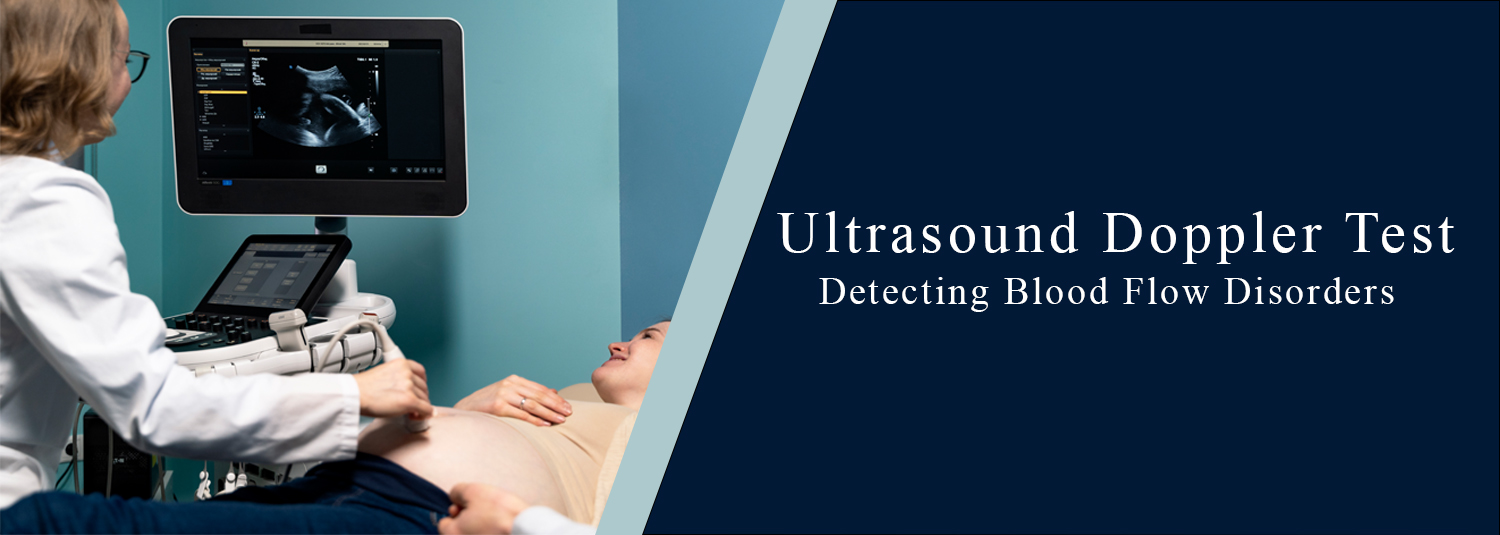
An Ultrasound Doppler test is an ultrasound imaging test that examines the way blood flows in arteries and veins in the body of the individual. It involves high-frequency sound waves to visualise the blood flow, thereby allowing doctors to discover anomalies with the blood flow, obstructions, or other related circulation issues.
This test is employed by doctors to examine vascular diseases, blood clots, constricted arteries, and other circulation issues. It is painless, safe, and non-radiative and is used to check the blood flow in the legs, neck, abdomen, and heart.
A Doppler test provides valuable information that assists doctors in selecting the most effective treatment in case a patient experiences leg pain, swelling, numbness, or any other indication of issues with blood flow.
What Is an Ultrasound Doppler Test?
An Ultrasound Doppler test is a special form of an Ultrasound that represents the blood circulation in vessels. Normal ultrasound images show the organs and tissues, whereas Doppler demonstrates the frequency of blood movement and the direction of speed.
The Doppler effect is employed in the test. When reflected on moving blood, sound waves vary, by which we can know about the movement of the blood.
The machine examines the altered sound waves and displays blood flow on a screen, allowing physicians to identify issues.
How the Doppler Ultrasound Works?
Gel is placed on the skin by a trained technician, and a small handheld probe is moved over the skin, which is called a transducer.
The probe initiates sound waves to the body, and they are reflected by moving blood cells. That machine captures the reported diseases back and then converts them into images and charts, revealing the movement of blood. Depending on the body part under examination, the test lasts between 20 and 40 minutes.
Types of Doppler Ultrasound Tests
Different types of Doppler ultrasound techniques are used depending on the medical condition being evaluated.
Colour Doppler Ultrasound
Colour Doppler exhibits blood flow in colours on the screen, hence doctors are able to view the direction of the flow and velocity.
Spectral Doppler
Spectral Doppler is used to determine the velocity of the blood, which provides doctors with more precise data.
Power Doppler
The Power Doppler is quite sensitive and is able to detect slow blood flow in small vessels.
Duplex Ultrasound
Duplex ultrasound combines normal imaging with Doppler, and, therefore, physicians can observe the blood vessel walls and blood flow within them.
Conditions Diagnosed with Doppler Ultrasound
Doppler ultrasound plays a crucial role in the identification of most blood-flow issues. Several common conditions are assessed with this test, namely:
Deep Vein Thrombosis (DVT) - deep vein clotting, typically in the legs.
Peripheral Artery Disease (PAD)- small arteries that reduce blood flow.
Venous insufficiency and varicose veins.
Carotid artery disease, which may increase stroke risk
Trouble with the blood flow in organs such as the liver or the kidneys.
The blood monitoring during pregnancy.
When these are identified early, then strokes, heart attacks, and other severe circulation complications can be prevented.
Doppler Ultrasound During Pregnancy
Doppler is especially utilised to monitor blood flow in the mother, placenta, and child during pregnancy. The doctors may advise Doppler studies in the course of pregnancy to:
Measure the flow in the umbilical cord blood.
Watch placental blood flow.
Development and well-being of the Check baby.
Issues of spot problems, such as the limited growth of babies.
It is non-radiative and therefore safe to mom and baby as it is sound-induced.
Preparation for a Doppler Ultrasound
Before taking a Doppler test, you should do preparation depending on the body part to be tested.
Most Doppler tests do not require any special preparation. However, you could be advised not to smoke or have a coffee or snack a few hours before, since it alters the blood circulation.
In case the scan happens in the abdomen, you might have to fast for some hours. You should wear loose and comfortable clothes so that the exam becomes less difficult.
Advantages of Doppler Ultrasound
Doppler ultrasound has numerous advantages in checking blood flow issues. The biggest benefit lies in the fact that it is painless and requires neither injections nor cuts nor radiation.
Other advantages include:
Doctors are able to observe blood flow in real time.
It discovers problems with bloodways.
It is safe in long-term monitoring and can be administered a number of times.
It’s fast and inexpensive.
It operates on both emergency and routine check-ups.
Due to all these advantages, nowadays Doppler is one of the most important tools in blood-flow medicine.
Limitations of Doppler Ultrasound
Although Doppler is highly helpful, it has its limits. The accuracy can be determined by the competence of the technician and the doctor. Deep vessels and very heavy people are more difficult to scan. In the event of the difficulty of the case, doctors can recommend additional examinations such as an MRI or a CT.
Conclusion
An Ultrasound Doppler test is a painless test that is safe and reliable in the determination of the blood flow in arteries and veins. The test enables the medical practitioners to locate vascular disorders, clots and flow anomalies at an early stage by measuring the speed and direction of blood flow. Early detection of issues with blood-flow allows physicians to take them into account in a short time and prevents severe complications such as stroke or significant damage.
Advanced diagnostic centres like Molecular Diagnostics and Therapy provide high-quality Doppler ultrasound services using modern imaging technology and experienced radiology specialists. Accurate Doppler studies play an important role in ensuring proper diagnosis, treatment planning, and improved patient outcomes.
Frequently Asked Questions
In News
Get Our Mobile App
for Easy Access
Book tests, view reports, and manage your health records on the go. Experience convenient healthcare with Molecular Diagnostics and Therapy.
- ✔ Book tests & home collection
- ✔ View reports instantly
- ✔ Track health history
- ✔ Get notifications & reminders
- ✔ Easy appointment management