HIDA Scan The Gold Standard for Gallbladder Function
Talk to Health Expert

Dr. Nikunj Jain
Co-Founder and HOD - Nuclear Medicine ,MBBS, DRM, DNB, FEBNM, FANMB, Dip. CBNC
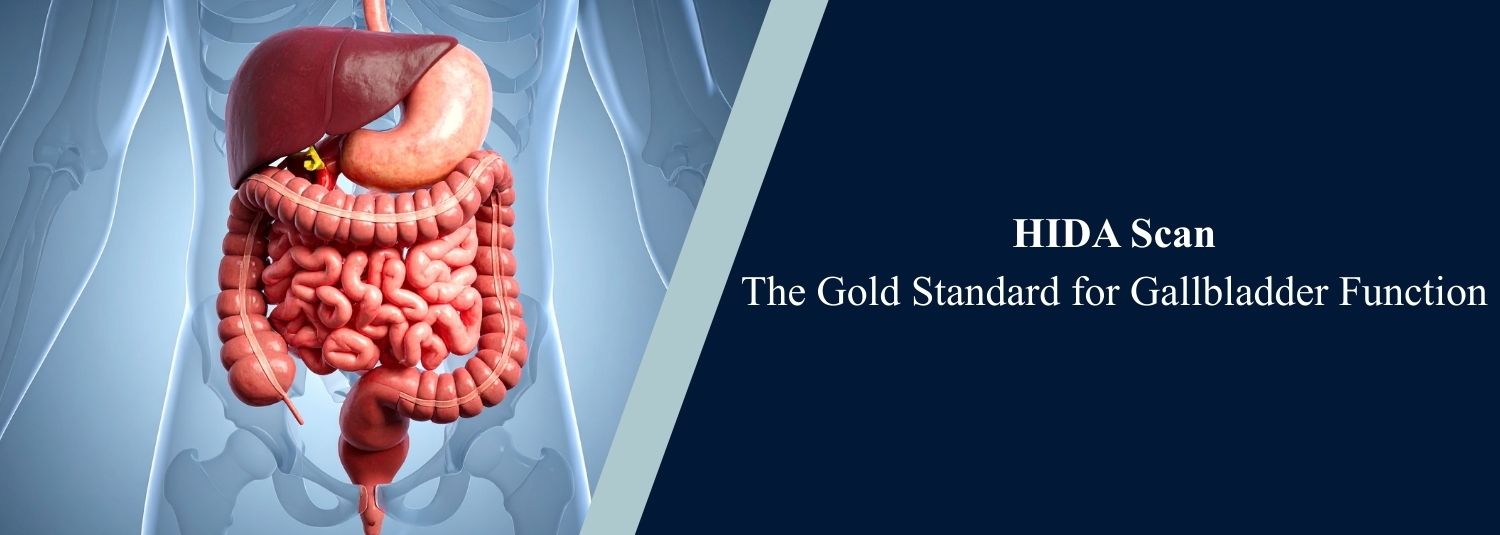
In the world of diagnosis, a HIDA scan is one of the most accurate diagnostic tests. It is used to check if the gallbladder and bile ducts are functioning well. It is different from the imaging test done routinely because they only show the structure but a HIDA scan shows how well the gallbladder is and how it's working. This makes the HIDA scan a reliable and best standard test to assess the gallbladder.
At Molecular Diagnostics and Therapy, we do HIDA scans using very modern and advanced technology of nuclear imaging. This makes sure that the results are accurate and the diagnosis is reliable for digestive and biliary symptoms in all patients. In this article, we will explain what a HIDA scan is, how it works, and what conditions it can help doctors diagnose, and why it is such an important tool in the world of modern medical imaging.
What is a HIDA Scan?
A HIDA scan refers to a Hepatobiliary Iminodiacetic Acid scan. It is a type of imaging test in nuclear medicine that is used by doctors to examine a patient’s liver, gallbladder, bile ducts, and small intestines. In this test, a doctor or a nurse will inject the patient with a small amount of radioactive tracer into their vein. This tracer will then travel through the bloodstream and then to the liver, and follow through into the bile ducts in the patient’s body.
The movement of this tracer is tracked by a special gamma camera, which creates images to show the doctors how the bile is flowing through the organs in the body. It is different from an ultrasound or a CT scan because they only show the anatomy. On the other hand, a HIDA scan gives doctors very useful information, and this makes it very valuable for diagnosing disorders related to the gallbladder.
HIDA Scan Test Details
Here are the basic technical details of a HIDA scan:
|
Parameter |
Details |
|
Test Type |
Nuclear medicine imaging |
|
Duration |
1–2 hours |
|
Radiation |
Very low dose |
|
Pain Level |
Minimal (injection only) |
|
Fasting |
Required (4–6 hours) |
|
Contrast Dye |
Radioactive tracer |
|
Reports |
Same day or within 24 hours |
At Molecular Diagnostics and Therapy, we give patients clear pre-test instructions and professional supervision throughout their entire procedure.
Why is the HIDA Scan Called the Gold Standard?
A HIDA scan is called the gold standard for gallbladder function because it tells and shows the doctor how well the gallbladder is working, such as filling, storing, and releasing bile. It provides information that other imaging tests cannot, such as:
- Whether the gallbladder is functioning properly
- How fast bile moves through the system
- Whether bile ducts are blocked
- How effectively the gallbladder contracts
This makes the HIDA scan very useful, especially if all the ultrasound results are coming out normal, but symptoms are persisting.
Conditions Diagnosed Using HIDA Scan
A HIDA scan is commonly used to diagnose the following conditions:
1. Gallbladder Dysfunction (Biliary Dyskinesia)
This scan helps to measure the ejection fraction, which helps the doctor to see how well the gallbladder is contracting and releasing bile.
2. Acute Cholecystitis
It helps in detecting any inflammation of the gallbladder, even if gallstones are not visible.
3. Chronic Cholecystitis
It helps to doctors to identify any long-term gallbladder inflammation and if the bile flow is poor.
4. Bile Duct Obstruction
It helps to detect the blockages that are caused by stones, tumors, or structures.
5. Bile Leakage
It is very useful to check if there are any bile leaks after a patient has undergone a surgery on the gallbladder.
6. Liver Function Disorders
It helps to assess the bile production and transport of the liver to the bile.
7. Sphincter of Oddi Dysfunction
It helps in evaluating any abnormal flow of bile, which is caused by the malfunctioning of the sphincter.
HIDA Scan Procedure: What to Expect
The HIDA scan is a safe and well-tolerated test for most patients.
|
Step |
Description |
|
Registration |
Patient details recorded |
|
Preparation |
Fasting for 4–6 hours |
|
Injection |
Radioactive tracer injected |
|
Imaging |
A gamma camera tracks bile flow. |
|
Optional Drug |
CCK may be given |
|
Completion |
Patient resumes routine |
In some cases, a hormone called CCK, which is Cholecystokinin. It is given to the patient to stimulate their gallbladder contraction. This helps to calculate the fraction of gallbladder ejection. At Molecular Diagnostics and Therapy, we have trained professionals in nuclear medicine to make sure the patient is comfortable and give them accurate imaging throughout the scan.
When is a HIDA Scan Recommended?
Doctors usually recommend a HIDA scan if a patient is experiencing:
- Right upper abdominal pain
- Nausea and vomiting
- Fatty food intolerance
- Unexplained digestive issues
- Suspected gallbladder disease
- Normal ultrasound but persistent symptoms
It is very helpful, especially when other imaging tests are failing to explain the symptoms of the patient.
Advantages of HIDA Scan
Here are some main benefits of getting a HIDA scan as follows:
- Evaluates organ function, not just structure
- Highly accurate for gallbladder disorders
- Detects problems at an early stage
- Safe with minimal radiation
- Useful when ultrasound is inconclusive
The HIDA scan is one of the tools that is trusted and reliable in hepatobiliary diagnostics because of all these advantages.
Is HIDA Scan Safe?
A HIDA scan is a very safe type of test. The radioactive tracer, which is inserted during the test in the patient’s body, leaves naturally in 24 hours in urine and stool. But if the patient is a pregnant or breastfeeding woman, they should inform their doctor beforehand. At Molecular Diagnostics and Therapy, we follow strict safety protocols to make sure minimum exposure to radiation and the well-being of the patient.
Final Thoughts
The HIDA scan is called the gold standard for evaluating the gallbladder function in a patient’s body. It gives very unique and functional insights that can not be obtained by imaging methods, which are done regularly. This makes it a very valuable test to diagnose any complex biliary disorders.
To get accurate results and advanced imaging technology with expert diagnostic care, Molecular Diagnostics and Therapy gives you high-quality HIDA scan services with professional supervision and reports that are reliable. If you are experiencing any type of constant pain in your abdominal area or any other digestive symptoms that cannot be explained, a HIDA scan could be very helpful to identify any underlying issue and to guide treatment that is effective.
In News
Get Our Mobile App
for Easy Access
Book tests, view reports, and manage your health records on the go. Experience convenient healthcare with Molecular Diagnostics and Therapy.
- ✔ Book tests & home collection
- ✔ View reports instantly
- ✔ Track health history
- ✔ Get notifications & reminders
- ✔ Easy appointment management