HSG Test in Infertility Workup Latest Guidelines Doctors Follow
Talk to Health Expert

Dr. Nikunj Jain
Co-Founder and HOD - Nuclear Medicine ,MBBS, DRM, DNB, FEBNM, FANMB, Dip. CBNC
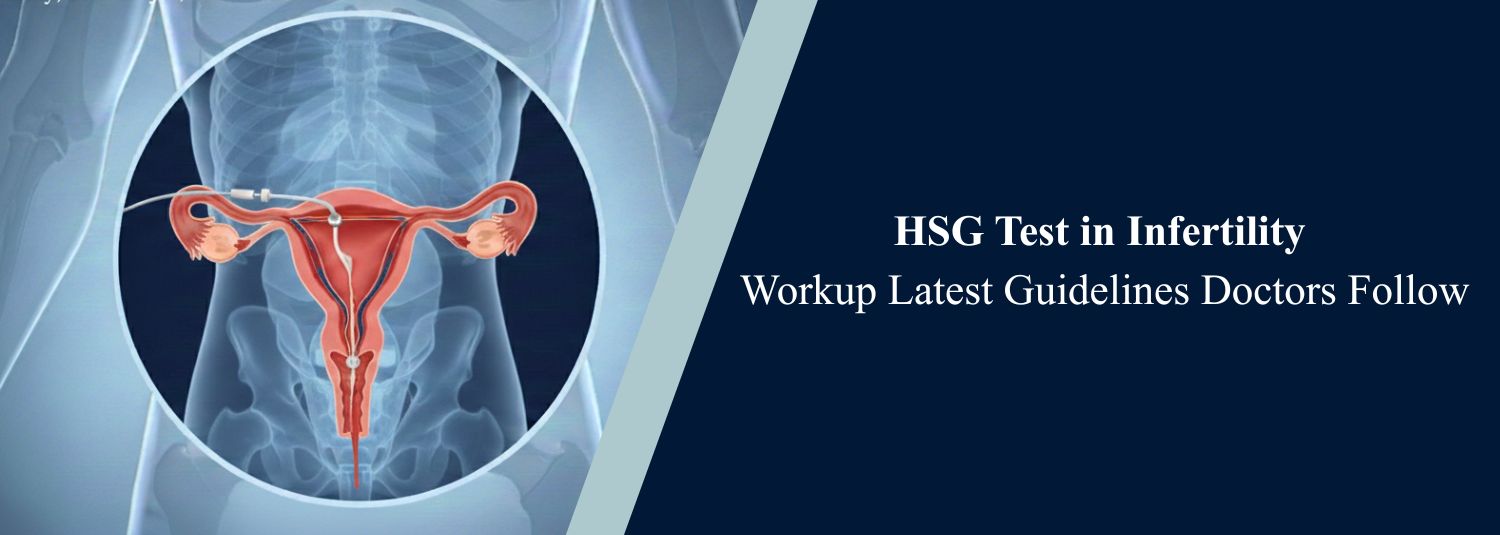
The problem of infertility is common in most couples across the globe. The right way to provide the proper treatment is to make the proper diagnosis. One of the tests that women usually go through is the HSG, commonly referred to as hysterosalpingography. It examines the fallopian tubes and uterus with the help of imaging.
At Molecular Diagnostics and Therapy, we have the latest imaging machines and radiologist skills. This ensures that there is precision in the outcomes and patients are safely maintained. This paper describes the HSG test, its application in the diagnosis of infertility, and the latest guidelines applied by doctors.
What is an HSG Test?
HSG test is an X-ray test of the image known as hysterosalpingography. A dye is placed in the uterus, and X-rays are used to determine the movement of the dye. It helps doctors to determine things such as:
Whether the fallopian tubes are open or blocked.
The shape and structure of the uterus.
Presence of uterine abnormalities.
The HSG test is usually done on the uterus when the female is in the early stage of the menstrual cycle, after menstruation, and before the ovulation period.
HSG Test Details
At Molecular Diagnostics and Therapy, our experts are well-trained and experienced. This assists in making sure that the patients are not put through much discomfort and that they are well communicated with during the test.
Why is HSG Important in Infertility Diagnosis?
The initial test that doctors order is the HSG. It examines two important factors: the uterine health and the presence of open tubes. Infertility is frequently caused by blocked fallopian tubes. Other problems that are detected by the HSG include:
Uterine fibroids
Polyps
Congenital uterine anomalies
Intrauterine adhesions
The HSG test may even clear little blockages and increase the pregnancy possibility in a few of the cases.
Latest Guidelines Doctors Follow for HSG Test
According to the existing medical norms, the doctors recommend that the patient take the following measures:
1. Timing of the Test
You should get the test done on the 7th and 10 th day of the menstrual cycle to prevent pregnancy and obtain the best images.
2. Infection Screening
Patients are screened for any pelvic infections before the test to avoid any complications.
3. Pain Management
Medical professionals may advise patients to take mild pain relievers before the test.
4. Antibiotic Prophylaxis
Antibiotics are prescribed to high-risk patients to avoid infections.
5. Use of Low-Dose Radiation
Modern technology uses low doses of radiation while still providing quality images.
6. Alternative Imaging if Needed
If the results from the HSG procedure are inconclusive, medical professionals may advise patients to undergo other procedures such as sonohysterography or laparoscopy.
HSG Procedure: Step-by-Step
The entire checkup occupies less than half an hour.
HSG with Anesthesia: A Comfortable Option
It is painful or causes anxiety to some patients when conducting a regular HSG. The test can be made more comfortable and stress-free with the help of anesthesia.
How It Works:
The physician inserts a small tube into the cervix and injects the contrast dye into the tube just as in a normal HSG.
X-rays are performed to check whether something is blocking or if there are any abnormal structures.
Anesthesia makes sure that the patient does not feel much or any pain and remains calm.
Before HSG with Anesthesia (Patient Instructions)
Do not eat or drink for 6–8 hours if sedation/general anesthesia is planned.
Inform the doctor about allergies, medical conditions, or medicines.
The test is usually done between Days 7–10 of the menstrual cycle.
Bring an attendant, as you may feel drowsy after the test.
Avoid vaginal products (tampons, creams) 24 hours before.
Follow any medicines prescribed by your doctor.
Benefits:
Pleasant and painless experience.
Decreased anxiety among sensitive patients.
Enables the doctors to have a smooth and accurate test.
Considerations:
Side effects are mild (i.e., drowsiness or nausea).
Rapid recovery with either local anesthesia or sedation; prolonged with general anesthesia.
Your doctor will select the anesthesia type that will work well according to your health and comfort.
Conditions Diagnosed Using the HSG Test
An HSG can find:
Blocked fallopian tubes
Hydrosalpinx
Uterine fibroids
Endometrial polyps
Uterine septum or anomalies
Adhesions (Asherman’s syndrome)
These findings help doctors decide the next steps in fertility treatment.
Risks and Safety of HSG Test
The HSG is generally safe. Some patients may have:
Mild cramping
Spotting
Temporary discomfort
Rare infection
In case the test is performed in experienced centers such as our Molecular Diagnostics and Therapy, serious complications are rare.
Benefits of HSG Test
Some major benefits include:
Accurate assessment of tubal patency
Quick and outpatient procedure
Guides fertility treatment planning
Identifies hidden uterine problems
Cost-effective diagnostic tool
Conclusion
The HSG test is considered to be one of the most fundamental instruments for diagnosing female infertility. It shows the state of the uterus and tubes, helping the doctors to identify the problems at the earliest and decide in favor of the most appropriate treatment.
In order to achieve the best results, it is crucial to follow the most up-to-date medical guidelines, which will help you pass the test safely and with minimal discomfort. In case of quality imaging, professional care, and proper fertility diagnosis, Molecular Diagnostics and Therapy will be the best place to have an HSG test done.
Frequently Asked Questions
In News
Get Our Mobile App
for Easy Access
Book tests, view reports, and manage your health records on the go. Experience convenient healthcare with Molecular Diagnostics and Therapy.
- ✔ Book tests & home collection
- ✔ View reports instantly
- ✔ Track health history
- ✔ Get notifications & reminders
- ✔ Easy appointment management