
Ultrasound: Types and Cost in Ghaziabad
Talk to Health Expert

Dr. Nikunj Jain
Co-Founder and HOD - Nuclear Medicine ,MBBS, DRM, DNB, FEBNM, FANMB, Dip. CBNC
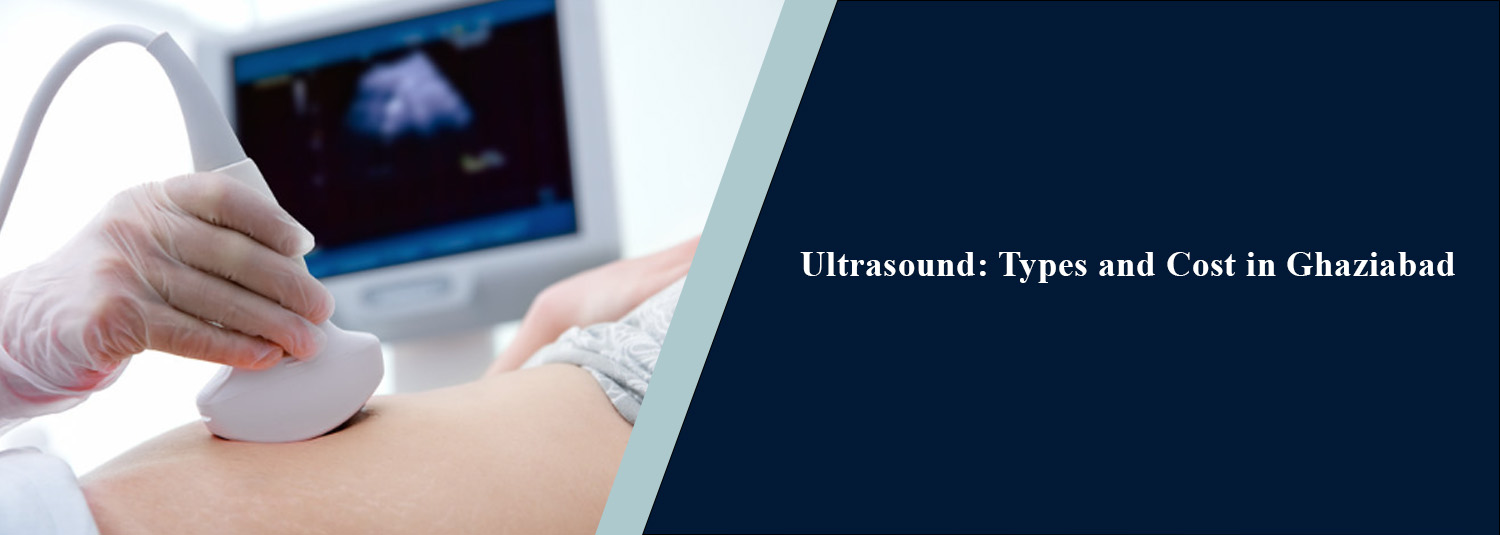
Ultrasounds are commonly recommended as
a diagnostic imaging option. They let doctors examine a range of body areas and
offer a non-radiation diagnostic method. Molecular Diagnostics and Therapy is
an NABL- and NABH-accredited diagnostic centre that offers excellent diagnostic
imaging. Patients can benefit from knowing more about the different types of
ultrasound, their applications, and associated costs.
What Is an Ultrasound
Scan?
Also referred to as sonography,
ultrasound is a form of diagnostic imaging. High-frequency sound waves are
directed at a patient’s body and are reflected by different body tissues and
organs. A computer analyses these reflected sound waves so that doctors can
view the images. Unlike X-rays and CT scans, ultrasounds do not involve
ionising radiation. They are often used to analyse the abdomen, pelvis,
pregnancy-related areas, thyroid, breasts and muscular and joint areas. Whilst
usually not uncomfortable, the exact nature of the ultrasound and the necessary
pre-examination arrangements depend on the body area under investigation.
Common Types of
Ultrasound Scans
The type of ultrasound undertaken
varies depending on a patient’s symptoms and medical history and on the
doctor’s suggestion.
1. Whole Abdomen
Ultrasound
This is used to analyse the abdominal
area and associated organs such as the liver, gall bladder, kidneys, pancreas,
spleen and urinary bladder. Doctors may suggest this type of ultrasound if a
patient has abdominal pain, oedema and/or if they are investigating kidney and/or
gall bladder stones or have liver and/or other abdominal-related issues.
2. Pelvic Ultrasound
This involves analysing the pelvic area
and associated organs, including the urinary bladder and reproductive organs.
For women, it may be used to analyse the uterus, ovaries, endometrium and
gynaecological issues. Men may also require this type of ultrasound to analyse
their urinary bladder and prostate.
3. Obstetric
Ultrasound
Obstetric ultrasounds are conducted
during pregnancy and are used to analyse a foetus’ development. At various
stages of pregnancy, they can be used to analyse a foetus’ growth, heart rate,
position, and the condition of the placenta and amniotic fluid. Particular
ultrasounds may also be suggested to analyse foetal development and to investigate
specific issues.
4. Thyroid Ultrasound
This is used to analyse the thyroid
gland, which is situated at the front of the neck. Doctors may use it to
analyse thyroid lumps, cysts and/or enlargement and alterations to thyroid
structure. It can also be used to analyse already identified thyroid-related
issues.
5. Breast Ultrasound
Ultrasound is used to analyse breast
tissue. It may be used to analyse breast lumps and/or cysts. Depending on a
patient’s age, symptoms and medical findings, doctors may suggest this
ultrasound, in conjunction with mammography and/or other analysis.
6. Doppler Ultrasound
This is used to analyse arterial and
venous blood flow and so analyse both the direction and velocity of blood flow.
Doctors may suggest this type of ultrasound if they are investigating a patient
for potential blood clots, blood vessel stenosis and/or circulatory and/or
vascular-related issues.
7. Musculoskeletal
Ultrasound
Musculoskeletal ultrasounds are used to
analyse muscular, tendon, ligament and joint areas. They can be used to analyse
soft tissue damage, oedema and/or accumulation of fluid and also certain
joint-related issues. Selected medical interventions can also be directed using
this type of ultrasound.
8. KUB Ultrasound
KUB stands for Kidneys, Ureters, and
Bladder. It is used to analyse the urinary system and can be used to analyse
kidney and/or urinary bladder-related issues, for example kidney stones,
urinary bladder issues and/or kidney oedema.
Why Is an Ultrasound
Scan Recommended?
There are various reasons why a doctor
may suggest a patient have an ultrasound. It can be used to analyse the causes
of pain, oedema and/or lumps and to analyse body organs. Common reasons for
undergoing an ultrasound include:
- Examining
abdominal and pelvic organs.
- Detecting or evaluating gallstones and kidney
stones.
- Monitoring pregnancy and fetal development.
- Assessing thyroid nodules and breast lumps.
- Evaluating blood circulation through Doppler
imaging.
- Investigating urinary problems.
- Monitoring certain known medical conditions.
Doctors analyse the ultrasound results
so that they can determine the likely cause of a patient’s symptoms and
determine if additional analysis and/or medical intervention is necessary.
Ultrasound Scan
Procedure: What to Expect
Typically, undergoing an ultrasound is
a straightforward process and does not involve medication or surgery. Patients
may be required to remove their clothing and then sit or lie on a table. A
sonographer then applies a particular water-based gel to the body area being
analysed. This allows efficient transmission of sound waves between the
ultrasound probe and a patient’s body. The sonographer then manipulates a
hand-held ultrasound probe (referred to as a transducer) across the relevant
body area. The probe both emits and analyses sound waves, which are displayed
on a monitor to form images.
Depending on the ultrasound type,
patients may be required to move, temporarily hold their breath, or adhere to
other instructions. Once the ultrasound has been completed, the sonographer
removes the gel. The majority of ultrasounds last between 15 and 30 minutes.
Some may, however, last longer. Following the ultrasound, a specialist analyses
the images, and a report is then produced for the patient’s doctor.
Preparation Before an
Ultrasound Scan
Preparation for an ultrasound again
varies depending on the type of ultrasound being undertaken. For an abdominal
ultrasound, patients may be requested not to eat or drink for a number of hours
prior to their examination. This can enhance the analysis of particular
abdominal organs. For a pelvic ultrasound, patients may be requested to drink
water and retain urine until after their examination, in order to fill their
bladder. Generally, no specific preparation is necessary for other types of
ultrasound, for example thyroid, breast and/or musculoskeletal ultrasounds.
Always ensure that you adhere to the diagnostic centre’s guidance regarding how
to prepare for an ultrasound, as this may differ.
Ultrasound Cost in
Ghaziabad
A number of factors affect the cost of
an ultrasound. These include the type of ultrasound, the body area under
investigation, the level of ultrasound analysis, and the diagnostic centre.
Compared to more specific ultrasounds, for example Doppler and/or detailed
pregnancy ultrasounds, a basic ultrasound may be comparatively inexpensive.
Costs can also be affected by the diagnostic centre’s equipment and services.
Prior to attending a diagnostic centre for an ultrasound, patients should
ascertain the cost of their required ultrasound. However, alongside cost,
patients should also consider the diagnostic centre’s image quality, specialist
reporting, and general diagnostic expertise.
Why Choose Molecular
Diagnostics and Therapy for Diagnostic Imaging?
Molecular Diagnostics and Therapy is an
NABL and NABH accredited diagnostic centre which aims to provide good
diagnostic services to aid patient care. It is essential that patients select a
diagnostic centre which has suitable imaging resources and staff. Patients
should also ensure that they bring with them their doctor’s prescription, past
ultrasound reports, and medical history when attending a diagnostic centre. Our
staff members also provide patients with information regarding how an
ultrasound is undertaken, how best to prepare for a particular ultrasound and
details regarding appointments.
Conclusion
Ultrasounds are widely used and safe and can be used by doctors to analyse body organs, soft tissues and blood flow. A variety of ultrasounds can be undertaken to analyse, for example, abdominal and urinary-related issues and to analyse pregnancies and blood vessels. If you require an ultrasound in Ghaziabad, it can be beneficial to understand the most suitable type of ultrasound, how best to prepare, and the likely associated costs. Molecular Diagnostics and Therapy provides diagnostic imaging services so that patients can effectively inform themselves and work towards enhanced healthcare.
Frequently Asked Questions
In News
Get Our Mobile App
for Easy Access
Book tests, view reports, and manage your health records on the go. Experience convenient healthcare with Molecular Diagnostics and Therapy.
- ✔ Book tests & home collection
- ✔ View reports instantly
- ✔ Track health history
- ✔ Get notifications & reminders
- ✔ Easy appointment management