MRI for Spine Problems: Symptoms That Require Imaging
Talk to Health Expert

Dr. Nikunj Jain
Co-Founder and HOD - Nuclear Medicine ,MBBS, DRM, DNB, FEBNM, FANMB, Dip. CBNC
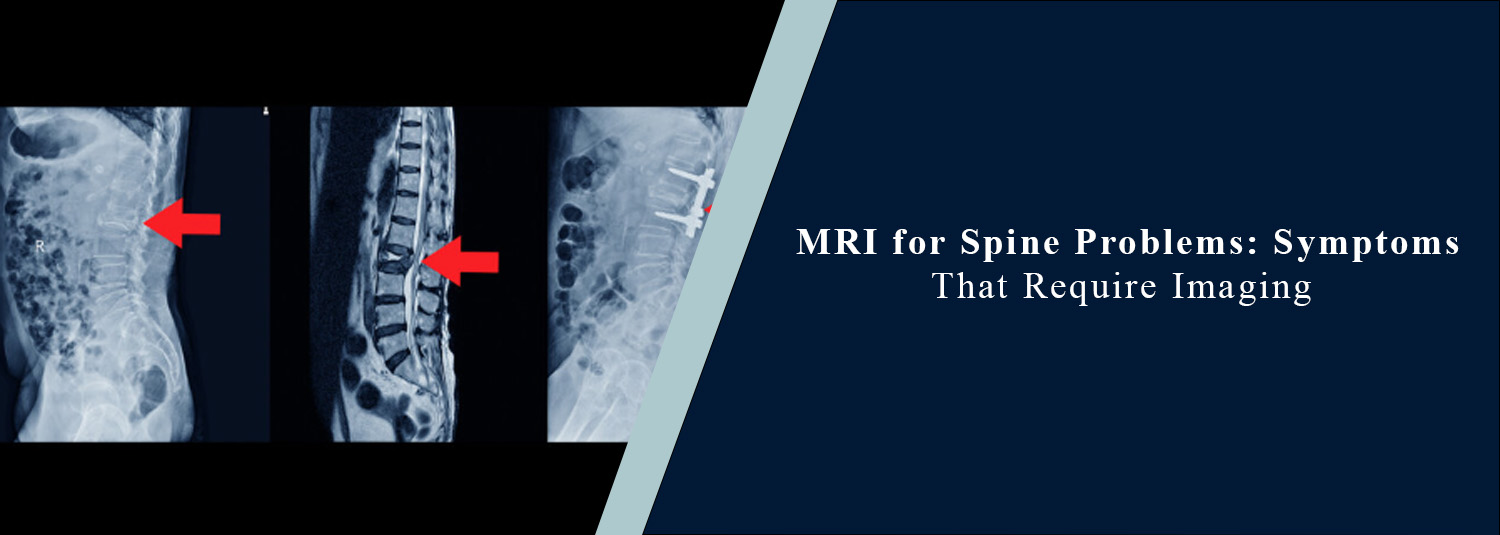
Back and spine problems are one of the most frequent diseases that are encountered by people of all ages. Although most back pain gets better with rest, patient exercise, and conservative care, certain symptoms may represent the presence of underlying conditions, which require detailed evaluation. During such times, an MRI scan of the spine can offer important info regarding the bones and discs, nerves, and soft tissues of the spine.
Magnetic Resonance Imaging (MRI) is a highly effective tool for assessing spinal disorders and is one of the preferred ways to do so, as it provides detailed images without radiation. Information regarding when imaging might be needed can assist a patient in finding a timely diagnosis and the correct treatment. Molecular Diagnostics and Therapy features cutting-edge MRI technology and highly trained radiology experts to ensure accurate diagnosis and thorough assessment of spine conditions.
What Is an MRI Spine?
MRI of the spine is performed with a powerful magnet and radio waves to produce detailed images of the spine and the structures around it. MRI can see spinal discs and nerves as well as ligaments, muscles, and the spinal cord, which cannot be seen on X-rays as well. Unlike X-rays, which show bones primarily, MRI is great for visualizing the spinal cord, spinal nerves, ligaments, muscles, and spinal discs. MRI imaging of the spine allows the doctor to see abnormalities that aren't seen on other X-rays. Based on the symptoms, the examination can be performed on the cervical or thoracic spine or the lumbar spine.
Why Is MRI Used for Spine Problems?
A diagnosis for many spine problems is impossible to get from typical X-rays. Doctors use MRI to diagnose problems in the disc, compression of the nerves, inflammation, infections of the spine, spinal tumors, and spinal injuries. It will offer detailed information that could help guide you towards treatment needs or whether to undertake surgery or other interventions.
Persistent Back Pain
Usually, back pain goes away in a few weeks. Persistent pain, however, that continues for several weeks or longer and has not responded to treatment, may need further investigation by MRI of the back. Imaging may be used to detect potential causes, including disc herniation, spinal degeneration, or nerve compression. If possible, early diagnosis can prevent symptoms from worsening and increase the chances of having a better outcome.
Pain Radiating to the Legs or Arms
If the back pain spreads down the leg as far as the arm or knee, the problem is likely to involve the nerves. This can ty create symptoms of shooting, burning, tingling pain spreading down into the limbs, due to compression of the spinal nerves. MRI of the spine may provide detailed information on the exact site of nerve compression and its severity. This is important to help determine the best treatment available.
Numbness and Tingling
If the numbness or tingling in the arms, hands, legs, or feet is ongoing, then that shouldn't be ignored. The symptoms can be due to irritation or compression of the nerves in the spinal canal. Doctors can use an MRI to get a detailed look at the spinal cord and nerves and determine their cause.
Muscle Weakness
Limited use of the arm and leg may suggest heavy damage to the nerves. If a person has difficulty lifting things, climbing, holding them, and eventually has to stand still to walk a distance, it may be a serious matter. MRI can detect nerve-damaging disorders and can differentiate whether treatment should be immediate and urgent.
Suspected Disc Herniation
Multiple causes occur, all of which involve the soft substances within a disk protruding and compressing adjacent nerves, a condition known as a herniated disc. MRI is one of the most helpful ways to diagnose disc herniation and gauge how serious it is. Severe pain, numbness, or weakness sometimes occurs in patients who tend to benefit from early imaging.
Chronic Neck Pain
Persistent neck pain, which may not respond to therapy, may also require imaging. MRIs on the cervical spine can detect disc degeneration, nerve compression, spinal narrowing, and even more.
Difficulty Walking or Balance Problems
Severe changes in walking pattern, poor coordination, or unsteadiness of walking can suggest spinal cord involvement. These symptoms do need medical attention, as there could be permanent neurological damage in some conditions if not diagnosed in a timely fashion. MRI gives valuable information about the surrounding tissues and the spinal cord.
Injury or Trauma
Spinal imaging might be needed in patients who have major accidents, falls, or sports injuries. MRI is useful in the evaluation of soft tissue injuries, ligament damage, injuries to the disc, and abnormalities of the spinal cord, which may not show up on standard X-rays.
Loss of Bladder or Bowel Control
A sudden loss of bowel or bladder control together with severe back pain is a medical emergency. These symptoms can represent a serious nerve compression that can only be managed properly if surgical intervention is obtained early and imaging is obtained. Early diagnosis is very important to minimize the chances of permanent complications.
Understanding Lumbar Spine MRI
One of the most common places for developing a back disorder is the lower back. MRI of the lumbar spine offers more intricate imaging of the lower back area and aids in identifying disc herniation, spinal stenosis, degeneration, and nerve compression. This examination is useful for many patients who have chronic lower back pain.
Is MRI Safe?
MRI does not involve the use of X-rays or other forms of radiation and is believed to be safe for most patients. But certain patients, e.g., those who have implants, pacemakers, or metallic devices, should alert their health care provider before the exam. The imaging team will decide whether or not magnetic resonance imaging is safe.
What Happens During the Scan?
Patients lie on a moving table during the exam, which slides into the MRI scanner. The person's coordination should be done while lying still during the procedure to get a good picture. The scan can take from 20 to 45 minutes, depending on the area being scanned. The procedure is well-tolerated by most patients, but those with claustrophobia will need to have any concerns about the procedure discussed with their health care provider first.
Conclusion
Like many spinal issues, advanced imaging is not always necessary to remedy the condition, but certain indications may warrant follow-up imaging to uncover possible root causes and complications. If there is persistent pain, numbness, weakness, problems with balance, or spreading sensations, then don't ignore it. The MRI spine test is able to provide a detailed report, which will help a doctor get a better idea of what the condition of the spine is and help them select an adequate treatment plan.
Advanced spine MRI, spine MRI for back pain, and lumbar spine MRI services are available at Molecular Diagnostics and Therapy with advanced imaging technology and expert radiology support, which allow timely and accurate diagnosis for patients.
Frequently Asked Questions
In News
Get Our Mobile App
for Easy Access
Book tests, view reports, and manage your health records on the go. Experience convenient healthcare with Molecular Diagnostics and Therapy.
- ✔ Book tests & home collection
- ✔ View reports instantly
- ✔ Track health history
- ✔ Get notifications & reminders
- ✔ Easy appointment management