Understanding Cancer Screening Tests by Age
Talk to Health Expert

Dr. Nikunj Jain
Co-Founder and HOD - Nuclear Medicine ,MBBS, DRM, DNB, FEBNM, FANMB, Dip. CBNC
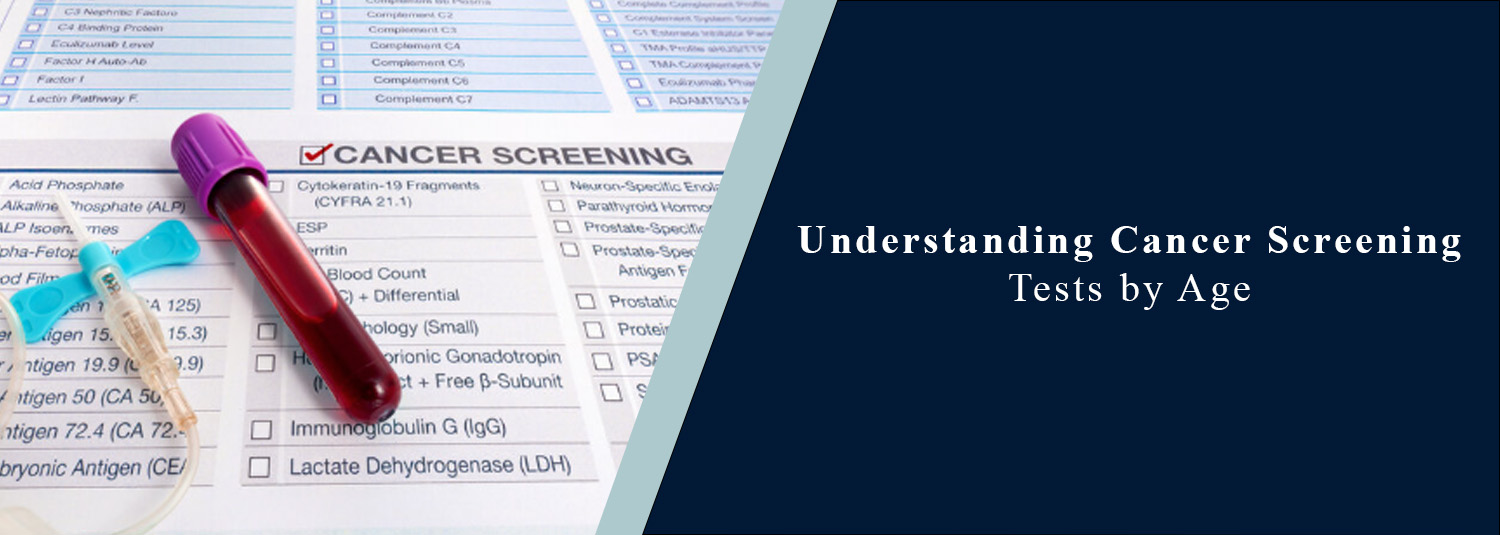
Cancer is among the top causes of mortality globally; however, early detection of many of these cancers can yield a successful treatment outcome. Unfortunately, the vast majority of cancers do not have any apparent symptoms in the early stages. When symptoms develop, the disease may have advanced, and treatment is then more difficult.
That's why cancer screening is so important and a key aspect of preventive health care. Cancer screening tests are used to identify cancer or changes that can lead to cancer early, before signs or symptoms. Early diagnosis can pave the way for improved treatments, better survival, and quality of life.
But there are indications to screen for cancer depending on the age, gender, family history, and individual risk. Knowing what screening to consider at what age enables young people to choose when to seek medical attention.
What Is Cancer Screening?
Cancer screening involves testing people who do not have any signs or symptoms of cancer. The aim is to detect problems as early as possible, at a time when treatment is likely to be more effective. Some screening tests can actually help in identifying precancerous changes before the cancer ensues. This enables health care provision to act in time and to stop cancer developing in its early stages, if possible. Regular screenings are an invaluable aspect of long-term health and decreasing the incidence of serious complications.
Cancer Screening in Your 20s and 30s
Yes, cancer is not as prevalent in younger people, but that's the perfect time to begin a healthy routine for cancer prevention. Cervical cancer screening should be discussed with a woman's health care provider. An abnormal pap test detects abnormal cells in your cervix and can be a sign of cancer if not treated. HPV testing may also be suggested in some instances.
Youth should also watch for any unusual changes in their body, such as a new lump, skin changes, loss of weight, unusual bleeding, etc. These symptoms are not necessarily cancerous, but should never be overlooked. People who have a high risk of cancer might need more frequent screening and monitoring.
Cancer Screening in Your 40s
The risk of multiple cancers starts to rise in people as they reach their 40s. In this decade and beyond, the need for routine cancer screenings has generally started to come up in conversation.
Breast cancer screening gets even more significant for women. Sometimes mammograms are effective in identifying breast diseases before they are painful or cause symptoms, and can even detect breast cancer in its early stages. Early detection greatly assists in the prognosis and survival.
In accordance with the medical guidelines, women should undergo regular cervical cancer screening. Men whose family members have had prostate cancer or who have other risk factors should talk to a health care provider about what they can do to stay healthy. Although recommendations for screening may differ, it is important to be aware of personal risk.
Cancer Screening in Your 50s
The 50s happen to be among the most pivotal decades in cancer screening, as the danger of quite a few prevalent cancers increases considerably during that time frame. Almost everyone should start colorectal cancer screening around age 45 or 50. Screening choices may include stool-based screening, colonoscopy, or other acceptable screening tests.
The additional benefit of a colonoscopy is that precancerous polyps can be found and removed before they become cancerous. This not only serves as a screening but also a preventative procedure. Women should stick to the routine screening mammograms because cancer risk does not decrease with age. The idea of a prostate health exam, such as blood PSA tests, can also be discussed with the health care provider, depending on a man's risk level.
Cancer Screening in Your 60s and Beyond
As individuals get older, their risk for cancer also rises. Thus, screening can continue to be a significant component of health care for people over the age of 65. The screening for colorectal cancer might be delayed depending on past screening history, overall health status, and health care screening recommendations. The low-dose CT scanners may be an option for people who have a significant smoking history, for those who are eligible for lung cancer screening.
Sometimes, it is difficult to find lung cancer early, but lung cancer screening can be beneficial to people with a high risk of lung cancer. Medical history and past tests may facilitate some women to be monitored for cervical cancer regularly, and regular prostate cancer tests may be necessary for some men.
Factors That Influence Screening Recommendations
Age is not the only screening criterion. History in the family is very important, as some cancers are hereditary. Close family members of women, or men, with breast, ovarian, colorectal, or prostate cancer might require earlier or more frequent screening.
Other risk factors, like smoking, obesity, drinking alcohol, not being physically active, and work exposures, may also play a role in cancer. Recommendations for screening are based on as many other factors as personal medical history and previous screening results. Screening plans should always be individualised due to each person's uniqueness.
Why Early Detection Matters?
Identifying cancer at an early stage can be a huge advantage in terms of a successful treatment outcome. Sometimes, early cancers are small and have not spread to other parts of the body. This may present the opportunity to pursue more conservative medications and treatment, and increase chances of survival.
Sometimes, the screenings catch things that are not cancer, but have the potential to become cancer. These abnormalities can be reversed, thus avoiding the development of cancer. Regular screening is one of the best tools available in modern preventative health care, as seen in these benefits.
Conclusion
Early detection and disease prevention are crucial to cancer screening. Each stage of life has its own health care priorities, ranging from screening for cervical cancer in early adulthood to screening for breast, colorectal, and prostate cancer in older years or screening for lung cancer at a later age. Age-appropriate screening recommendations can help to identify possible issues before they become symptoms, thereby providing earlier treatment and better outcomes.
Regular visiting and check-ups with health care professionals and understanding their own risk factors, plus consistently following health professionals' screening schedules, are important to maintaining long-term health. Molecular Diagnostics and Therapy provides full cancer screening, advanced diagnostic technology, and comprehensive oncology services to monitor, manage, and detect cancer early in patients at any age.
Frequently Asked Questions
In News
Get Our Mobile App
for Easy Access
Book tests, view reports, and manage your health records on the go. Experience convenient healthcare with Molecular Diagnostics and Therapy.
- ✔ Book tests & home collection
- ✔ View reports instantly
- ✔ Track health history
- ✔ Get notifications & reminders
- ✔ Easy appointment management