CT Scan of the Abdomen: Common Conditions It Detects
Talk to Health Expert

Dr. Nikunj Jain
Co-Founder and HOD - Nuclear Medicine ,MBBS, DRM, DNB, FEBNM, FANMB, Dip. CBNC
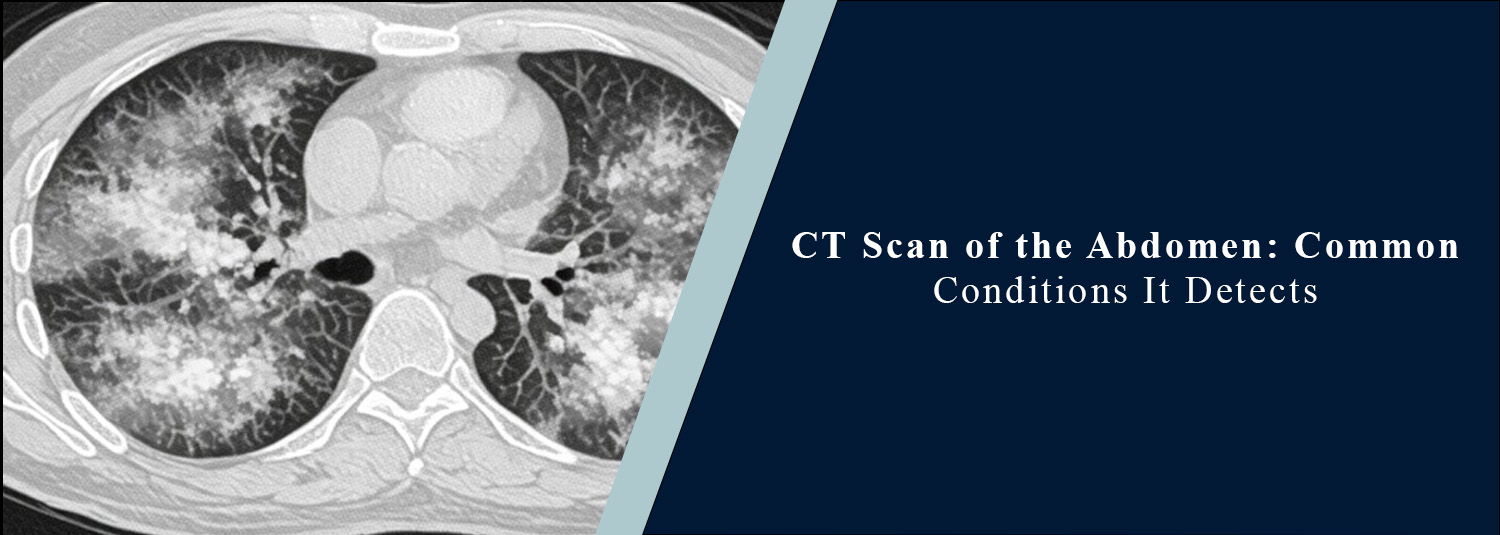
Sometimes abdominal pain, digestion issues, weight loss, and suffering from a lot of discomfort can be signs of an underlying medical condition which may require thorough evaluation. Clinical history and routine laboratory tests can help identify the cause of the problem but should not always be relied upon to identify the cause. In these cases, a CT scan is a key element of making an accurate diagnosis by giving detailed pictures of these abdominal organs.
A computer-based procedure, using special X-ray machines, to generate cross-sectional images of the body. Conducts a comprehensive examination of the liver, pancreas, kidneys, gall bladder, spleen, intestines, blood vessels, and adjacent organs with superb detail. Patients are more at ease when they get a CT examination by knowing the details about the CT test, the CT examination process, the CT scan preparation, and the interpretation of the given report.
Advanced CT imaging technology at Molecular Diagnostics and Therapy, combined with highly trained CT radiologists, allows for the most accurate imaging of the abdomen for the early detection and evaluation of a diagnosis for a variety of medical conditions.
What Is an Abdominal CT Scan?
A non-invasive imaging diagnostic test that generates detailed cross-sectional images of the organs in the abdomen. A computed tomography (CT scan, unlike an ordinary X-ray, makes a series of images of the patient at various angles to help the doctor see anything abnormal that might not be identified in a standard X-ray. The exam can be done with or without dye (contrast) according to the medical condition to make certain organs and blood vessels more visible.
Why Do Doctors Recommend an Abdominal CT Scan?
When patients continue to have symptoms in their abdomen, or other tests are not sufficiently informative, doctors might order a CT scan. Problems such as persistent abdominal discomfort, fever of no known cause, problems with the bowel, distended abdomen, suspected internal injury, unexplained weight loss, blood in the urine, or abnormal blood tests. CT is also useful to assess tumors, inflammation, injuries, and infections of the internal organs of the abdomen.
Common Conditions an Abdominal CT Scan Can Detect
The best thing about the CT Scan is that it can detect numerous medical issues from one examination. It can locate liver diseases like fatty liver, liver cysts, liver abscess, and liver tumors. However, another reason for the scan is to check for complications with the gallbladder, to check for bile duct obstruction, for gallbladder inflammation, and to check for gallstones. Abdominal computed tomography (CT) imaging is frequently used to diagnose kidney stone disease. A scan can accurately provide information on size, position, and number of stones and identify urinary tract obstruction as well.
CT scan is very useful in the diagnosis of appendicitis, before the development of complications, identifying the appendix inflammation. Detailed assessment of pancreatic disease such as pancreatitis, pancreatic cysts, and pancreatic tumours also may be performed.
The scan is commonly employed in the diagnosis of intestinal diseases such as bowel obstruction, diverticulitis, inflammatory bowel disease, abdominal infections and intestinal perforation. CT imaging is also used by doctors for the diagnosis of abdominal abscesses, enlarged lymph nodes, abdominal bleeding, traumatic injuries, aneurysms and different types of cancer in the abdomen.
CT Scan for Cancer Detection
If an individual has a cancer suspected to involve organs like the liver or pancreas, the kidneys, colon, stomach, adrenal glands, or the lymph nodes, then an abdominal CT scan is typically performed. This scan helps to decide the volume, location, and dimensions of tumors. It can also be used to help determine if cancer has spread (metastasized) to nearby tissues or to another place in the body. CT imaging is one of the most useful tools in the evaluation of cancer; further investigations like biopsy or PET-CT may be needed at times.
CT Scan Procedure
Patients are less anxious prior to the CT scan if they understand what will happen during the procedure. On registration, patients can be asked to shed any metal articles and put on a hospital gown. Contrast can be taken orally or intravenously if it's needed.
The patient is comfortable, lying down on a motorised scanning table, which is slowly moved through the CT scanner. Patients could be instructed to hold their breath for a short period of time during image acquisition to reduce blur caused by any movement, and to get clearer images. The actual scan time depends on the type of scan being taken, but is typically in the range of 10 to 30 minutes.
CT Scan Preparation
Good preparation for a CT scan can help achieve accurate imaging. Preparation will be determined based on whether it is necessary to use contrast material. It might be necessary for patients not to eat for a few hours before the exam. Unless otherwise specified, it is recommended to drink water as it is a source of hydration.
Diabetics, kidney disease patients, as well as pregnant women/humans with contrast dye allergy should inform their doctor before the scan. Previous imaging studies should also be brought with a patient's medical records to be reviewed. If the instructions for putting the treatment on are followed carefully, then they are more likely to improve the quality of the images and reduce repeat examinations.
Understanding Your CT Scan Report
Once complete, a radiologist reviews the images and documents a detailed report for the CT scan. The report will provide a description of the abdominal organs and recognize any abnormalities, and may include a comment regarding inflammation and any tumor, cyst, infection, stone, collection of fluid, or injury. It also might contain recommendations for further tests or imaging, if needed. Patients need to consult their treating physician regarding the results of their CT scan – the physician will interpret the results in light of symptoms and medical history.
Is an Abdominal CT Scan Safe?
A CT scan is a particular type of X-ray. A CT scan is a specific kind of X-ray. When required for diagnosis of a medical condition, the benefits of the correct medical diagnosis far outweigh any small risks of radiation exposure.
Modern CT scanners use advanced technology to minimise radiation dose while maintaining excellent image quality. Contrast material is generally safe, although some patients may experience mild allergic reactions. Your healthcare provider will assess your medical history before the examination.
Choosing the Right CT Scan Centre
Image quality and expert interpretation play an important role in accurate diagnosis. Choosing a centre with modern CT equipment, experienced radiologists, and reliable reporting ensures better diagnostic confidence. If you are searching for a CT scan near me, selecting an accredited diagnostic centre with advanced imaging technology can make a significant difference in the accuracy of your diagnosis.
At Molecular Diagnostics and Therapy, patients benefit from state-of-the-art CT imaging systems, highly experienced radiologists, comprehensive CT scan test details, accurate reporting, and patient-focused diagnostic care.
Conclusion
The abdominal CT scan is among the best computed tomography (CT) scans for diagnosing abdominal pain, digestive disorders, kidney stones, liver disease, appendicitis, infections, injuries, and numerous cancers. It generates in-depth images that enable a doctor to diagnose conditions in their initial stages and offer the right treatment plan.
Being familiar with what is involved in a CT scan, preparing for a CT scan, and carefully following your doctor's advice when looking at the CT scan report can improve your outlook for a good diagnosis. For a reliable CT scan near me, Molecular Diagnostics and Therapy has the most advanced service providers with expert CT scan radiologists and high-quality diagnostic services.
Frequently Asked Questions
In News
Get Our Mobile App
for Easy Access
Book tests, view reports, and manage your health records on the go. Experience convenient healthcare with Molecular Diagnostics and Therapy.
- ✔ Book tests & home collection
- ✔ View reports instantly
- ✔ Track health history
- ✔ Get notifications & reminders
- ✔ Easy appointment management