CT Scan: Detailed Cross-Sectional Imaging for Diagnosis and Treatment Planning
Talk to Health Expert

Dr. Nikunj Jain
Co-Founder and HOD - Nuclear Medicine ,MBBS, DRM, DNB, FEBNM, FANMB, Dip. CBNC
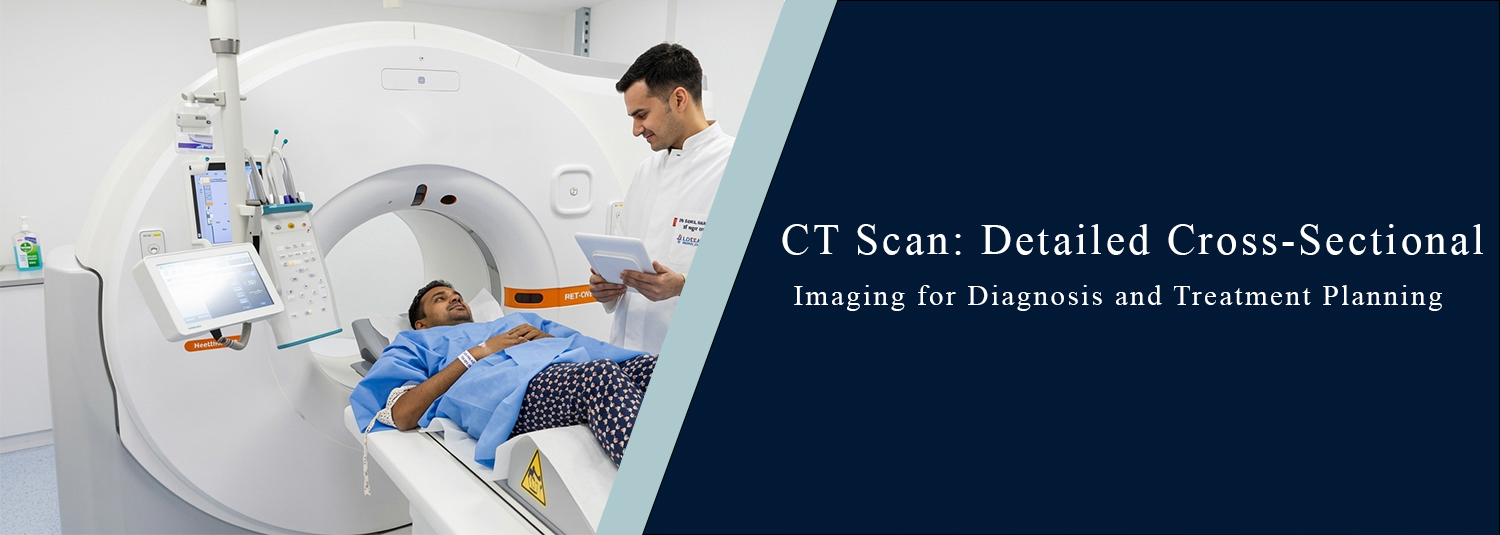
CT Scan: Detailed
Cross-Sectional Imaging for Diagnosis and Treatment Planning
A CT scan is one of the best diagnostic studies in modern
medicine. It uses X-rays and computers to produce clear cross-sectional images
of the body. Such images provide physicians with an opportunity to examine
organs, bones, blood vessels, and soft tissues in detail.
CT scans are used to locate a tremendous amount of medical issues,
including injuries and infections, as well as other dangerous conditions such
as cancer and heart disease. They are fast, precise, and provide a detailed
picture; hence, they are widely used in all hospitals and clinics worldwide.
This scan assists physicians in identifying issues, determining
procedures, and monitoring disease conditions.
What Is a CT Scan?
A CT or Computed Tomography is a scan in which a large number of
X-ray images in various positions along the body are taken. A computer then
processes these images to create cross-sectional slices of the body.
A CT scan has three-dimensional images of the inside of the body
as opposed to a simple X-ray, which reflects a flat picture. This assists
physicians in identifying issues in images that other images may fail to see.
CT scans are able to examine most of the parts of the body: the
brain, chest, abdomen, pelvis, bones, and blood vessels.
How a CT Scanner Works?
A CT scanner is a massive, circular machine that has a spinning
X-ray tube and detectors. The patient is placed on a table, which is brought
into the scanner.
The X-ray tube is rotated around the patient as the table is
moved, and numerous images in varying angles are captured. The pictures are
then stitched in detail with computer software into cross-sectional images.
The entire scan is fast and normally can be completed within a
couple of minutes, depending on the type of test.
Types of CT Scans
CT scans can be used to evaluate different organs and medical
conditions. Some of the most commonly performed CT scans include:
|
Type of CT Scan |
Purpose |
|
CT Brain |
Detects stroke, brain
tumors, bleeding, and head injuries |
|
CT Chest |
Evaluates lung
infections, tumors, and pulmonary diseases |
|
CT Abdomen |
Examines the liver,
kidneys, pancreas, and digestive organs |
|
CT Angiography |
Visualizes blood
vessels and detects blockages |
|
CT Spine |
Evaluates spinal
injuries, fractures, and disc problems |
All these types provide doctors with information that is precise
in the diagnosis.
CT Scan Procedure
A CT scan is very fast and painless, and it takes between 5 and 30
minutes, depending on the area being scanned.
The patient is placed on a table, which is moved into the CT
scanner during the scan. The machine operates with the help of a control room,
and the technician communicates with the patient by means of an intercom.
The patient is requested to remain motionless. In other instances,
the technician requests the patient to hold their breath briefly during the
taking of pictures. The scanner rotates around the body and records numerous
X-ray images, which the computer converts to detailed cross-section images.
Use of Contrast in CT Scans
In some CT scans,
doctors may use a contrast material to enhance the visibility of certain
organs or blood vessels.
Contrast agents enhance vision by highlighting particular areas
within the body. They may be administered either orally or via other modes:
- Oral contrast – swallowed to examine the
digestive tract
- Intravenous
(IV) contrast – injected into a vein to
visualize blood vessels and organs
- Rectal
contrast – used for certain
gastrointestinal studies
The contrast type varies depending on the scan type and the
condition of the patient.
Preparation for a CT Scan
The instructions to be prepared depend on the form of the CT scan.
Common guidelines are:
- No
eating or drinking before the scan in case contrast will be administered.
- Report
allergies to the physician, particularly iodine-based contrast.
- Take
off metals such as jewelry, belts, glasses, etc., before the scan.
- Inform
the physician if you are pregnant.
Advantages of CT Scans
A CT scan offers a number of advantages in medical diagnosis. The
greatest strength is that it creates very detailed images of the interior body.
These images enable doctors to identify the diseases in time and organize
proper treatments.
CT scans are also very fast, and this helps a lot in emergencies
like trauma or internal hemorrhage. Other benefits include:
- Non‑invasive
test
- The
precision of detecting abnormalities is high.
- Ability
to scan through several organs.
- Facilitates
biopsies and surgery.
Due to these advantages, CT scanning plays a vital role in modern
medical practice.
CT Scan in Disease Diagnosis
CT scans could diagnose and treat a variety of medical conditions.
CT scans have found wide usage in determining the location of cancer and are
used to determine its stage, the size of the tumor, and whether it is malignant
or benign. They are also used to diagnose lung disease, identify internal
injuries following accidents, identify kidney stones, and research brain issues
such as stroke or bleeding. Moreover, CT scans also enable the doctors to view
the effectiveness of the treatments such as chemotherapy, radiation, or
surgical procedures.
Safety and Risks of CT Scans
The CT scans are considered to be safe with a limited dose of
ionizing radiation. Positive outcome of the correct diagnosis tends to outweigh
the dangers. Modern CT scanners have lower radiation levels; additionally, they
preserve the clarity of images.
Individuals who receive contrast might experience endothermia or a
metallic flavor. Allergic reactions are rare but must be reported immediately
to the medical personnel. Doctors carefully evaluate the need for a CT scan
before recommending the test.
Conclusion
CT scans are strong
diagnostic instruments that provide images of the body in detail. They make use
of special X-rays and computer techniques. This allows physicians to visualize
illnesses, examine trauma, and strategize desirable cures.
The scan is quick,
painless, and highly accurate. This is the reason why it is applied extensively
in contemporary medicine. Molecular Diagnostics and Therapy offers qualified CT
scanning using modern technology and professional radiologists. Such services
simplify the process of diagnosis and help doctors plan to treat the patients
better.
In News
Get Our Mobile App
for Easy Access
Book tests, view reports, and manage your health records on the go. Experience convenient healthcare with Molecular Diagnostics and Therapy.
- ✔ Book tests & home collection
- ✔ View reports instantly
- ✔ Track health history
- ✔ Get notifications & reminders
- ✔ Easy appointment management