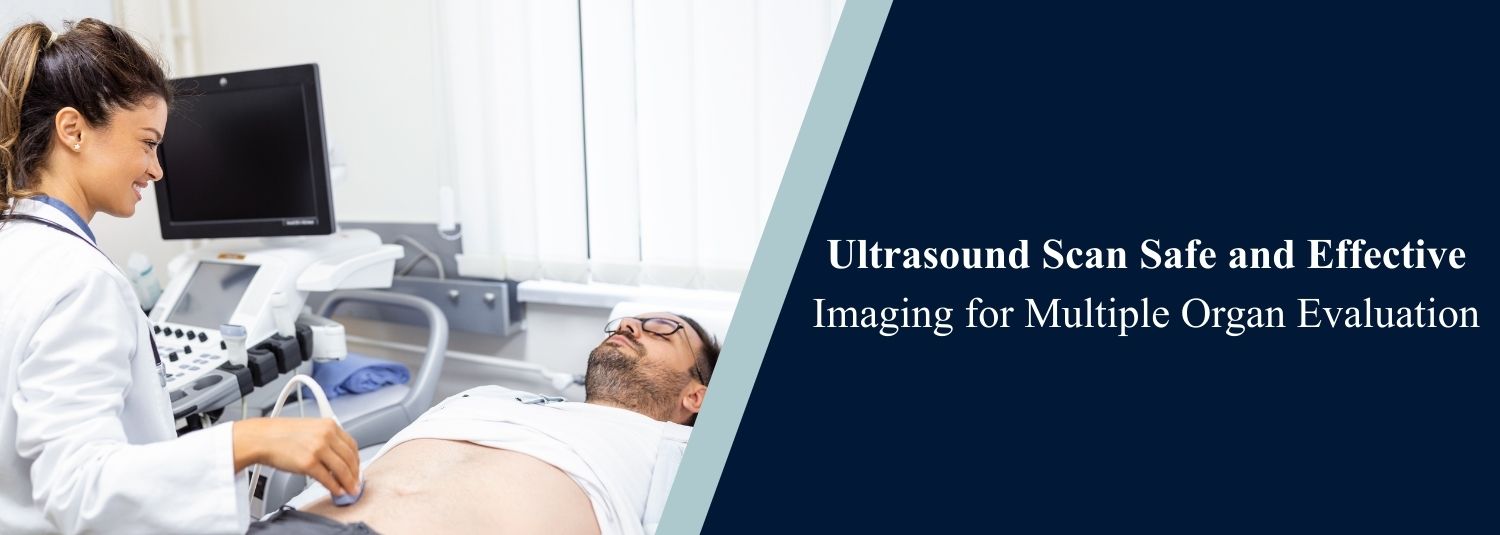
Understanding Ultrasound Scan: Uses, Types, Benefits and Safety
Medical imaging plays a vital role in modern healthcare by helping doctors diagnose, monitor, and treat various diseases. Among the many imaging tools available, ultrasound scan is one of the safest, most accessible, and widely used diagnostic techniques. It is a non-invasive test that uses high-frequency sound waves to create real-time images of internal organs and tissues.
Ultrasound scans are commonly used to examine organs such as the liver, kidneys, gallbladder, pancreas, uterus, ovaries, thyroid, heart, and blood vessels. Since ultrasound does not use radiation, it is considered safe for people of all ages, including infants and pregnant women.
What Is an Ultrasound Scan?
Ultrasound, also known as sonography, is a diagnostic imaging procedure that uses high-frequency sound waves. A small handheld device called a transducer sends sound waves into the body. These waves bounce back after hitting internal structures, and a computer converts the returning echoes into detailed images displayed on a screen.
Unlike X-rays or CT scans, ultrasound does not use ionizing radiation. This makes it a preferred choice for pregnancy monitoring and routine health checkups.
How Does Ultrasound Work?
The transducer emits sound waves that travel through the body. Different tissues — such as fluids, soft tissues, and bones — reflect these waves differently. The returning echoes are processed by a computer to produce clear, real-time images.
A gel is applied to the skin during the procedure to help the transducer maintain proper contact and improve image quality. The scan is painless and usually takes 15–30 minutes, depending on the area being examined.
Types of Ultrasound Scans
1. Abdominal Ultrasound
Used to examine the liver, kidneys, gallbladder, pancreas, and spleen. It helps detect gallstones, kidney stones, cysts, tumors, and infections.
2. Pelvic Ultrasound
Used to evaluate the uterus, ovaries, and bladder in women, and the prostate in men.
3. Obstetric Ultrasound
Performed during pregnancy to monitor fetal growth, detect abnormalities, and determine the baby’s position.
4. Doppler Ultrasound
Measures blood flow in arteries and veins and helps detect blockages, clots, and circulation problems.
5. Thyroid and Neck Ultrasound
Assesses thyroid nodules, neck swellings, and lumps.
6. Echocardiography
A specialized ultrasound of the heart that evaluates heart structure and function.
Benefits of Ultrasound Imaging
- Safe and Radiation-Free: No exposure to harmful radiation.
- Non-Invasive and Painless: No incisions required.
- Real-Time Imaging: Allows immediate visualization of organ movement and blood flow.
- Cost-Effective: More affordable than CT and MRI scans.
- Quick Results: Reports are often available the same day.
Due to these advantages, ultrasound is often the first imaging test recommended for many health concerns.
Conditions Diagnosed with Ultrasound
- Gallstones and kidney stones
- Liver disease and fatty liver
- Ovarian cysts and uterine fibroids
- Thyroid nodules
- Abdominal pain causes
- Blood clots in veins
- Pregnancy-related concerns
Ultrasound also helps guide procedures such as biopsies and fluid drainage.
Is Ultrasound Safe?
Yes, ultrasound is extremely safe. Since it uses sound waves instead of radiation, it can be performed multiple times without risk. It is routinely used during pregnancy to monitor fetal development.
However, it should always be performed under medical guidance by trained professionals to ensure accurate interpretation.
How to Prepare for an Ultrasound?
- Abdominal Ultrasound: Fasting for 6–8 hours may be required.
- Pelvic Ultrasound: A full bladder may be necessary.
- Other Scans: Usually require minimal preparation.
Your doctor will provide specific instructions before the test.
Limitations of Ultrasound
Ultrasound may not provide clear images in cases of excessive abdominal gas or severe obesity. In complex situations, CT or MRI scans may be recommended.
Despite these limitations, ultrasound remains a dependable and widely used diagnostic tool.
Why Early Diagnosis Matters
Early detection improves treatment outcomes. Ultrasound helps doctors identify problems at an early stage, enabling timely and accurate medical decisions.
Conclusion
Ultrasound scan is a safe, effective, and reliable diagnostic method. Its real-time imaging capability, absence of radiation, and affordability make it an essential tool in modern healthcare.
Whether for pregnancy monitoring or diagnosing abdominal, thyroid, or vascular conditions, ultrasound plays a crucial role in ensuring timely and accurate healthcare decisions.