How Imaging Helps Avoid Unnecessary Surgeries?
Talk to Health Expert

Dr. Nikunj Jain
Co-Founder and HOD - Nuclear Medicine ,MBBS, DRM, DNB, FEBNM, FANMB, Dip. CBNC
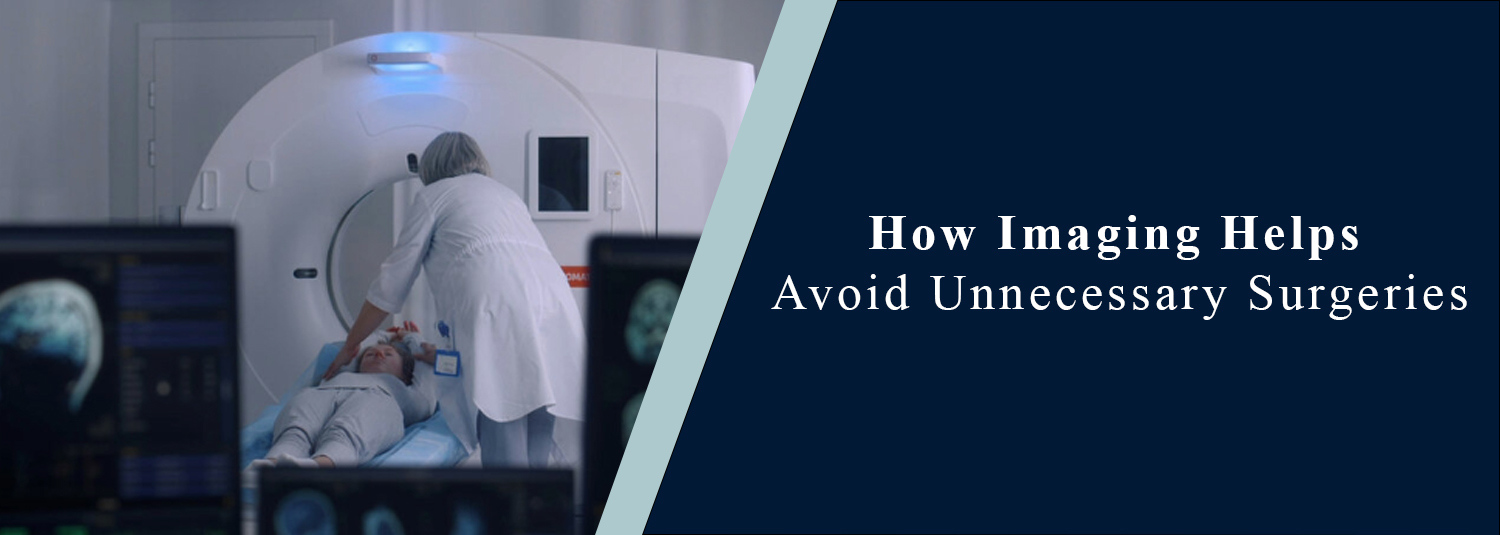
Modern medicine has seen incredible development, and one of the most significant parts is medical imaging. Previously, when patients came up with unclear or complicated symptoms, doctors were left with the only choice of doing exploratory surgeries to diagnose the problem at hand. These were procedures in which there were risks and were very invasive and, in some cases, not very useful. Modern imaging systems have transformed this procedure into allowing physicians to thoroughly consider and treat diseases without necessarily scaling up to surgery.
What Is Medical Imaging?
Medical imaging can be defined as a variety of techniques that are employed in the visualization of internal body structures. Normal imaging techniques involve CT scans, MRI, ultrasound, and PET scans. Such technologies enable physicians to detect the abnormalities in a given organ, tissue, and blood vessels in a detailed manner.
A relatively new branch of this science, called molecular imaging, further proves how tissues and cells operate on the molecular scale. Rather than detecting structural changes alone, it assists in identifying early biological changes in the body, making it apparent that a disease has been detected even before it can be seen due to conventional imaging.
Eliminating the Need for Exploratory Surgery
The fact that imaging is used to substitute exploratory surgery is one of the greatest benefits of imaging. Previously, physicians needed to conduct surgical interventions just in order to find the reason behind the symptoms. Imaging is now able to give a vivid and detailed picture, and no such invasive methods are required.
An example is that the CT scans can find internal injuries, tumors, or infections easily, whilst the MRI scans can be very effective in investigating soft tissues such as the brain and spinal cord. Using these tools, doctors will be able to make proper diagnoses without putting patients at risk of surgery, which could result in infection, bleeding, or anesthesia complications.
Early and Accurate Disease Detection
Early diagnoses play a key role in avoiding a disease that gets to serious stages that may necessitate medication as a last resort. Imaging technologies are crucial in the detection of diseases in the initial stages, when they can be treated with ease.
This is especially where molecular imaging is helpful. It is able to identify changes on a cellular level, which can be used to diagnose conditions such as cancer early in the formation of a tumor or before it progresses to become large, causing the body to be viewed using a conventional method. This early diagnosis usually gives the doctors an opportunity to treat the patient without a surgical intervention, such as medications or focused treatment, avoiding invasive treatment.
Improved Decision-Making for Treatment
Accurate imaging assists the doctors in making sounder decisions regarding the treatment options. Not all conditions need surgery, and through imaging, it can differentiate cases that need urgent surgery and those that can be handled through alternative solutions.
To use an example, imaging is used to determine the presence and type of a tumor, whether benign or malignant, the size, and the location of the tumor. This data will be critical in determining the need to undergo surgery or a case that can be followed or treated by less intrusive methods. Imaging enables patients to get the right treatment without subjecting themselves to unnecessary surgeries by giving a clear image of the disease.
Monitoring Conditions Without Repeated Surgery
The ability of imaging to track diseases is the other key advantage of imaging. Numerous issues may not necessarily be operated upon, like chronic diseases or slow-paced tumors, but need periodic monitoring.
Periodic imaging scans allow a doctor to monitor the body and determine whether the condition is getting better, staying better, or getting worse. The watch and wait approach also makes it possible to prevent medication surgeries when they are not necessary, yet provide an opportunity to take action in time in the case the situation worsens.
Reducing Risks and Improving Patient Safety
Surgery is always fairly dangerous, with the threat of infection, loss of blood, and anesthetic complications being among the possible complications. Imaging can enhance patient safety because it reduces the number of inappropriate surgeries.
Short recovery time, reduced physical and emotional stress, and the cost of health care are also beneficial to patients. Most non-invasive imaging techniques are relatively fast, painless, and do not necessitate hospitalization, making them a more convenient choice in diagnosis and follow-up treatment.
Enabling Minimally Invasive Procedures
Whereas it can never be avoided, imaging is essential in the reduction of invasive procedures in case surgery is inevitable. Image-guided procedures enable physicians to be very precise in carrying out specific treatments (e.g., biopsies or catheter-delivered therapies).
They are less invasive surgeries that incur less pain, less time in the operating theater, and quicker healing than conventional surgical operations. With imaging, only the affected area is used, which eliminates the amount of damage it causes to the healthy tissues around.
The Growing Importance of Molecular Imaging
Molecular imaging has also been developed, and this has added to the advancement of modern diagnostics. It offers greater insights into the mechanisms of disease development and progression by making attention to the molecular and cellular events that occur inside the body.
This cutting-edge technique contributes to personalized medicine, during which the treatment targeted at the specific patient is developed, according to the complicated imaging results. Through the detection of diseases at the earliest and saving on unnecessary surgeries as well as enhancing overall outcome, molecular imaging is vital in this endeavor.
Conclusion
Medical imaging has changed the healthcare landscape by minimizing invasive diagnostic procedures and unnecessary surgeries. It enables early diagnosis, proper diagnosis, and successful monitoring of the disease, so that patients obtain the best possible treatment.
The future of healthcare is becoming more accurate, less risky, and patient-oriented due to constant development and creation, such as the establishment of molecular imaging. Imaging not only leads to better clinical decision-making but also elevates various levels of patient comfort and safety, which makes imaging an invaluable resource in the modern medicine industry.
Frequently Asked Questions
In News
Get Our Mobile App
for Easy Access
Book tests, view reports, and manage your health records on the go. Experience convenient healthcare with Molecular Diagnostics and Therapy.
- ✔ Book tests & home collection
- ✔ View reports instantly
- ✔ Track health history
- ✔ Get notifications & reminders
- ✔ Easy appointment management