What Is a Bone Density Test (DEXA Scan)? Who Needs It?
Talk to Health Expert

Dr. Nikunj Jain
Co-Founder and HOD - Nuclear Medicine ,MBBS, DRM, DNB, FEBNM, FANMB, Dip. CBNC
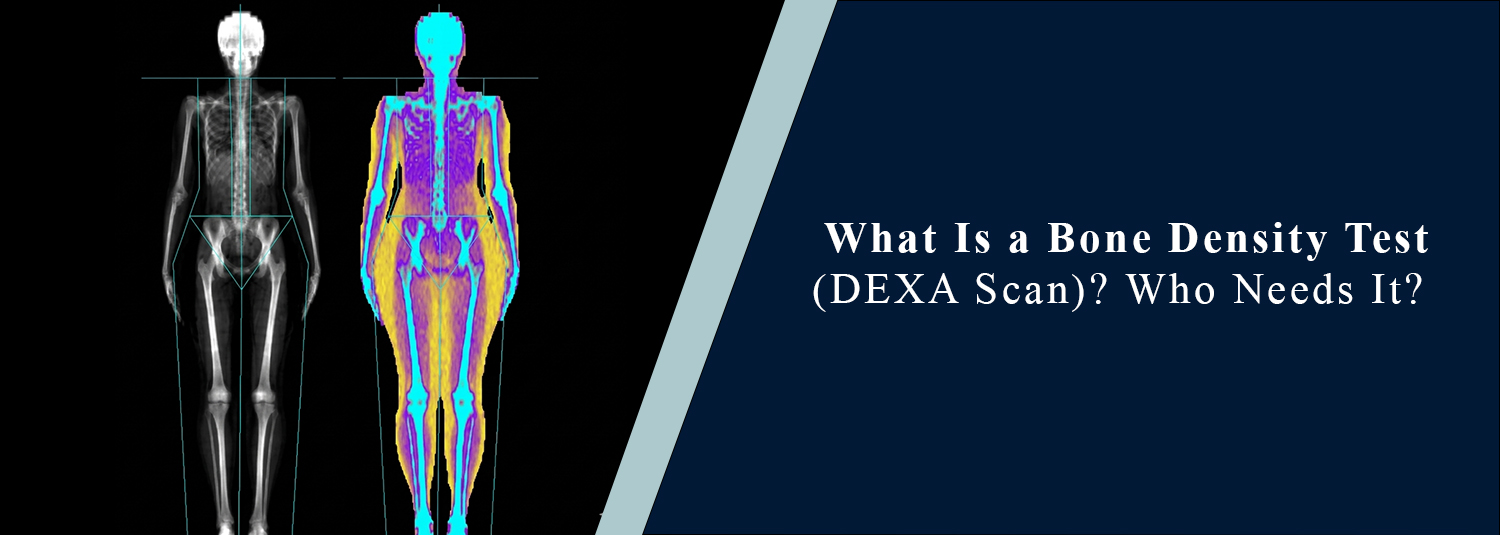
Bones are powerful and provide an individual with mobility, balance, and general health. But bone loss is a slow process that remains unnoticed until a fracture or pain is experienced. Most individuals are ignorant of the fact that their bones are weakening as time goes by. It is here that a bone density test, often referred to as the DEXA Scan, comes in very handy. It aids in the early detection of bone loss and makes it possible to prevent severe troubles by prompt treatment.
What Is a Bone Density Test?
A DEXA Scan (Dual-Energy X-ray Absorptiometry) is a special type of image test involving the measurement of bone mineral density (BMD). It involves low-dose X-rays to check the strength of your bones. The examination is normally carried out on the hip and spine since these are more likely to have a fracture.
This is a non-invasive, painless, and fast test. It does not involve any form of injections or complex preparation, and is therefore a convenient method of testing bone health.
Why Is a DEXA Scan Important?
Bone loss also does not present any noticeable symptoms during the initial stages. Consequently, there are numerous people who learn about the problem after having a fracture. A DEXA scan can be used to identify a diminished bone density before it becomes very problematic.
It is also very handy when it comes to the diagnosis of Osteoporosis that is a condition where bones become weak and are most likely to fracture. Early diagnosis enables medics to prescribe lifestyle changes and interventions to enhance bone strength and limit fractures.
How Does the Test Work?
When doing the scan, you are lying on the flat table as the scanning arm travels gradually through your body. With the machine, the X-rays are passed on to your bones at low doses, and the machine measures the obtained absorption. Dense bones absorb more X-rays than weak bones.
The whole procedure can last 10- 20 minutes. It is totally painless, and you can go about your routine activities right after the test.
Understanding DEXA Scan Results
The results of the DEXA scan are expressed in T-scores, i.e., your bone density compared to that of a healthy young adult.
Who Needs a Bone Density Test?
A DEXA scan is not necessary for all people, but some people are more prone to losing their bone strength and would like to have the test done.
Females 65 years and above.
Males 70 years and above.
Women below 65 years of age and postmenopausal with risk factors.
People who have had fractures from minor injuries
Young people whose family members have osteoporosis.
People taking long-term steroid medications
Individuals with hormonal disorders or a lack of calcium.
When you fall into one of these groups, a health exam that includes a bone density test may be ordered by your physician.
Risk Factors for Weak Bones
Bone density can be reduced due to several factors. The most general one is aging, whereby bone mass diminishes with age. Women can lose their bone mass faster due to hormonal changes and, in particular, loss of estrogen following menopause.
There is also a great contribution of lifestyle factors. Bones can be made weak by a low calcium and vitamin D diet, inactivity, cigarette smoking, and increased alcohol intake. The risk may be further contributed to by certain health issues and some medications.
Preparation for a DEXA Scan
The DEXA Scan preparation procedure is easy. You might be requested to take off calcium supplements at least 24 hours before the test. It is advisable to wear soft, loose-fitting clothes that do not contain any metal, including zippers, belts, etc.
You should also tell your doctor whether you are pregnant or have recently had imaging tests done on yourself that include contrast materials, as this could affect the scan.
Is the Test Safe?
Yes, DEXA is regarded as very safe. It employs a very low amount of radiation, which is far less than a normal X-ray. Due to this reason, it can be regularly used in people who are suffering from bone loss.
Valuable implications of early detection and prevention far override low-risk implications of the test.
What Happens After the Test?
As soon as the results are delivered, your doctor will consult them and propose proper actions. When you have low bone density, changes to your lifestyle, including a better diet, more physical activity, and calcium and vitamin D supplements, may be recommended.
In other instances, drugs can be given to reduce bone loss and to build strength in the bones. Follow-up scans can also be advised because they will help to assess your progress and modify treatment whenever necessary.
Conclusion
A bone density test is a basic yet effective instrument of keeping bones healthy. The DEXA Scanning aids in detecting bone loss and identifying diseases such as Osteoporosis at an early stage before severe complications set in.
When you are in danger or are afraid of your bone condition, it is prudent to reach out to your doctor and seek assessment of the condition. With appropriate care and lifestyle, you will be maintaining strong and healthy bones in the future, with early diagnosis.
Frequently Asked Questions
In News
Get Our Mobile App
for Easy Access
Book tests, view reports, and manage your health records on the go. Experience convenient healthcare with Molecular Diagnostics and Therapy.
- ✔ Book tests & home collection
- ✔ View reports instantly
- ✔ Track health history
- ✔ Get notifications & reminders
- ✔ Easy appointment management