PET CT Scan for Lung Cancer: How Early Can It Detect?
Talk to Health Expert

Dr. Nikunj Jain
Co-Founder and HOD - Nuclear Medicine ,MBBS, DRM, DNB, FEBNM, FANMB, Dip. CBNC
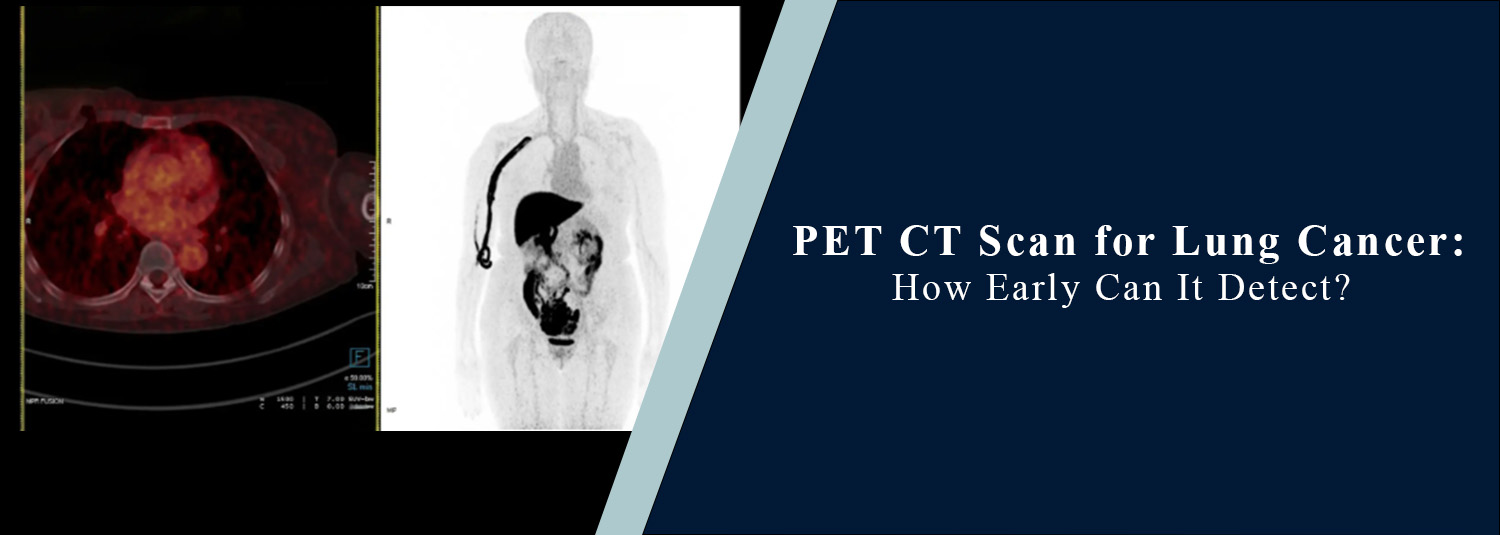
Lung cancer remains one of the most prevalent and thus most deadly cancers in the world today. One of the big challenges in the way of lung cancer treatment is that frequently, people go through the initial phases of the disease without any signs. If you have symptoms such as a cough that won't go away, chest pain, shortness of breath, or loss of appetite and weight, your cancer could be more advanced. This is important as early diagnosis is crucial to the effectiveness of treatments and survival.
Advances in medical imaging have given doctors a better chance for early detection of lung cancer and helped improve early diagnosis. Among these, PET-CT scanning has proven to be one of the most advantageous technologies in cancer diagnosis, characterisation, and treatment assessment. The combination of PERT and CT enables the physician to have more precise clinical information and more precise anatomical information, which makes a more precise diagnosis for clinical decisions. Advanced PET-CT imaging is being used in Molecular Diagnostics and Therapy to assist in the early diagnosis of cancer, accurate staging of cancer, and the assessment of patients with lung cancer.
PET-CT is a merging of two strong imaging modalities. Positron Emission Tomography (PET) is a type of metabolic analysis of cells, and Computed Tomography (CT) is an analysis of the internal structure of the body. A small portion of a radioactive tracer that has glucose in it is then placed into the bloodstream during the process. Cancer cells generally grow and divide quickly and require more glucose than healthy cells. This means that the tracer is concentrated on PET images of areas with cancer cells.
At the same time, the CT scans offer detailed anatomical information, helping the physician to locate abnormal areas in the body. This is a combination so informative that PET-CT is much more informative than using either imaging technique alone.
Why Is Early Detection of Lung Cancer Important?
The stage of a person's lung cancer diagnosis, also known as the stage, greatly influences how the cancer can be treated and the prognosis. For early-stage lung cancer, some treatments include surgery, drugs focused on a certain part of the body (also called targeted therapy or agents), radiation, and/or other therapies.
Unfortunately, there are cases of lung cancer that can develop without symptoms. Often, this means that the patient is in a later stage of diagnosis, and treatment is more difficult. If it is found early, doctors have the opportunity to detect any suspicious growth that may go without the tumor growing too large to tackle, thus giving the patients a better survival rate.
How Early Can PET-CT Detect Lung Cancer?
PET scans may even reveal evidence of cancer-related changes in metabolism before noticeable changes are seen with routine imaging tests. Even very small cancers have a higher metabolic rate. This capability enables PET-CT to be able to detect areas in question sooner than many current diagnostic imaging techniques. In most cases, PET-CT allows serious illness to be detected in small growths in the lung that may need further investigation.
Lung cancer detection, however, is dependent on a number of factors, like the size of the tumor, its location, and its metabolism. In some cases, it is not the tumor itself that requires imaging, but rather the metabolism of the tumor cells. If a very small tumor is present, it may not be detected by PET scanning because it does not take up enough labelled tracer. PET CT has its limitations, but the fact is that it's one of the most powerful imaging exams available to diagnose suspected lung cancer.
Role of PET-CT in Diagnosing Lung Cancer
If a lung nodule or abnormality is detected in the chest X-ray or computed tomography (CT) scan, PET CT can provide information that will help identify if the nodule is probably cancerous or not. Malignant tumors are generally more metabolically active than normal tissues, and PET-CT may be used to help determine if a suspicious-looking lung lesion is or isn't a tumor. This helps to decide whether or not additional tests (such as a biopsy) are necessary.
PET-CT is particularly useful for distinguishing between the presence and activity of cancer and scar tissue, inflammation, or other non-cancerous abnormalities that may appear similar on conventional imaging tests.
PET-CT and Cancer Staging
Staging is one of the most significant applications of PET-CT in the treatment of lung cancer. The staging of cancer involves an assessment of the extent of the disease in the body. A PET-CT scan can be used not only to assess the primary lung tumour, but can also assess nearby lymph nodes and distant organs. This comprehensive evaluation aids a doctor in deciding if cancer has spread to the lungs.
Treatment depends on the extent of the disease, and that is why staging is critical to get an accurate diagnosis. Especially in the early stages, cancers can be treated with surgery; in many cases, evidence of far more advanced cancers will present to be treated with systemic approaches like chemotherapy, an immunohistochemistry approach, or therapeutic agents that have targeted treatment.
Monitoring Treatment Response
PET-CT is valuable not just for diagnosis but also in the treatment, staging, and outcome to check the efficacy. The metabolic changes of tumors often occur before there is any increase or decrease in the size of the tumor itself.
PET-CT can measure metabolic activity, which can help the doctor decide if the cancer cells are responding to treatment. If there is a reduction of tracer uptake, then a positive response is likely, although if the uptake has not dropped or has continued to rise, then it might point towards making changes to the treatment plan. This is the ability to gauge treatment success early, which will enable oncologists to make better decisions in offering the care their patients deserve.
Conclusion
PET CT scanning has developed into an amazing new tool for detecting and treating lung cancer, providing valuable information about the structure and metabolism of tumors. In this sense, it is one of the most useful imaging techniques in current oncology practice because it has the ability to detect abnormal cells at an early stage.
PET-CT is employed at all points in the cancer care journey, from diagnosis of an undifferentiated lung nodule through to checking the success of cancer treatment, and as part of cancer recurrence monitoring. While not every imaging technique is completely accurate, the PET–CT is important for getting a more accurate diagnosis, which ultimately leads to better treatment for the patient.
Molecular Diagnostics and Therapy continues to strive for timely diagnosis, accurate assessment, and ongoing therapy for patients with lung cancer, as it maximizes the use of very advanced PET-CT technology along with its diagnostic team.
Frequently Asked Questions
In News
Get Our Mobile App
for Easy Access
Book tests, view reports, and manage your health records on the go. Experience convenient healthcare with Molecular Diagnostics and Therapy.
- ✔ Book tests & home collection
- ✔ View reports instantly
- ✔ Track health history
- ✔ Get notifications & reminders
- ✔ Easy appointment management