What Is Contrast Dye in a CT Scan and Is It Safe?
Talk to Health Expert

Dr. Nikunj Jain
Co-Founder and HOD - Nuclear Medicine ,MBBS, DRM, DNB, FEBNM, FANMB, Dip. CBNC
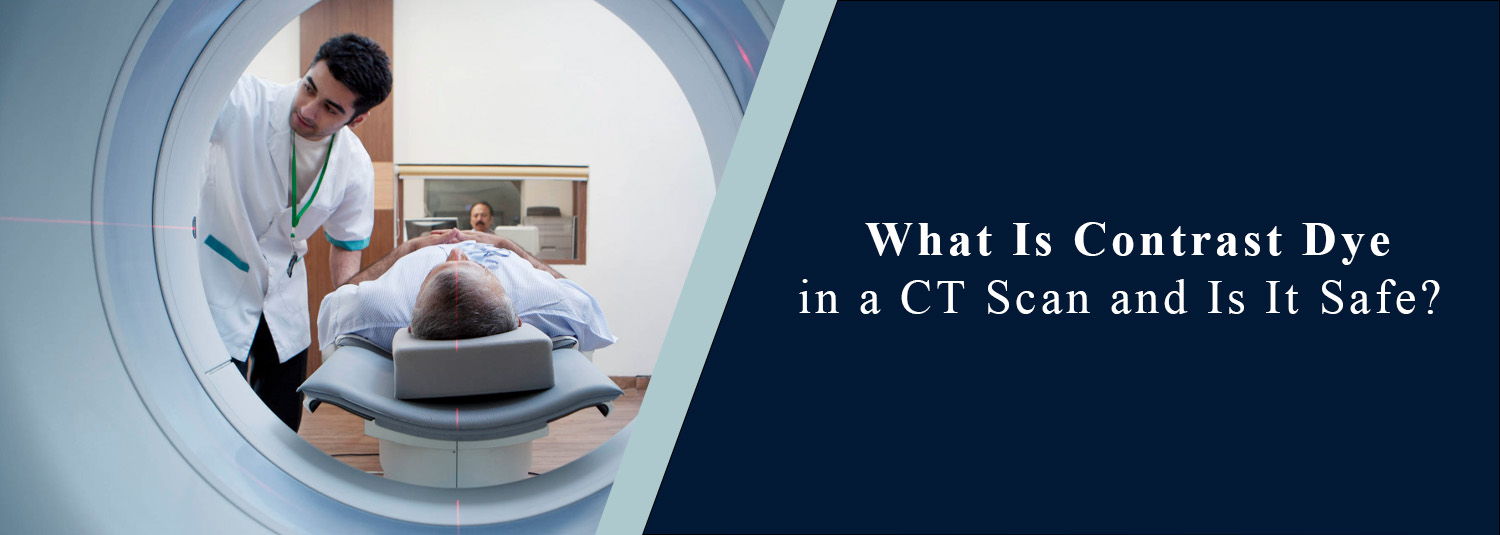
A CT scan is one of the most widely used imaging procedures used today in the medical field. They can help the doctor look at the organs, bones, blood vessels, and tissues in a lot of detail. In some cases, a CT scan using contrast dye can be ordered, which offers more detailed and clearer images of the body. Many people, when hearing they are about to have a CT scan, have heard of what is often referred to as contrast dye, and are worried about this. Safety, side effects, allergies, and what the dye does are common and frequently asked questions. Providing patients with information and comfort on the use of a contrast dye before their scan procedure may make them more comfortable and knowledgeable.
Contrast dye CT imaging can be used to aid the diagnosis of infections, tumours, blood vessel disorders, abdominal disorders, and many other diseases. In Molecular Diagnostics and Therapy, the use of advanced CT imaging supports close diagnosis and medical assessments through the sophisticated use of CT imaging.
What Is Contrast Dye?
Dye is a special substance called "contrast dye," "contrast material," or "contrast agent" that is used during imaging tests to help certain organs, tissues, and blood vessels in the body be seen. In a regular CT scan, certain tissues may not be distinguishable from normal tissue and abnormal tissue because these tissues are similar in density. Contrast dye contrasts with these structures to accentuate them, enhancing the diagnostic ability of the image. The majority of CT scan contrast agents are iodine-based because iodine is effective at blocking X-rays, making the image more visible.
How Is Contrast Dye Given?
Depending on what area(s) of the body are being scanned and what the purpose is, several methods of contrast administration are available. Most often, the contrast material is administered intravenously (IV), typically in the arm or hand. This enables dye to flow through the bloodstream and stress the blood vessels and organs in the body.
To obtain better visualisation of the stomach and other digestive tract structures, oral contrast may be needed for some abdominal or digestive system scans and may be administered to the patient before the imaging. In some special tests, a contrast can also be injected into body cavities or joints. The procedure used depends on which medical condition is being assessed and whether a CT scan is needed.
Why Is Contrast Dye Used?
A contrast dye is used to improve the ability of the doctor's CT scan to provide detailed and accurate information. It allows the easy visualization of soft tissues and better delineation of normal and abnormal tissue types. Common uses of contrast-enhanced CT are as follows:
Tumors and cancers
Blood vessel abnormalities
Infections and inflammation
Internal bleeding
Organ injuries
Kidney and liver disorders
Brain conditions
Heart and vascular diseases
Contrast dyes are useful in cancer imaging to identify the size, blood supply of the tumor, and its spread to adjoining tissues. It can be used in a vascular imaging method to inspect the flow of blood and find clogging or an aneurysm.
What Happens During a Contrast CT Scan?
The healthcare provider may ask questions before the scan, such as whether there are any allergies, kidney disease, or diabetes, and whether any other medications were taken or previous reactions to contrast dye were experienced. Sometimes a blood test is ordered to check how well the kidneys are functioning before giving the contrast.
Some feel a warm sensation throughout their body or taste a bit of metal in their mouth during the injection. This is typically a fleeting emotion and is gone in just a couple of minutes. The procedure is painless and will only take a brief amount of time. Patients should drink ample amounts of water after the procedure to assist in the removal of the dye.
Is Contrast Dye Safe?
In most cases, the dye used in CT scans is safe for humans. The modern contrast media are well-designed and extensively used in world medical imaging. But, like any medical part, some people will get a side effect or allergic reaction to the contrast dye. In general, complications are not serious and can be prevented with caution. To keep risks to a minimum and help keep patients safe, doctors thoroughly review a patient's medical history before offering a contrast-enhanced CT scan.
Common Side Effects of Contrast Dye
Very few side effects from the dye are severe and permanent. A few people may have:
A warm flushing sensation
Mild nausea
Metallic taste in the mouth
Mild headache
Temporary discomfort at the injection site
Typically, these symptoms will clear up within a short period of time.
Allergic Reactions to Contrast Dye
Very few people get an allergic reaction to the iodine-based contrast dye. Some allergic reactions may consist of itching or a rash, as well as sneezing or scabby skin. In very few cases, more serious side effects can occur, including trouble breathing, swelling, or low blood pressure. The imaging centers are prepared to deal with allergy reaction in a timely way in case of its occurrence. Anyone who has had an allergic reaction to contrast dye before, has asthma, or has extreme allergies should inform their doctor before their scan.
Kidney Safety and Contrast Dye
The use of contrast dye is one of the primary concerns since it affects the functioning of the kidney. Generally, people with normal kidney function will have no problem getting rid of the contrast. Patients with a history of kidney disease, diabetes, dehydration, and some medical conditions might be slightly more likely to experience kidney-associated complications following contrast. Thus, doctors may order kidney function tests prior to performing the dye tests, particularly in high-risk people. Fluids after the scan may be necessary to support kidney function and remove the contrast from the body.
Who May Need Extra Precautions?
Some people need further testing prior to getting the contrast dye. These may include:
Patients with kidney disease
People with diabetes
Individuals with previous contrast allergies
Patients with asthma
Elderly patients with multiple health conditions
Doctors might change the process, prescribe more fluids, or have other imaging tests if needed.
Conclusion
Contrast dye is used in many CT scanners and produces very good images, and it is also used to improve the accuracy and quality of images produced by the CT scan in diagnosis. Doctors can use contrast-enhanced CT scans to diagnose and determine the severity of several medical issues because it shows certain organs, blood vessels, and diseased tissue. Most patients tolerate and do not have any adverse reactions to the contrast dye.
While there are mild side effects and allergic reactions that may sometimes occur, serious complications do not frequently happen when medical precautionary measures are taken. Patients need to understand what a contrast dye is, why it is used during a CT scan, and its associated safety. In the era of state-of-the-art imaging and personalized diagnostic care, Molecular Diagnostics and Therapy assist in the correct interpretation of a radiograph and a safer assessment of a patient with a variety of medical conditions.
Frequently Asked Questions
In News
Get Our Mobile App
for Easy Access
Book tests, view reports, and manage your health records on the go. Experience convenient healthcare with Molecular Diagnostics and Therapy.
- ✔ Book tests & home collection
- ✔ View reports instantly
- ✔ Track health history
- ✔ Get notifications & reminders
- ✔ Easy appointment management