Liver Ultrasound: Why Your Doctor May Recommend It?
Talk to Health Expert

Dr. Nikunj Jain
Co-Founder and HOD - Nuclear Medicine ,MBBS, DRM, DNB, FEBNM, FANMB, Dip. CBNC
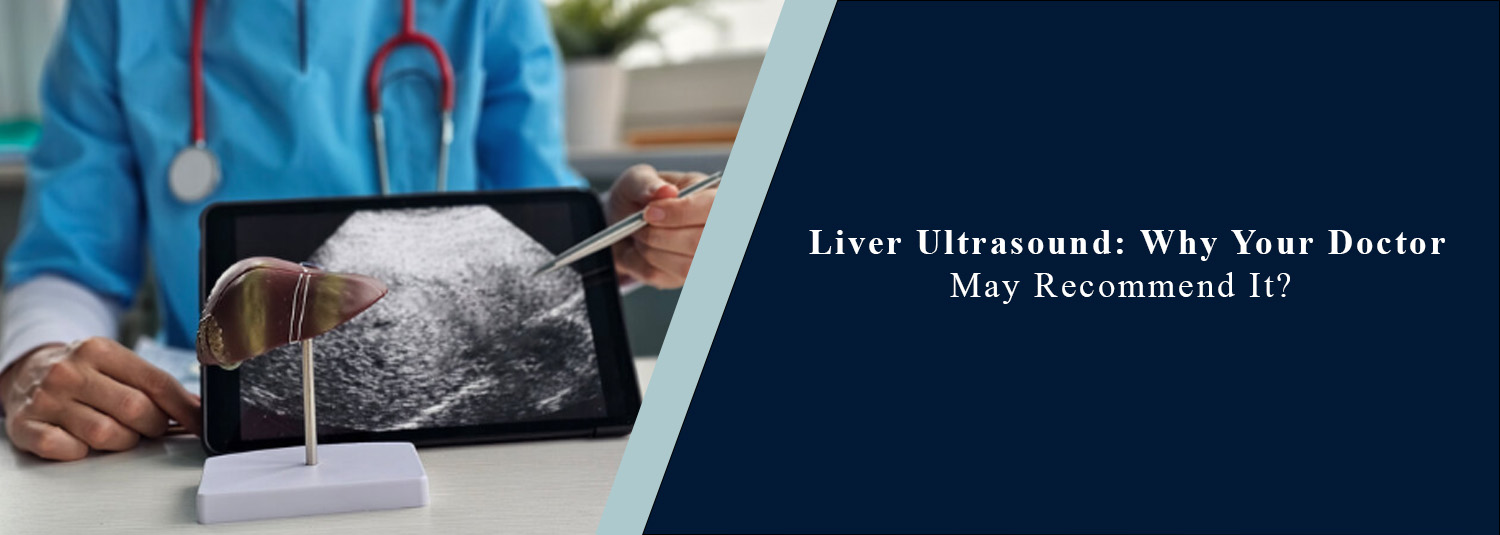
The liver is a very important organ in the human body. It is involved in thousands of critical processes like eliminating toxic substances from the bloodstream, making proteins, storing nutrients, and aiding digestion. Many liver diseases develop during the early stages with little or no signs or symptoms. This explains the often-prescribed liver ultrasound when someone is suspected of having a liver problem or to follow an already diagnosed condition.
Liver Ultrasound is an imaging procedure that uses sound wave energy to form detailed images of the liver and surrounding organs is safe, painless, and non-invasive. It assists physicians in identifying issues like fatty liver, enlarged liver, cysts, tumors, infection, and other issues related to bile ducts without having patients undergo radiation exposure.
Whether you are looking for the best ultrasound scan, ultrasound scan test information, an ultrasound scan report explanation, or you are looking for an ultrasound scan near me, it helps to understand the purpose of an ultrasound scan to learn the reason for this test being commonly recommended. Here at Molecular Diagnostics and Therapy, state-of-the-art ultrasound equipment is paired with experienced doctors of radiology to deliver accurate liver imaging for early diagnosis and for the best treatment planning.
What Is a Liver Ultrasound?
A liver ultrasound kind of imaging test that uses high-frequency sound waves to obtain real-time images of the liver. In contrast to other imaging procedures (such as CT scans or X-rays), ultrasound does not use radiation, thus making it a safe way to image individuals of all ages.
During the scan, the doctor can look at the size, shape, texture, blood flow, and neighbouring anatomical structures of the liver. It can also check the gallbladder, bile ducts, and blood vessels nearby at the same time. A liver ultrasound is a popular choice as it is short, easy, and makes important diagnoses.
Why Do Doctors Recommend a Liver Ultrasound?
A liver ultrasound might be ordered for a variety of reasons. This is frequently the initial imaging study ordered in the event of liver disease being suspected. A liver ultrasound is used to check the liver when liver function tests are abnormal, abdominal pain is chronic, the abdomen is swollen, one is yellow, has lost weight for no apparent reason, or liver enzymes are up. It is also often employed for chronic liver diseases to diagnose hepatitis and fatty liver disease. Test results can be very useful to doctors for making decisions on further tests or treatment.
Conditions That Can Be Detected
Liver ultrasound can be used to help determine many liver issues. It is used commonly in the diagnosis of fatty liver, liver enlargement, liver cysts, benign tumors, liver abscess, cirrhosis, blockage of the bile duct, gallstones, and some types of liver cancer. It may also detect abdominal fluid (ascites). While ultrasound is very useful in many cases of liver problems, in some instances, a computed tomography (CT) scan or a magnetic resonance imaging (MRI) scan may be recommended as a more thorough form of evaluation.
Preparing for the Ultrasound Scan
A good setup results in good image quality during the examination. Sometimes patients are told to fast for approximately 6-8 hours before the scan. Learning is better if gas is eliminated from the intestine by fasting, which makes the liver and gallbladder easier to see.
No matter what, the instructions given by the diagnostic center must be followed by patients before taking the test so that the test result is correct. Molecular Diagnostics and Therapy patients are provided with comprehensive information about their ultrasound scan tests before the appointment to ensure they are well-prepared.
What Happens During the Procedure?
The use of a liver ultrasound is easy and pain-free. The patient is lying on an examination table with an examining gel over the abdomen that couples with their skin. A little machine called a transducer is slowly glided over the skin. The transducer transmits sound waves into the body and receives the reflected sound waves (echoes) as a picture on a screen. Typically, the process takes about 20-30 minutes, and patients are able to resume their normal pursuits right after the procedure.
Is Liver Ultrasound Safe?
Yes. Liver ultrasound is one of the least risky imaging tests that are available. Considering that it is based on sound waves and not radiation, no known adverse effect exists from diagnostic ultrasound (typically used for routine examinations). Popular for adults, children, and even pregnant women (where appropriate). It has very good safety, so it can be used for repeated examinations when continuous monitoring is needed.
Understanding Your Ultrasound Scan Report
Once the exam has been completed, a radiologist reviews the images and generates a report for ultrasound. Liver size, shape, texture, and any abnormalities that may be present are described. It can also involve results of the gallbladder, bile ducts, pancreas, spleen, or nearby blood vessels. Your doctor can tell from the report if more tests or treatment are necessary. The ultrasound examination report from a sonogram should always be read by the patient with their doctor, not alone.
Benefits of Early Liver Imaging
Several liver diseases may present with no signs or symptoms. Doctors can catch problems before liver damage occurs in the early stages of the disease with early imaging. Early diagnosis provides better treatment options, can help track the progression of the disease, and can help avoid severe and life-threatening consequences like liver failure or late-stage cirrhosis.
Those who have diabetes or obesity, viral hepatitis, high blood cholesterol, or a history of liver problems in the family may particularly benefit from early liver evaluation. State-of-the-art imaging technology aids in better liver ultrasound exams and timely treatment at Molecular Diagnostics and Therapy.
Choosing the Best Ultrasound Scan
When searching for the best ultrasound scan, patients should look for experienced radiologists, modern imaging equipment, reliable reporting, and accredited diagnostic facilities. High-quality ultrasound technology produces clearer images, allowing more accurate diagnosis and better treatment planning. Choosing an experienced diagnostic center also ensures dependable ultrasound scan test details and timely reporting. If you are looking for an ultrasound scan near me, selecting a trusted diagnostic center with experienced specialists can make a significant difference in the quality of your healthcare.
Conclusion
Liver ultrasound is a pain-free, non-invasive, and highly sensitive imaging procedure that can be performed to assess the general condition of the liver and identify a variety of liver disorders. This exam can offer useful diagnostic information without sending patients down to the X-ray table to receive radiation, and it can help in diagnosing fatty liver disease or liver enlargement, cysts, tumors, and bile duct issues.
Knowing what the ultrasound scan test is and what to expect when you get your ultrasound scan report from your doctor can help you ensure an accurate diagnosis and the right treatment. When looking for the best ultrasound scan and ultrasound scan near me, you should look for an experienced diagnostic center, because this would ensure that you will have accurate results.
Through the advanced use of imaging technology and experienced radiologists, Molecular Diagnostics and Therapy delivers accurate imaging services of the liver with a priority on early detection, precise diagnosis, and high-quality patient care.
Frequently Asked Questions
In News
Get Our Mobile App
for Easy Access
Book tests, view reports, and manage your health records on the go. Experience convenient healthcare with Molecular Diagnostics and Therapy.
- ✔ Book tests & home collection
- ✔ View reports instantly
- ✔ Track health history
- ✔ Get notifications & reminders
- ✔ Easy appointment management