Chronic Kidney Disease: Stages and Testing
Talk to Health Expert

Dr. Nikunj Jain
Co-Founder and HOD - Nuclear Medicine ,MBBS, DRM, DNB, FEBNM, FANMB, Dip. CBNC
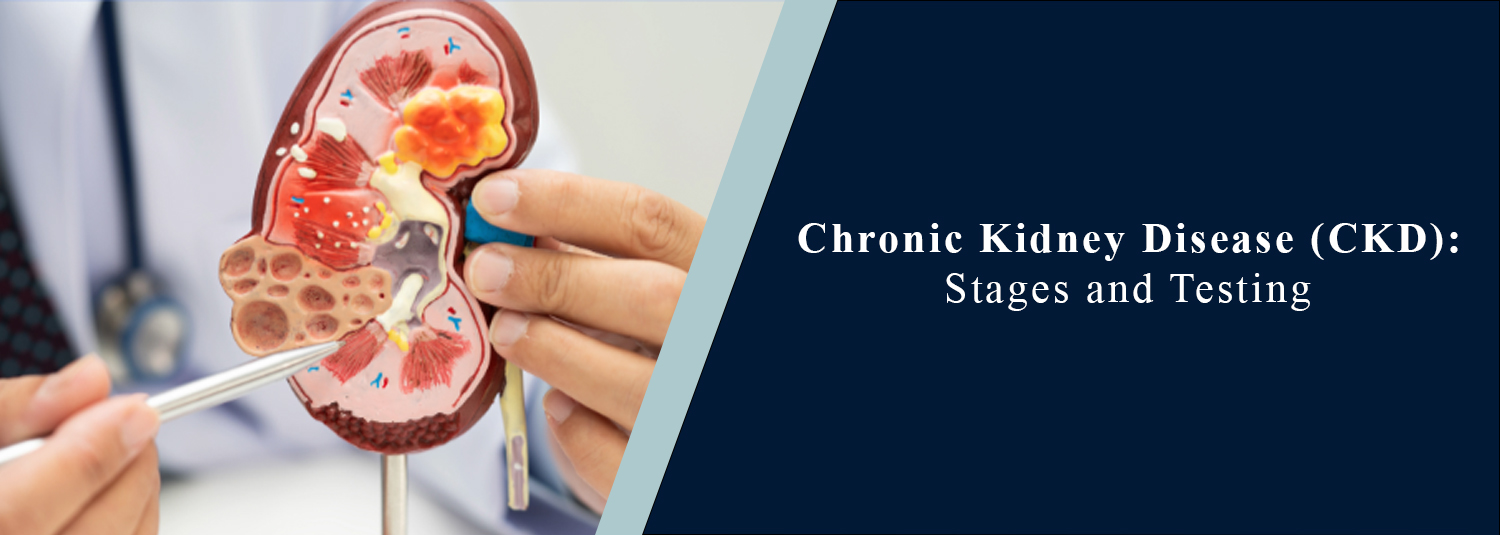
Chronic Kidney Disease (CKD) is a chronic disease in which the kidneys ultimately become unable to effectively perform their functions. The kidneys are significant because they assist in the filtration of blood to eliminate waste products, excess fluid, and toxins, and they help maintain electrolyte balance and proper blood pressure. When a kidney begins to become drained over time, then the body has to begin to build up some degree of harmful material, leading to serious health problems unless it is properly addressed.
The CKD tends to develop gradually, and a person hardly shows any symptoms in the first stages. This is why many people are unaware of the disease until it has reached a significant stage. We must be aware of the stages of CKD and why it is important to early diagnose in order to live better, as well as to be in control of it.
Understanding Chronic Kidney Disease
Diseases that damage the kidney in the long run are also known to cause Chronic Kidney Disease. The latter are the two most common, such as diabetes or high blood pressure, which could harm even the smaller filtering elements of the kidneys. Other contributory factors include recurrent kidney infections, inherited conditions, autoimmune conditions, and chronic use of certain drugs.
There may be no symptoms at an early age of CKD. However, with the progression of the disease, patients may feel tired and have swelling of their legs or ankles, changes in their urine, muscle spasms, nausea, and poor concentration. These symptoms are typically associated with a scenario in which the functioning of the kidneys has been significantly hampered.
Stages of CKD
These five stages of CKD depend on the rate of glomerular filtration (GFR), the success of the kidneys in filtering blood. Each stage indicates the extent of kidney damage and can help in treatment choices.
Stage 1: Normal or High Kidney Function
Kidney activity is normal or nearly normal in this phase, with a GFR of 90 or more. Nonetheless, common effects of kidney damage may be indicated by the presence of protein in the urine. The majority of individuals in this age group do not have any symptoms, making regular testing a necessity in determining their presence.
Stage 2: Mild Reduction in Kidney Function
At this point, GFR is between 60 and 89. The damage to the kidneys is established, but the symptoms are still slight or nonexistent. Lifestyle modifications and addressing underlying conditions, together with early intervention, may enable the delay of the disease.
Stage 3: Moderate Kidney Damage
Stage 3 is often divided into two sub-stages: 3A (GFR 45–59) and 3B (GFR 30–44). The effects of fatigue, water retention, and obstructions with urination may start showing up at this stage. This process is crucial in medical management in order to avoid additional deterioration.
Stage 4: Severe Kidney Damage
Kidney functionality is greatly affected with a GFR between 15 and 29. The symptoms are more evident and can comprise swelling, dyspnea, and metabolic disequilibrium. At this point, preparation of higher interventions like dialysis or a kidney transplant may be initiated.
Stage 5: Kidney Failure (End-Stage Renal Disease)
In the last phase, the GFR becomes lower than 15, which means the kidney is severely failing. The kidneys are no longer able to filter the blood effectively. This stage may be fatal without any treatment, such as dialysis or a kidney transplant.
Importance of Testing in CKD
Routine testing is important in the early diagnosis of CKD, particularly in individuals who are more at risk. Laboratory tests are very important since symptoms usually do not manifest at an early stage, and this may result in much harm before the disease is detected.
A blood test, including serum creatinine, is one of the main tests applied to determine the functioning of the kidneys. Creatinine is another waste substance secreted by the muscles, and its high concentration in the blood signifies poor functioning of the kidneys. This value is employed to estimate the GFR, which is used to identify the CKD stage.
The other significant test is the albumin-to-creatinine ratio (ACR), which is used to test the presence of protein in the urine. The occurrence of protein leaking is a useful early indication of kidney damage, and its occurrence can be seen even at normal GFR levels.
Other tests can be performed to ensure that no abnormalities are found, urine analysis can be done to warrant the patient to undergo some kind of testing, like an ultrasound or CT scan to determine the structure of the kidneys, and occasionally a kidney biopsy to confirm the cause of any damage.
Who Should Get Tested?
Some categories of the population are more at risk of CKD and require routine screening. These are people with diabetes, a history of high blood pressure, a family history of kidney disease, people who are overweight, or people above 40 years old. The timely identification of CKD in these people can be performed during early testing and prevent the emergence of the disease.
Managing CKD Through Early Detection
Even though CKD is incurable, the right management and early diagnosis can substantially delay the disease. Proper lifestyle modifications (eating healthy, low salt, physical activity, and smoking prevention) can be used to prevent kidney damage.
The medical management can involve the regulation of blood sugar in diabetic patients, the regulation of blood pressure, and the use of drugs that minimize protein wastage in the urine. Monitoring should be performed regularly by blood and urine tests to monitor changes in the disease and to change the treatment accordingly.
Conclusion
Chronic Kidney Disease is a long-term illness that may remain unidentified until it is at an advanced stage. The knowledge of its stages and the significance of testing can make a difference. Diagnosis and timely management of the latter can be made through routine screening, particularly among the high-risk population. Proactive actions and frequent visits to healthcare professionals can help people to control CKD and experience a higher quality of life.
Frequently Asked Questions
In News
Get Our Mobile App
for Easy Access
Book tests, view reports, and manage your health records on the go. Experience convenient healthcare with Molecular Diagnostics and Therapy.
- ✔ Book tests & home collection
- ✔ View reports instantly
- ✔ Track health history
- ✔ Get notifications & reminders
- ✔ Easy appointment management