CT Shoulder Scan: Purpose, Procedure, and Risks
Talk to Health Expert

Dr. Nikunj Jain
Co-Founder and HOD - Nuclear Medicine ,MBBS, DRM, DNB, FEBNM, FANMB, Dip. CBNC
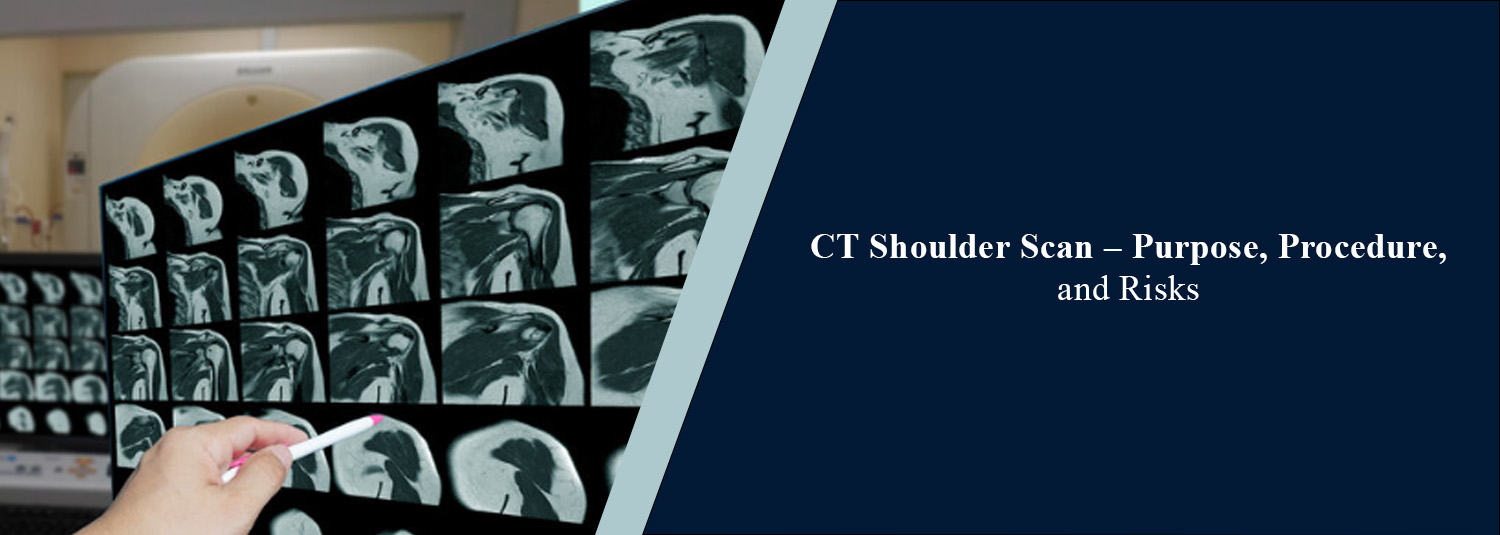
A Computed Tomography shoulder scan is
a type of imaging test that uses X-rays and computer processing to create
detailed cross-sectional images of the shoulder bones and joint. If a physical
exam or X-ray is not adequate, your doctor might order a CT scan of your
shoulder. This guide explains what to expect during a CT shoulder scan, how it
is used, the possible risks, and the cost factors. Molecular Diagnostics and Therapy offers diagnostic imaging to aid the assessment of a wide range of
medical conditions.
What Is a CT Shoulder
Scan?
A CT scan of the shoulder, also called
a shoulder CT, uses a scanner to produce detailed pictures of the bones and
surrounding tissues. These include the upper arm bone, shoulder blade,
collarbone, and shoulder joint. The CT scan forms cross-sectional images,
unlike a normal X-ray, which enable doctors to look at the shoulder from
various angles. It is especially valuable in determining the alignment of bone
fragments in complex fractures, bone damage, joint alignment, and some
structural abnormalities. The scan may be done with or without contrast dye.
What Are the Uses of
a CT Shoulder Scan?
Doctors use a CT shoulder scan to get
more detailed pictures and to detect and examine any problems that may be
present around the shoulder joint or in other bones. It may be used, following
an accident, fall, or sports injury, to identify a fracture or the amount of
damage done to bone. It may also assist your doctor in assessing your shoulder
dislocations, proper alignment, and the deformities of some types of arthritis.
Sometimes an examination is performed
in case of suspected lesions of the bones or structure. A CT scan may also be
used before certain surgeries, such as shoulder replacement or complex fracture
repair, to show the bone anatomy in detail. After surgery, it can be used to
evaluate bone alignment and healing if there is a clinically indicated need for
further imaging. The results of the scan are taken with the patient's symptoms,
medical history, and other exam results to help determine additional evaluation
or treatment.
What Is the CT
Shoulder Scan Procedure?
The CT shoulder scan technique tends to
be rapid and non-invasive. Details of the procedure vary according to protocol
and need for contrast.
Before the Scan
Your doctor's staff will check your
prescription and ask about your medical history. Tell them if you are pregnant
or have a chance of becoming pregnant, have kidney problems, or have had a
reaction to contrast material in the past.
Fasting is not usually necessary for
the majority of non-contrast shoulder computed tomography (CT). If contrast
material is to be used, however, extra preparation may be required. Jewellery,
watches or any other piece of metal that might get in the way of imaging may be
removed at the doctor's request. Follow the instructions given by the
diagnostic centre before your appointment.
During the Scan
You will lie on a motorised examination
table, positioned so the shoulder can be scanned accurately. While the table
passes through the CT scanner, X-ray images are taken from various angles.
These images are sent to a computer to examine the shoulder in great detail in
a cross-sectional view.
It is important to stay still during
the scan to get clear images. In cases where it is necessary to use a contrast
material, it might be given through an intravenous line. This entire process
will be explained to you by the imaging team.
After the Scan
After the exam, the majority of
patients will be able to resume their normal routine, except in any instances
where their healthcare team recommends otherwise. If they have given you
contrast media, follow their further instructions. A radiologist reviews the
scans and writes a report for the doctor who ordered them. Your doctor will let
you know what he or she found and offer additional tests or treatment options
if they are needed.
What Are the Risks of
a CT Shoulder Scan?
CT diagnostic imaging of the shoulder
is typical of the medical diagnosis process, but there are some risks
associated. Use of ionising radiation during the exam itself should be carried
out when the possible medical uses outweigh the risk of exposure. The imaging
team responsibly handles radiation risk by following proper procedures. A small
number of patients have an allergic reaction to contrast dye, which is usually
mild. Severe reactions are rare.
For individuals who have kidney issues,
a further evaluation may be necessary prior to taking iodinated contrast dye.
Tell the doctors in advance of the exam about your medical history, allergies,
and any potential for pregnancy. Another factor is that CT scans will show the
bones very well, but may not be ideal for, or suitable for, some soft-tissue
injuries, such as some abnormalities of the tendons or ligaments. Your doctor
will choose which imaging test is best based on your symptoms and clinical
needs.
What Is the CT
Shoulder Scan Cost?
The cost of a CT scan of the shoulder
is dependent on the diagnostic centre, the CT scan technique being used,
whether or not a contrast material is used, and whether or not the reporting
service is included. The cost of a scan without contrast could differ from an
exam with contrast.
For the correct estimate, please call
the diagnostic centre and check what is needed in the exam requested in the
prescription. Do not assume the price is the complete cost; separately, ask
whether the radiologist’s report is included in the price and whether any other
charges apply. This will give you the full cost in rupees before you book.
Conclusion
A CT scan of the shoulder can show the
doctor a detailed scan of the bones and joints to see if there are any
fractures, dislocations, changes in the bone characteristics related to
arthritis, or abnormalities. The process is rapid and relatively painless, but
uses radiation and may necessitate extra measures if using contrast dye.
If a CT scan of the shoulder has been ordered, follow your doctor's directions about preparing for the procedure and let the imaging personnel know if there are any medical conditions or issues that might affect their results. Molecular Diagnostics and Therapy is a diagnostic centre for imaging that supports the medical evaluation and therapy of patients.
Frequently Asked Questions
In News
Get Our Mobile App
for Easy Access
Book tests, view reports, and manage your health records on the go. Experience convenient healthcare with Molecular Diagnostics and Therapy.
- ✔ Book tests & home collection
- ✔ View reports instantly
- ✔ Track health history
- ✔ Get notifications & reminders
- ✔ Easy appointment management