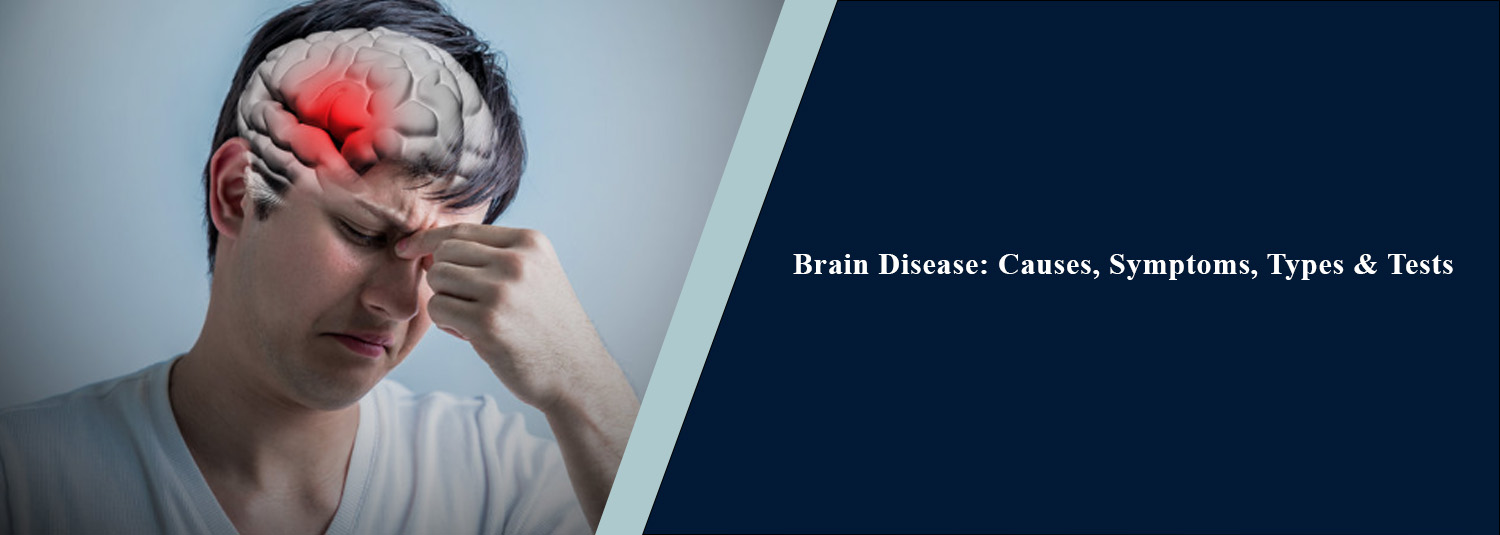
Brain Disease: Causes, Symptoms, Types & Tests
Talk to Health Expert

Dr. Nikunj Jain
Co-Founder and HOD - Nuclear Medicine ,MBBS, DRM, DNB, FEBNM, FANMB, Dip. CBNC
The brain plays a key role in
regulating many important functions in the body, such as movement, memory,
speech, emotions, coordination, and basic functions. Brain diseases may impair
these functions in various ways and can develop through alteration of genes,
infections, trauma (injury), blood vessel problems, or tumors, as well as
because of normal ageing or due to several health-related medical conditions.
Many brain diseases can develop gradually, without any obvious signs, or become
instantly apparent.
Early medical assessment may assist in
narrowing down which symptoms they have and what tests may be needed to look
for a potential cause of their symptoms. The advanced diagnostics offered at
Molecular Diagnostics and Therapy help to assess and manage various brain and
nervous system disorders.
What Is Brain
Disease?
The term brain disease is used to
describe many conditions that impact the brain or its daily activities. They
might be temporary or chronic and can affect brain function, cognition, emotions,
or the broader nervous system. People at any age can suffer from brain
disorders. Symptoms and severity of their symptoms vary according to the
condition and site of involvement in the brain. Many times, when the symptoms
are present, a neurological examination is one of the first steps in the
evaluation process, and further testing is required if necessary.
Common Causes of
Brain Diseases
There are numerous causes of brain
diseases. Some of them may be related to ageing, blood vessel changes,
infection, injury, or genetic changes, or may be inherited. Some problems are
common and may be due to:
- Genetic
or inherited conditions
- Brain or head injuries
- Infections affecting the brain or nervous
system
- Stroke and other blood vessel disorders
- Brain tumors
- Neurodegenerative conditions
- Certain autoimmune disorders
- Metabolic or nutritional problems
- Long-term effects of some other health
conditions
The cause is not always immediately clear, which is why doctors may use
a combination of medical history, neurological examination, laboratory tests,
and imaging.
Brain Disease
Symptoms
There is no single set of symptoms
associated with any condition, and the symptoms depend on the region of the
brain involved. Some symptoms might occur suddenly, and some might spread over
time. Common symptoms of brain diseases are headaches that won't go away or an
unusual type of headache, memory loss, difficulty concentrating, confusion,
seizures, dizziness, difficulty with balance or coordination, weakness or
numbness, changes to vision or speech, tremors, and behaviour or mood
changes.
Headaches, memory loss, and dizziness
don't necessarily mean brain disease. But if symptoms last for longer than
usual, get worse, are unusual, and/or are linked to new neurological problems,
it is advisable to have a health care professional evaluate them.
Types of Brain
Diseases
Brain diseases are of many types and
could be classified based on their cause and effects.
Neurodegenerative
Diseases
Diseases and disorders like Alzheimer's
or Parkinson's can gradually impair the operation of the brain. These can
affect memory, thinking, movement, co-ordination, or any other function.
Epilepsy
Epilepsy is a condition of the nervous
system that is characterized by recurring seizures. EEG may be performed to
assess the electrical functions of the brain, while CT or MRI may help to
evaluate potential structural issues.
Stroke
A stroke happens when blood flow to the
brain is blocked or a blood vessel in the brain leaks (or ruptures). It may
lead to sudden weakness, difficulty speaking, vision changes, confusion, or
coordination/movement issues.
Brain Tumors
Brain tumors are abnormal growths that
can occur in different areas of the brain. Symptoms may involve headaches,
seizures, weakness, vision and speech problems, balance issues, and
cognition/behaviour issues. Magnetic resonance imaging (MRI) or computed
tomography (CT) scan might be used to diagnose and pinpoint the location of a
brain tumour.
Brain Infections
The brain and surrounding structures
can be affected by infections like encephalitis and meningitis. Blood tests,
brain imaging, EEG (electroencephalogram), or a cerebrospinal fluid test may be
used, depending on what it is suspected to be.
Brain Diagnostic
Tests
Not all brain diseases can be diagnosed
by a single test. Depending on the symptoms, medical history, physical exam,
and suspected diagnosis, the tests ordered are determined.
Neurological
Examination
During a neurological exam, the doctor
evaluates functions of the nervous system, including memory, thought,
coordination, movement, reflexes, sensation, speech, and balance. It may help
the doctor determine those areas that might require more of an evaluation.
MRI and CT Scan
MRI is used to give detailed images of
the brain, and it can help to check if there are any abnormalities in the
structure of the brain. Sometimes a CT scan is also helpful and may be used in
certain emergencies, injuries, bleeding, or suspected stroke.
EEG
An electroencephalogram, or EEG, is a
tracing of the brain's electrical activity. Used routinely for suspected
epilepsy and other brain dysfunction disorders.
Blood Tests
Blood tests might be taken to identify
infections, metabolic issues, nutritional deficiencies, thyroid problems, or
other abnormalities that can lead to or be related to neurological symptoms.
PET Scan
In certain cases, PET brain imaging can
give information regarding brain metabolism and function. May be considered to
assess some neurological or cognitive disorders as warranted.
Lumbar Puncture
CSF may be obtained for testing in a
procedure referred to as a lumbar puncture, or spinal tap. It is sometimes used
if doctors suspect some infections, inflammatory conditions, or other
neurological diseases.
When Should You Seek
Medical Evaluation?
Some neurological symptoms need
immediate medical attention. Urgent evaluation is needed for sudden weakness or
numbness, difficulty speaking, sudden confusion, loss of balance, seizures, or
sudden changes in vision. If symptoms develop over time, as with some
persistent memory impairment, headaches, tremors, and/or problems maintaining
balance, a health care professional may decide if additional neurological
evaluations are warranted.
Brain Diagnostic
Services at Molecular Diagnostics and Therapy
Molecular Diagnostics and Therapy
offers diagnostic services that are used to help assess a variety of health
issues. Relevant imaging, laboratory and/or specialist diagnostic
investigations may be advised depending on the clinical needs of the patient.
Test selection should always be determined by the patient's symptomatology,
medical history and examination and the suspected condition. This is because
test results are only part of what needs to be taken into account and should be
considered by qualified health care workers only.
Conclusion
Brain diseases are a variety of conditions that may interfere with the way the brain works and cause problems with memory, movement, speech, coordination, behaviour, and so on. Their causes and symptoms can differ widely; when unusual and persistent symptoms occur, it is important that they be properly examined and evaluated medically. Brain diagnostic tests may include neurological examination, blood tests, MRI, CT, EEG, PET imaging, and cerebrospinal fluid testing, depending on the suspected condition. No single test is suitable for every patient. Molecular Diagnostics and Therapy offers diagnostic services that support the evaluation and monitoring of different health conditions, helping healthcare professionals obtain the information needed for appropriate medical decisions.
Frequently Asked Questions
In News
Get Our Mobile App
for Easy Access
Book tests, view reports, and manage your health records on the go. Experience convenient healthcare with Molecular Diagnostics and Therapy.
- ✔ Book tests & home collection
- ✔ View reports instantly
- ✔ Track health history
- ✔ Get notifications & reminders
- ✔ Easy appointment management