DOTA Test in Delhi: Purpose, Procedure and Benefits
Talk to Health Expert

Dr. Nikunj Jain
Co-Founder and HOD - Nuclear Medicine ,MBBS, DRM, DNB, FEBNM, FANMB, Dip. CBNC
Molecular imaging can be highly
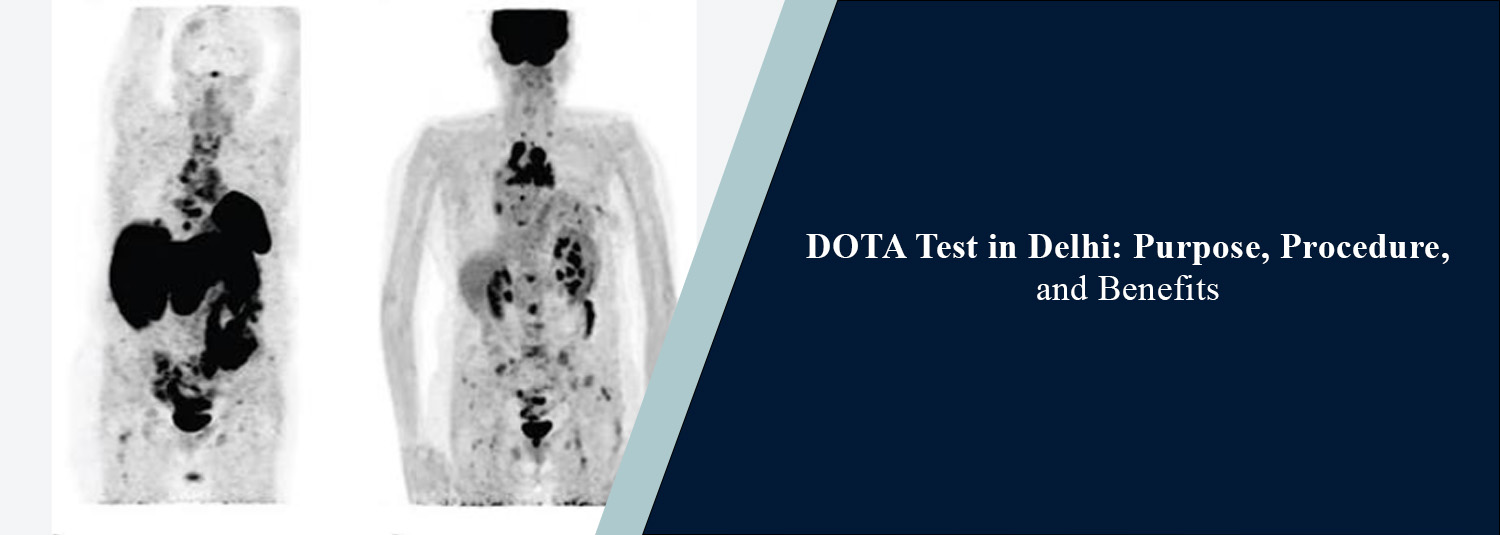
beneficial in diagnosing particular neuroendocrine tumours. A DOTA test is a
form of nuclear medicine imaging and utilises a radiolabelled compound (for
example, Gallium-68 DOTATATE or DOTANOC) to highlight particular cells and
analyse the position and size of some tumours. This is achieved by the
radiolabelled compound attaching to somatostatin receptors.
The PET scanner is then used to analyse
the body’s uptake of this compound. In addition, a CT scan is conducted to
analyse the body’s structure and so enable the medical team to analyse the
position of areas with increased uptake. The type of radiolabelled compound
used will depend upon the patient and the likely diagnosis, as advised by a
doctor.
Why Is a DOTA PET-CT
Scan Performed?
A DOTA PET-CT scan is frequently used
to analyse particular types of neuroendocrine tumour. These can occur in
various locations within the body, for example, in the gastrointestinal tract,
pancreas, and lungs.
1. Detecting and
Locating Neuroendocrine Tumours
The DOTA test can be used to analyse
areas of enhanced somatostatin receptor uptake. This can aid medical professionals
in identifying the likely position of a neuroendocrine tumour, especially if
other imaging techniques have not provided sufficient detail.
2. Assessing the
Spread of Tumours
The scan can be used to produce
full-body data. This can therefore enable medical professionals to analyse if a
known neuroendocrine tumour has disseminated to other parts of the body. Such
analysis is important in analysing the severity of a patient’s disease and so
enabling suitable treatment to be planned.
3. Evaluating
Recurrent Disease
For some patients, a DOTA PET-CT scan
may be advised to analyse if a neuroendocrine tumour is likely to have recurred
following treatment. Medical professionals can then analyse if further analysis
and/or treatment is necessary.
4. Supporting Treatment
Planning
DOTA imaging can be used to analyse if
the cells of a tumour are likely to have somatostatin receptors. Such analysis
can then help medical professionals to analyse whether a patient could
potentially be suitable for treatment with therapies that act upon these
receptors, such as peptide receptor radionuclide therapy (PRRT).
How Is the DOTA Test
Procedure Performed?
Generally, the DOTA PET-CT test is
easily undertaken by a nuclear medicine team. Following an analysis of a
patient’s medical history, previous scan results, current medication, and
referral information, a small volume of the relevant radiolabelled compound is
injected into the patient’s vein. The patient is then required to wait for a
period of time so that the radiolabelled compound can enter the body and attach
itself to relevant receptors. Again, this will depend on the radiolabelled
compound and the centre’s scanning process.
The patient then lies on the bed of a
PET-CT scanner. Images are then analysed by the scanner, which utilises both
PET and CT to provide functional and structural data, respectively.
Whilst the scanning process may only
last for around 10 – 30 minutes, the whole appointment can last for around 2 –
3 hours or even longer, again depending on the patient and the scanning
process.
Preparation Before a
DOTA Scan
As previously mentioned, preparation
for a DOTA test can differ depending on the radiolabelled compound and the
patient’s health. Patients should adhere to preparatory instructions given by
the diagnostic centre. Typically, patients may be asked to maintain good
hydration and to bring along previous medical information. Patients should also
advise the medical team of their current medication. Particular attention may
be needed for those taking somatostatin analogues. In addition, women should
tell their doctor if they are pregnant or breastfeeding. The medical team will
then analyse whether or not it is suitable to undertake a DOTA scan and give
relevant advice.
Benefits of a DOTA
PET-CT Scan
Compared to general imaging processes,
a DOTA PET-CT scan can provide expert molecular data. This can assist medical
professionals in analysing neuroendocrine tumours that are positive for
somatostatin receptors. In addition, it can be used to analyse the dissemination
of disease and inform treatment. As the PET and CT scans are analysed together,
this can be of particular value in the analysis of complex medical situations
and in planning onward care. It is also important to recognise that a DOTA scan
does not itself diagnose cancer. Analysis of the scan should always be
undertaken in conjunction with medical, pathological and laboratory data and
other imaging data.
DOTA Test in Delhi at
Molecular Diagnostics and Therapy
An expert nuclear medicine medical team
and suitable imaging centre should be engaged for expert PET-CT analysis.
Molecular Diagnostics and Therapy is both NABL and NABH accredited and is a
diagnostic centre offering diagnostic analysis and imaging. It assists medical
professionals in analysing patients by recommending and undertaking suitable
diagnostic analysis. Individuals wishing to undertake a DOTA PET-CT scan in
Delhi should firstly ascertain the precise radiolabelled compound to be used,
whether this will be available on the day of the appointment, what preparatory
steps are necessary, and how long it is likely to take to receive analysis of
the scan.
Conclusion
A DOTA test is a form of expert PET-CT analysis. It can be used to locate, analyse the dissemination of, and analyse the likely reoccurrence of somatostatin receptor-positive disease. It can also assist in the planning of a patient’s treatment. Molecular Diagnostics and Therapy provides expert diagnostic analysis to facilitate good medical analysis and patient care. If your doctor has recommended that you undergo a DOTA PET-CT scan, talk to your medical team about why this will be undertaken, how best to prepare for it, and what will happen next so that you can benefit from a smooth and well-informed diagnostic process.
Frequently Asked Questions
In News
Get Our Mobile App
for Easy Access
Book tests, view reports, and manage your health records on the go. Experience convenient healthcare with Molecular Diagnostics and Therapy.
- ✔ Book tests & home collection
- ✔ View reports instantly
- ✔ Track health history
- ✔ Get notifications & reminders
- ✔ Easy appointment management