Skin Cancer: Symptoms, Causes, Types and PET-CT
Talk to Health Expert

Dr. Nikunj Jain
Co-Founder and HOD - Nuclear Medicine ,MBBS, DRM, DNB, FEBNM, FANMB, Dip. CBNC
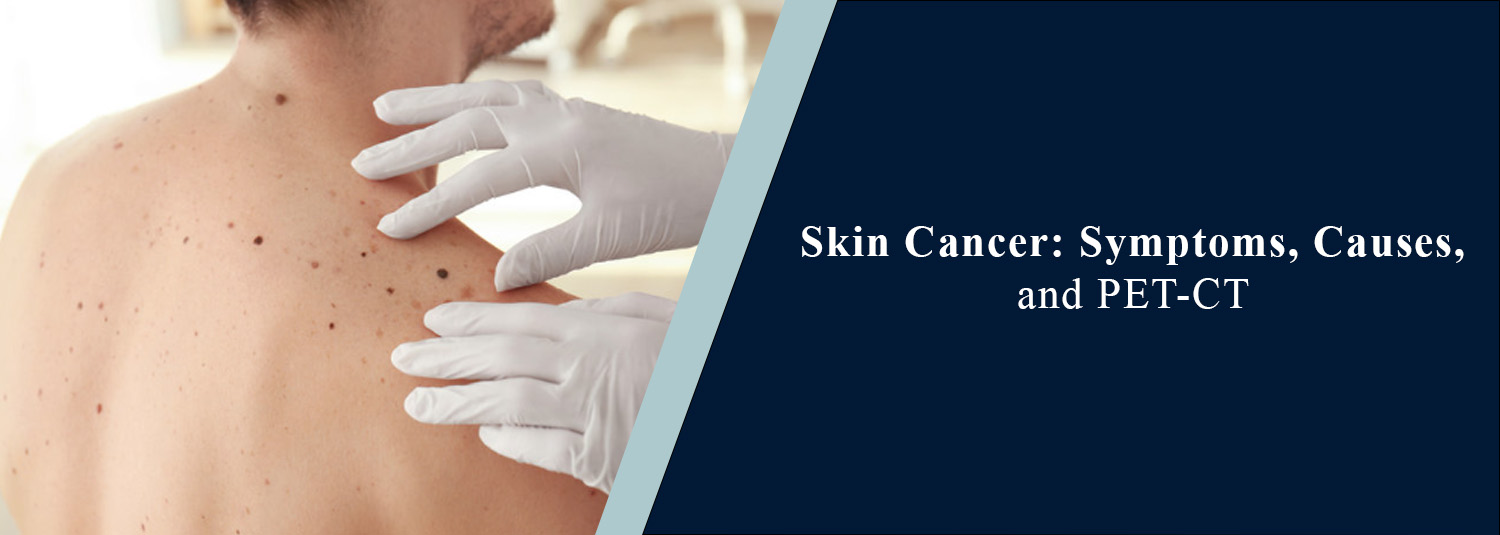
Skin cancer develops when skin cells undergo abnormal
proliferation due to uncontrolled growth. The growths can occur on sunny parts
of the body such as the face, neck, and hands, but also elsewhere on the body
even though the skin has not been exposed to the sun. The detection of skin
cancer symptoms is vital to ensure that the physician develops an effective
treatment plan. There are different types of skin cancer with varying levels of
severity ranging from slowly growing cancer to highly aggressive cancer. At
Molecular Diagnostics and Therapy, our diagnostic imaging services can assist
the physician in detecting the presence of certain cancers and determining if
they have spread to other parts of the body.
What Is Skin Cancer?
Skin cancer occurs when the DNA of the skin cells gets damaged,
leading to uncontrolled proliferation of the cells. The malfunctioning of the
skin cells that normally form the skin results in the formation of abnormal
cells with cancerous properties. Skin cancer can be classified based on the
type of cells they were formed from. For example, some cancers develop only on
the skin surface, whereas others grow deeper into the skin tissues and
metastasize to the lymph nodes and other organs. The prognosis of skin cancer
depends on the type, size, location, and many other factors. Early and
effective diagnosis of cancerous skin lesions can improve the patient’s
outcome.
What Are the Causes of Skin Cancer?
There are multiple causes and skin cancer risk factors
contributing to the disease, and some of them cannot be managed. The most
common cause of skin cancer is the effect of UV radiation. UV rays can damage
skin cells, and people who frequently got sunburned during their childhood or
young adulthood and those who expose their skin to artificial UV radiation
(tanning salons) have a higher risk of developing the disease.
The other risk factors for developing skin cancer include having
fair skin, blue or green eye color, and sun sensitivity. At the same time, the
disease can occur in people with all skin types. Having a family history of
skin cancer, a suppressed immune system, a personal history of skin cancer, and
exposure to toxins or radiation also increases the risk of developing skin
cancer. Having one or more of the risk factors does not necessarily lead to
having the disease, but in some cases, several risk factors together can raise
the risk further.
What Are the Symptoms of Skin Cancer?
The symptoms of skin cancer can occur in a variety of forms based
on cancer type. The first symptom of skin cancer is a change in a previous skin
condition or the appearance of a new lesion or mole. Other symptoms of skin
cancer may be seen as a sore that has failed to heal for an extended period, a
skin sore that is easily irritated, a scaly or crusted patch, a sore that
bleeds or itches, or any unusual growth on the skin surface that is changing in
size, shape, or color. Finally, skin cancer symptoms can present themselves as
a shiny bump on the skin surface, a hard patch or node, or a skin lesion that
looks similar to a scar.
What Is the Role of PET-CT in Skin Cancer?
Positron Emission Tomography – Computed Tomography (PET-CT) is a
type of imaging test that uses a radiotracer substance to highlight regions
with abnormal metabolism in the body. Typically, the FDG radiotracer is used
for cancer diagnosis. A PET-CT scan merges PET and CT scans to produce a single
image that depicts anatomical and metabolic information. PET-CT scans for skin
cancer can be helpful in specific circumstances, depending on the type, size,
and stage of cancer, as well as the patient’s symptoms and previous test
results. The main purpose of using PET-CT scans in skin cancer is to detect
suspicious lesions, tumors, and abnormal masses in the body to help determine
the cancer’s stage and plan the treatment.
A PET-CT scan is not recommended for all patients with skin
cancer. A biopsy is used to diagnose a skin lesion, whereas PET-CT is used to
look for spread. Secondly, a PET-CT scan is not useful for assessing small skin
tumors, and some skin cancers do not retain radiotracers in their tissues,
making them invisible for scanning. Moreover, inflammation and infection can
also cause abnormal FDG uptake, which can be mistaken for cancer. Finally, a
physician will determine whether a PET scan or another imaging test is more
appropriate for a particular patient’s condition.
Conclusion
At Molecular Diagnostics and Therapy, we provide a number of diagnostic imaging services that may contribute to cancer staging. In cases when a PET-CT scan is required, our services can support physicians in staging cancer and planning treatment. In case you are concerned about a suspicious lesion on the skin, it is advisable to consult a dermatologist or other healthcare professionals rather than attempt to determine the nature of the lesion yourself. If a skin cancer diagnosis has already been made, it is vital to speak with a physician about recommended tests and their sequence.
Frequently Asked Questions
In News
Get Our Mobile App
for Easy Access
Book tests, view reports, and manage your health records on the go. Experience convenient healthcare with Molecular Diagnostics and Therapy.
- ✔ Book tests & home collection
- ✔ View reports instantly
- ✔ Track health history
- ✔ Get notifications & reminders
- ✔ Easy appointment management