Full Body CT Scan: Purpose, Procedure, and Cost in Delhi
Talk to Health Expert

Dr. Nikunj Jain
Co-Founder and HOD - Nuclear Medicine ,MBBS, DRM, DNB, FEBNM, FANMB, Dip. CBNC
An advanced imaging study that takes a
detailed picture inside the body using X-rays and computer technology is called
a full body CT scan. It is useful in certain scan protocols to look at the
body's organs, bones, blood vessels, and soft tissues in several areas. A
person looking for a “full body CT scan” in Delhi should come to terms with the
fact that, similar to most medical tests, there is nothing that will satisfy
everyone and there is no standard scenario which will be followed in every
patient.
Molecular Diagnostics and Therapy
offers diagnostic imaging services to assist in the diagnosis and assessment of
a number of conditions. Patients can discuss with their doctor which
investigation is most appropriate, as they will have a good understanding of
what a whole body CT is, how it works, how it is prepared, and the costs
involved.
What Is a Full Body
CT Scan?
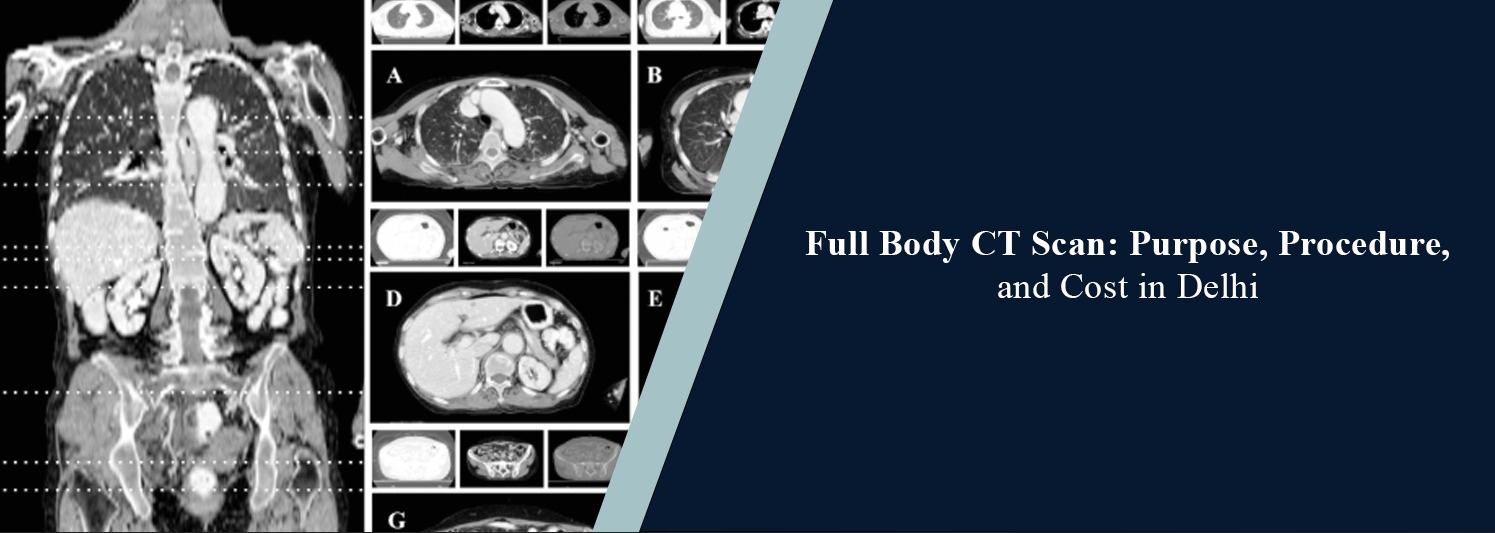
A full body CT scan, also known as a
whole body CT scan, uses computed tomography (CT) technology to generate images
of the internal organs and tissues, captured cross-sectionally at various
points. These images are then added together by a computer to provide detailed
views that can assist a doctor in assessing a particular area of the body. A
full-body computed tomography (CT) scan may represent various imaging
scans.
Some examinations involve the chest,
abdomen, and pelvis; others involve specific areas based on the patient's
symptoms and/or medical needs. Certain organs and blood vessels may be enhanced
to be better seen using contrast material. This is based on the clinical
question, and the scan protocol will be determined accordingly. Not every
individual will require a full CT scan, and regular CT scans of people without
symptoms might not be helpful.
What Are the Uses of
a Full Body CT Scan?
Depending on which parts of the body
are being scanned, a full body CT scan can provide some information on a number
of medical conditions.
1. Examining Internal
Organs
CT can help give detailed images of the
lungs, liver, kidneys, and other parts of the belly. It could be used to
further help the doctor look into abnormalities, injuries or changes that are
seen in the end during examination.
2. Detecting Tumours
and Abnormal Growths
X-rays and CT scans can provide insight
into some masses and their size, location, and relationship to adjacent
tissues. In patients already diagnosed with cancer, the CT can help assess the
spread of the cancer or be ordered to check how the cancer has responded to
treatment, depending on the clinical case. CT is not always the preferred test
for characterising a suspected tumour; further imaging or a biopsy may be
required.
3. Assessing Injuries
In some emergency cases, CT scans can
be used to detect internal injuries or bleeding, or damage to organs and bones.
Scans of the areas are based on the type of trauma and the treating team's
evaluation.
4. Investigating
Unexplained Symptoms
If a detailed evaluation of the inner
structures is required and symptoms haven't gone away or seem unexplained,
doctors might suggest CT imaging. This is because the type of scan to be used
is dependent on the suspected condition, examination findings, and the
symptoms.
5. Evaluating Certain
Diseases
CT imaging might be useful to evaluate
infections, inflammation, abnormalities of the blood vessels, and other
diseases of the parts being scanned. May require further tests to diagnose.
What Happens During
the Full Body CT Scan Procedure?
The full body CT scan procedure usually involves several straightforward
steps.
Step 1: Initial
Assessment
The imaging team confirms your details, reviews the referral, and
explains the examination. They may check whether contrast is required and
whether any additional precautions are necessary.
Step 2: Positioning
You lie on a movable examination table. The table is positioned so that
the scanner can capture images of the required body regions.
Step 3: Contrast
Administration
Depending on the scan protocol, an iodine-based contrast agent may be
injected through a vein. This helps make certain organs and blood vessels more
visible. Some patients may experience a temporary warm sensation or metallic
taste.
Step 4: Image
Acquisition
The table moves through the CT scanner while images are captured. You
will need to remain still and may be asked to hold your breath briefly during
certain parts of the scan.
Step 5: Image Review
and Reporting
After the scan, a radiologist reviews the images and prepares a report.
The referring doctor interprets the findings alongside your symptoms and
medical history and advises whether further tests or treatment are needed. The
duration depends on the areas examined, the imaging protocol, and whether contrast
or additional scan phases are required.
Is a Full Body CT
Scan Safe?
In the majority of circumstances where
the anticipated benefit from the use of a CT scan is deemed to be greater than
the risk, this type of scan is widely used. They do, however, expose you to
ionising radiation, so no unnecessary tests should be performed. In some
patients, there could be an allergic reaction; an allergic reaction is possible
when contrast is used. Special precautions may be required in cases of
compromised kidney function and/or prior contrast reaction history. The imaging
team determines a protocol as per the clinical needs and the given situation of
the patient. Discuss, before the examination, with the team if a patient is
pregnant, has kidney issues, as well as any previous reactions to the contrast
material.
Full Body CT Scan
Cost in Delhi
The entire body CT scan price in Delhi
will adjust depending on the areas being scanned, methodology used, and the
contrast material, equipment, and services included in the examination. The
cost of a scan that is done on many parts of the body can be different from a
scan of a specific body part. Other services may also influence the overall
cost, such as additional imaging phases or any other service that is required.
The term “full body CT scan” can mean
different protocols, so it is important to clarify to the patient the areas
that will be scanned and what the price quoted is for. Contact Molecular Diagnostics and Therapy to find out about the availability of scans, preparation,
and current charges.
Conclusion
A full-body CT scan is a cutting-edge
imaging procedure that may enable doctors to examine soft tissue, bones, blood
vessels, and internal organs in specific parts of the body. It is used for
studying particular symptoms, determining an injury, inspecting abnormal
growths, and some diseases.
CT screening of the entire body is not approved for everyone, but should be chosen based on the patient's medical needs. If you are thinking about getting a full body CT scan in Delhi, then check out with your physician to know about available imaging options and going price in the region.
Frequently Asked Questions
In News
Get Our Mobile App
for Easy Access
Book tests, view reports, and manage your health records on the go. Experience convenient healthcare with Molecular Diagnostics and Therapy.
- ✔ Book tests & home collection
- ✔ View reports instantly
- ✔ Track health history
- ✔ Get notifications & reminders
- ✔ Easy appointment management