
Thyroid Cancer: Symptoms, Causes, Types & PET CT as a Diagnostic Tool
Talk to Health Expert

Dr. Nikunj Jain
Co-Founder and HOD - Nuclear Medicine ,MBBS, DRM, DNB, FEBNM, FANMB, Dip. CBNC
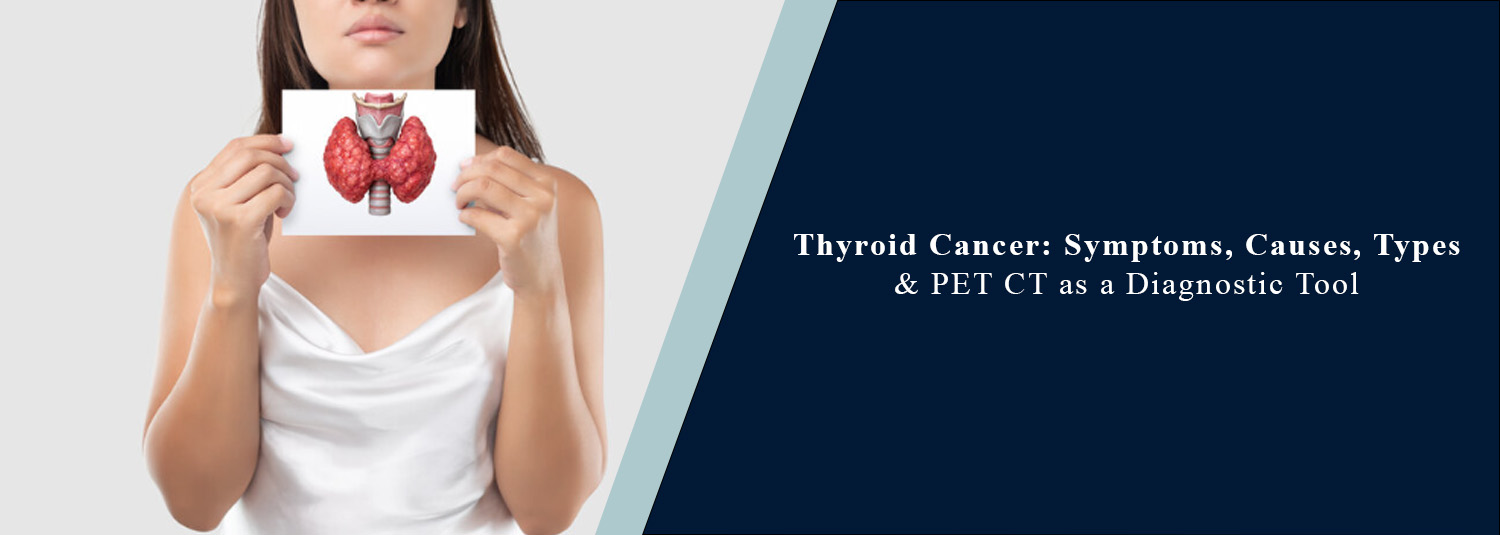
Thyroid cancer is a cancer that occurs in the thyroid gland, a tiny
gland located in the front part of the neck. The thyroid produces two hormones
that affect the body's metabolism, energy level, and various other processes;
it regulates several important functions of the body. Thyroid cancer can occur
in people of all ages, and the growth of some types of it may be more
aggressive than others.
Awareness of what might cause thyroid cancer, how to spot signs of
thyroid cancer, and the need to seek prompt medical attention to determine the
condition and the most suitable course of action. In certain cases, a PET CT of
the thyroid may also be ordered to give more information on the thyroid cancer.
Molecular Diagnostics and Therapy provides advanced diagnostic imaging services
to support the evaluation of various health conditions.
What Causes Thyroid
Cancer?
When the causes of thyroid cancer aren't always known, it's an unknown
cause. As with any cancer, some factors can make people more likely to get
thyroid cancer. Some family history of thyroid cancer, high exposure to
radiation, and certain inherited genetic changes are all factors associated
with thyroid cancer. People with a risk factor do not necessarily get thyroid
cancer. However, some individuals develop thyroid cancer when there are no risk
factors. If a person has a history of symptoms that could be related to an
underlying cause, a healthcare professional can determine this.
Common Thyroid Cancer
Symptoms
The thyroid cancer symptoms can vary depending on the size and location
of the cancer. Sometimes, thyroid cancer is not detected and does not cause any
symptoms in its early stages and can be discovered during a routine exam or
imaging test.
It is possible for lumps or swelling in the neck, voice changes, trouble
swallowing, or "pressure" in the neck to be seen or felt. Lymph nodes
in the neck can swell, too. These can be very common symptoms and usually do
not indicate thyroid cancer. If the lump in the neck or some of the symptoms
are unusual and there is a long duration of concern, it is important to get
medical help to ensure an appropriate assessment.
Types of Thyroid
Cancer
Thyroid cancer comes in various forms and may behave differently when
growing and being treated. It's most often papillary or follicular thyroid
cancer. Most of them are classified as differentiated thyroid cancer.
Others are medullary thyroid cancer and anaplastic thyroid cancer. Anaplastic
thyroid cancer is a rare but fast-growing form of thyroid cancer. The type is
important because the type of thyroid cancer will give the doctor a clue to the
nature of the tumor and the best treatment methods.
How Is Thyroid Cancer
Diagnosed?
There are a number of ways by which a doctor can assess suspected
thyroid cancer. This may involve a physical examination, blood tests,
ultrasound of the thyroid gland and (occasionally) an examination of a thyroid
gland nodule by biopsy. In some cases, an ultrasound could aid doctors in
looking for the thyroid and determining if there are nodules that might require
more evaluation. A biopsy is recommended if cells or tissues should be analysed
by a laboratory to see if cancer cells are present. Sometimes more imaging is
suggested to learn more about the extent of the disease or its possible spread.
Molecular Diagnostics and Therapy offers diagnostic imaging facilities that may
be recommended by healthcare professionals based on the patient's individual
medical needs.
What Is Thyroid
Cancer PET CT?
Thyroid cancer PET CT is a combination of two imaging tools in one. PET
gives information about metabolic activity of tissues, and CT gives detailed
images of the internal structures of the body. Combined, these pictures can
provide the doctor with further information that allows him to examine specific
regions of interest for additional evaluation.
PET CT is not necessary for everyone who has thyroid cancer. In some
cases, it may be used, for instance, if doctors are seeking to assess suspected
recurrence or metastasis or if other tests are not suitable. The type of PET
scan may also be different depending on the type and characteristics of thyroid
cancer. Determined by the individual's condition by the doctor who is treating
the individual.
How Can PET CT Help
in Thyroid Cancer?
PET CT can help doctors look for areas of increased metabolic activity
and understand where these areas are located in the body. It can be helpful
when a patient is at risk of recurrence or metastasis, or if thyroid cancer has
recurred or spread to other sites.
Interpretation of PET CT results is made in conjunction with clinical symptoms,
medical history, laboratory, biopsy, and other imaging results. Remember that,
although there is increased activity on the PET scan, this does not necessarily
indicate cancer, and additional tests may be required.
When Should You See a
Doctor?
If there is persistent swelling or lumps in the neck, if he or she has
trouble swallowing, if a voice changes in some way, or if there is persistent
pressure in the neck, a health care provider should evaluate these symptoms.
Thyroid cancer is not the only cause of these symptoms, but medical evaluation
can help in determining what the cause is. Individuals who have been diagnosed
with a thyroid nodule or thyroid disorder should keep up their monitoring and
testing plan established by their health care provider.
Conclusion
Thyroid cancer can occur in various forms and can grow in different
ways, and can also have different symptoms. Knowing about the symptoms of
thyroid cancer, the possible causes of thyroid cancer, and various types of
thyroid cancer can help people to know when medical evaluation might be
required.
In certain cases of thyroid cancer, PET CT might be beneficial for imaging – especially if the doctor needs more information about the recurrence or metastasis of the disease. But this is not required for all patients. Only a healthcare provider can determine if a thyroid cancer PET CT or other type(s) of diagnostic test is appropriate for the person, depending on his/her condition and medical history. Molecular Diagnostics and Therapy provides advanced diagnostic services that can support patients and healthcare professionals in the evaluation and monitoring of various medical conditions.
Frequently Asked Questions
In News
Get Our Mobile App
for Easy Access
Book tests, view reports, and manage your health records on the go. Experience convenient healthcare with Molecular Diagnostics and Therapy.
- ✔ Book tests & home collection
- ✔ View reports instantly
- ✔ Track health history
- ✔ Get notifications & reminders
- ✔ Easy appointment management
