Top 7 Myths About Nuclear Medicine You Should Stop Believing
Talk to Health Expert

Dr. Nikunj Jain
Co-Founder and HOD - Nuclear Medicine ,MBBS, DRM, DNB, FEBNM, FANMB, Dip. CBNC
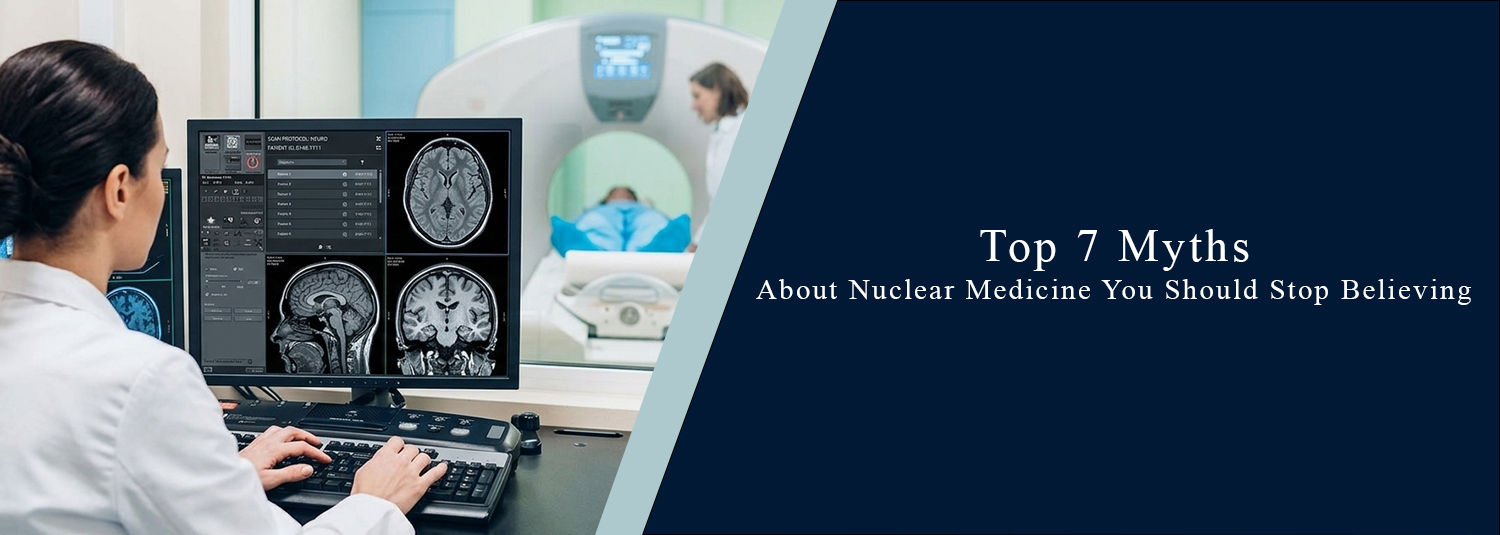
When people hear the term nuclear medicine, it often sparks unnecessary fear and confusion. Nuclear is a term that is often linked with danger or radiation, or even disaster. But the truth is, nuclear medicine is amongst the safest and most developed instruments employed in the present healthcare to diagnose and treat diseases.
Let’s break down the top 7 myths about nuclear medicine that you should stop believing, so you can make informed decisions about your health without fear.
Myth 1: Nuclear Medicine Is Dangerous and Harmful
The most common myth is that nuclear medicine procedures are risky as they expose patients to radiation. Although there is the truth that in these procedures, little radioactive material is put into use; the dose administered is insignificantly low and well guided.
Indeed, the radiation dose of the majority of nuclear medicine conditions is similar to or even less than many standard-of-care imaging examinations. Medical practitioners have high standards of safety that guarantee the safety of the patients throughout the process.
Myth 2: Nuclear Medicine Is Only Used for Cancer
Although it is common knowledge that nuclear medicine is widely used in the diagnosis and treatment of cancer, it is not exclusive to oncology.
It is also used to evaluate:
Cardiac scans (scans of heart conditions)
Epilepsy or Alzheimer's disease: Disorders of the brain (such as epilepsy or Alzheimer's disease)
Bone abnormalities
Thyroid function
Kidney and liver function
This renders nuclear medicine a flexible diagnostic medium in various medical specialties.
Myth 3: The Procedures Are Painful
Nuclear medicine tests are not painful or uncomfortable for many people. The fact of the matter is that most of the procedures are uncomplicated and least invasive. A small quantity of radiotracer is generally administered into a vein. Subsequently, the scan itself is a pain-free procedure, as you are just lying there as the imaging technology provides detailed images of your body. Cuts, long recovery time, and stitches are not needed.
Myth 4: Radiation Stays in Your Body for a Long Time
The other myth is that radioactive material takes a long time to leave the body. As a matter of fact, the radiotracers applied in nuclear medicine have been engineered to break down and exit the body on their own initiative. The release of most of the radioactive material happens in hours to a couple of days by way of urine or sweat. The patients are normally encouraged to consume a lot of water following the process so that they can empty it out sooner.
Myth 5: Nuclear Medicine Is Only for Serious Conditions
Although nuclear medicine is employed in cases of serious illnesses such as cancer, it can also be employed in early diagnosis and regular assessment. To illustrate, it can scan the disease at the cellular level- in most cases, before structural alteration would be made obvious in conventional methods such as X-rays or CT scans. This early diagnosis can make a big difference in treating the patients.
Myth 6: It’s Unsafe for Children and Elderly Patients
The number one priority of nuclear medicine is safety, and all the procedures are very specific to every patient, considering age, weight, and medical condition. Nuclear medicine scans can be safely done on children and the elderly, provided the doctor prescribes them. Actually, doses given in pediatrics are advanced to be even less, yet they give proper diagnostic outcomes. Medical staff make sure that the advantages of a scan never outweigh any insignificant risks.
Myth 7: Nuclear Medicine and Radiation Therapy Are the Same
Nuclear medicine should not be confused with radiation therapy by many people.
Nuclear medicine imaging involves the use of low levels of radioactive substances as a means of disease diagnosis and monitoring.
Radiation therapy, however, involves the administration of high doses of radiation to such conditions as cancer.
The use, dosage, and method are entirely different. As a field, nuclear medicine is mainly diagnostic (rarely therapeutic in medicinal manners), but radiation therapy is treatment-oriented.
Why Understanding the Truth Matters?
Conceiving that these myths may cause unnecessary fears, failure to get early treatment, and failure to get the opportunity to treat these diseases early. Nuclear medicine has impacted the way physicians comprehend and manage diseases as it offers details at both the cellular and molecular levels of understanding.
It allows for:
There should be a diagnosis at an early stage and accurately.
Better treatment planning
Effectiveness of treatment monitoring.
Personalized patient care
It is a safe, trustworthy, and very effective medical instrument when applied properly.
Final Thoughts
It is important to understand that you should not fear nuclear medicine, but you should be appreciative of it. Its underlying technology has ensured that many lives have been saved through early detection of diseases and accurate administration of treatment.
There is a need to have trust in medical expertise and evidence-based practices rather than being guided by misconceptions. When your doctor orders a nuclear medicine scan, it is so well because the advantages greatly supersede any meager dangers brought about.
Frequently Asked Questions
In News
Get Our Mobile App
for Easy Access
Book tests, view reports, and manage your health records on the go. Experience convenient healthcare with Molecular Diagnostics and Therapy.
- ✔ Book tests & home collection
- ✔ View reports instantly
- ✔ Track health history
- ✔ Get notifications & reminders
- ✔ Easy appointment management