PET CT Scan: A Complete Guide to Early Diagnosis and Accurate Disease Detection
Talk to Health Expert

Dr. Nikunj Jain
Co-Founder and HOD - Nuclear Medicine ,MBBS, DRM, DNB, FEBNM, FANMB, Dip. CBNC
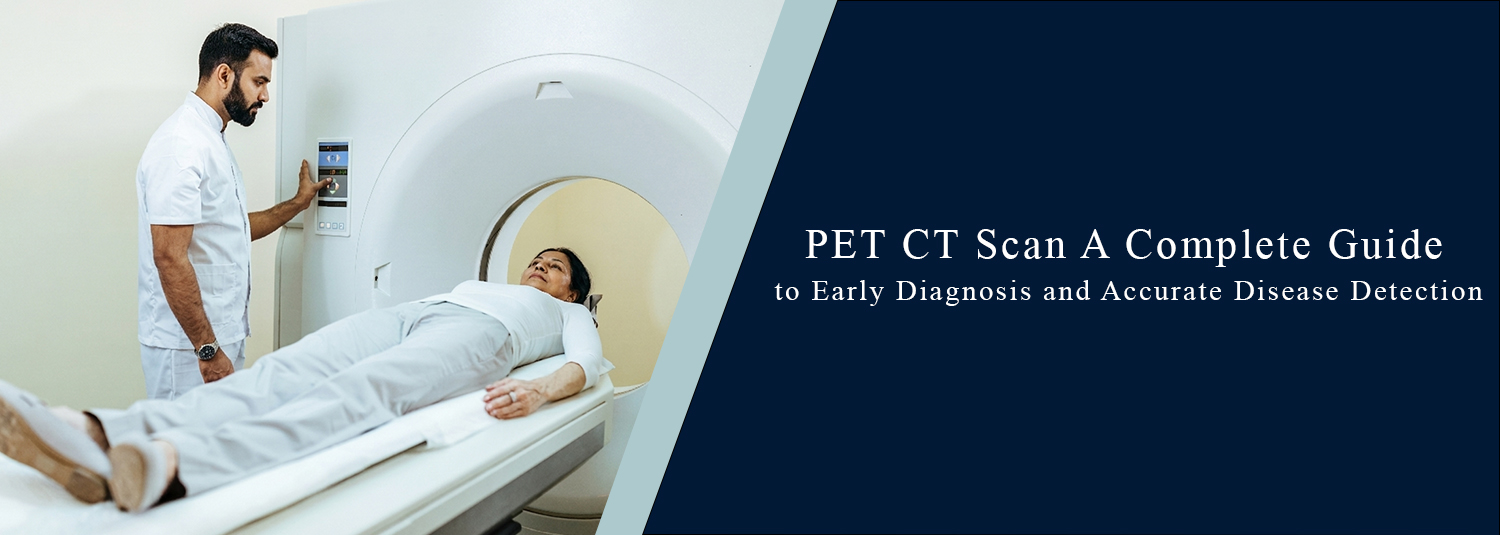
Early and accurate diagnosis is critical to effective treatment in modern-day healthcare. Some diseases are silent and will take time before real symptoms begin to manifest, e.g., cancer. This is where imaging techniques such as the PET CT scan have taken over the medical field.
Functional and structural imaging used together in a PET CT scan enables doctors to identify diseases at their initial stages and design treatments more efficiently. In the medical practice of modern times, rapid and precise diagnosis is highly valued in the context of achieving positive treatment outcomes.
What is a PET CT Scan?
PET CT scan is an effective form of diagnostic imaging technology that integrates two types of imaging, Positron Emission Tomography (PET) and Computed Tomography (CT). The PET scan measures the functioning of tissues and organs at a cellular level, whereas the CT scan gives detailed pictures of the internal structures of the body.
Combining both of these scans, the results of a scan are incredibly accurate images that not only reveal where a problem is located but also its activity or aggressiveness. This twofold ability renders PET CT one of the most sophisticated devices that can be used to detect diseases today.
How Does a PET CT Scan Work?
The procedure is initiated by a small amount of radioactive tracer injected into the body of the patient. A sugar tracer is typically some variation of glucose since most ailments, such as cancer, use a higher amount of sugar than normal tissues.
The tracer, once injected, passes via the bloodstream and is concentrated in more metabolically active regions. This activity is detected by a PET scanner and is used to identify abnormalities. Meanwhile, a CT scan provides detailed images of the anatomy. A combination of these images provides the physicians with insight on an overall structure and operation.
Why is PET CT Important for Early Diagnosis?
Showing that a PET CT scan can identify diseases before structural changes, the fact that it has become one of the largest benefits of a CT scan. Modern imaging techniques, such as X-rays or standalone CT scans, are mostly used to detect the presence of physical abnormalities, which could only become apparent in later disease stages.
Instead, PET CT is able to detect changes at a cellular level. This implies that illnesses can be identified way before symptoms set in. Pre-treatment can greatly enhance the success rates of treatment, and in many cases, pre-diagnosis is even life-saving.
Common Uses of PET CT Scans
The accuracy and reliability of PET CT scans have made them very popular in various medical practices.
PET CT is the most common method of cancer detection, cancer staging, and cancer monitoring in oncology. It aids physicians in identifying the precise placement of tumors, the extent to which cancer has metastasized, and the efficacy of treatment.
PET CT can be used in cardiology to measure blood flow to the heart and diagnose regions of impaired function. This aids in the detection of coronary artery disease and the measurement of heart health.
Applications of PET CT in neurology include the use of brain activity to identify neurological disorders like Alzheimer's disease, epilepsy, and other types of neurological disorders.
Advantages Over Traditional Imaging
PET CT has a number of benefits over traditional imaging methods. It offers functional and structural information at one scan, eliminating the requirements of two or more tests. It is also very sensitive, in that it is able to identify even minor or early abnormalities.
Accuracy is also a significant advantage. PET CT lessens the possibility of misdiagnosis by providing a more vivid and detailed image of the condition. This enables medical professionals to make better judgments when it comes to therapy.
What to Expect During the Procedure?
In general, a PET CT scan is a painless and safe procedure. Patients normally fast for a couple of hours before the scan. Once the tracer is injected, 30 to 60 minutes may be needed to allow the tracer to spread throughout the body.
The scan lasts an average of 20 to 40 minutes. The patient is also lying motionless on a table that passes through the scanner at this time. Staying still is a good idea to get good pictures.
Patients are generally able to resume their usual activities immediately after a scan, with the tracer one way or the other departing the body after some time.
Are There Any Risks?
PET CT scan for most people is safe. The level of radiation exposure is quite low and is acceptable in medical terms. Nevertheless, it might not be prescribed to expectant mothers or some patients without an adequate medical examination.
There are minimal side effects, and some patients may be slightly discomforted by the injection. Physicians will always weigh the advantages against the consequences before ordering the scan.
The Role of PET CT in Treatment Planning
In addition to diagnosis, PET CT scans are critically important in monitoring and planning the treatment. These scans would help doctors decide the best course of treatment, which could be a surgery, chemotherapy, radiation treatment, or a combination of both.
Follow-up PET CT scans can be used during treatment to evaluate the success of the therapy. When the disease is responding, the treatment process is continued; otherwise, physicians are able to change the approach in a timely way. This individual process enhances the general results and prevents needless interventions.
Conclusion
One of the most advanced and effective types of diagnostic measurement used in modern medicine is a PET CT scan. It is very valuable to patients and health care professionals due to its capability to detect illnesses at an early stage, offer precise insights, and inform treatment choices.
PET CT scans provide a considerable benefit over traditional imaging processes; problems are identified at the cellular level. It is essential to consider that, regardless of the process of cancer diagnosis, health condition examination, analysis of brain processes, etc., this technology will contribute to proper and effective healthcare in a timely way.
Life-changing living. Investment in early diagnosis by using higher imaging techniques, such as PET CT, may be the key to improved treatment outcomes and a better quality of life.
Frequently Asked Questions
In News
Get Our Mobile App
for Easy Access
Book tests, view reports, and manage your health records on the go. Experience convenient healthcare with Molecular Diagnostics and Therapy.
- ✔ Book tests & home collection
- ✔ View reports instantly
- ✔ Track health history
- ✔ Get notifications & reminders
- ✔ Easy appointment management