Abdominal Ultrasound: Conditions It Can Detect
Talk to Health Expert

Dr. Nikunj Jain
Co-Founder and HOD - Nuclear Medicine ,MBBS, DRM, DNB, FEBNM, FANMB, Dip. CBNC
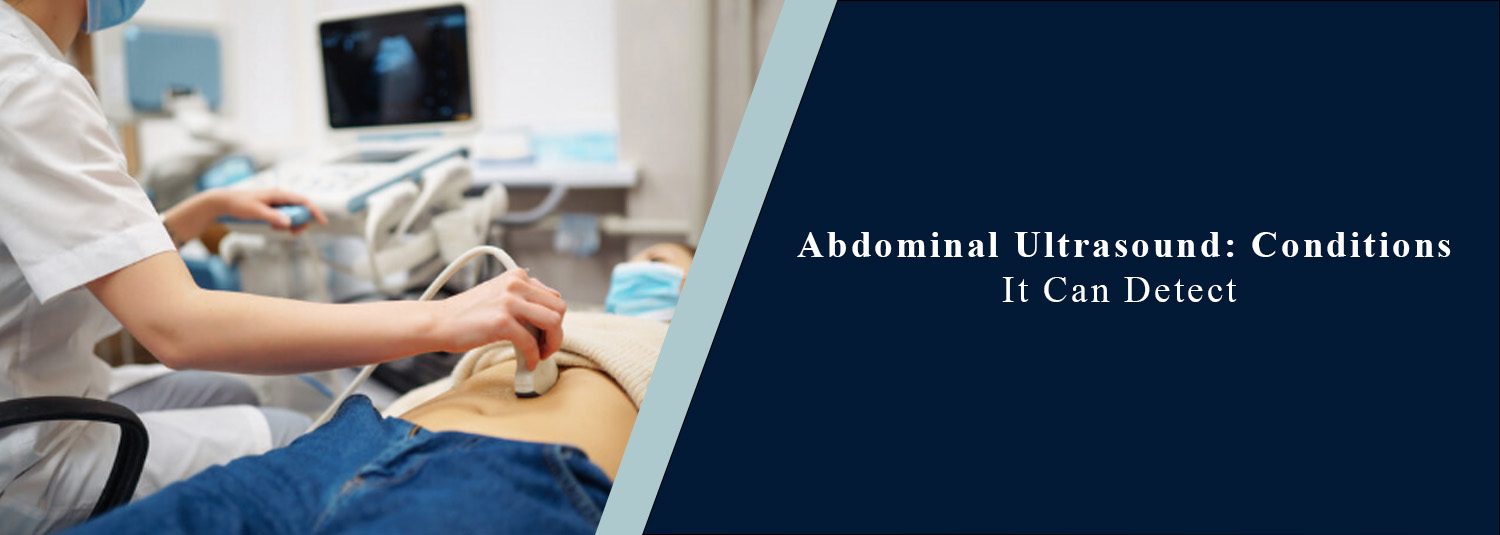
An abdominal ultrasound is one of the most commonly ordered imaging tests of the abdomen to evaluate organs and anatomy. The process is considered to be harmless, invaluable, and even painless, using sound waves without radiation to get information about internal organs. This test is routinely requested to investigate certain symptoms such as abdominal pain, bloating, nausea, unintended weight loss, or abnormal blood test results.
The abdominal ultrasound is a very useful imaging modality to help diagnose a variety of conditions and treatment options that can arise in the abdomen. The very latest ultrasound scanning and specialist skills of radiology professionals in Molecular Diagnostics and Therapy give effective imaging and quick diagnosis of various abdominal issues.
What Is an Abdominal Ultrasound?
An abdominal ultrasound uses high-frequency sound waves to form pictures of the organs and tissues in the abdomen. The procedure can help physicians examine the liver, gallbladder, kidneys, pancreas, spleen, urinary bladder, and the main blood vessels. The test presents no exposure to radiation and thus can be performed by anyone, pregnant women included. The examination in the medical field is known as a USG abdomen, or abdominal ultrasound.
Why Is an Abdominal Ultrasound Performed?
There are many reasons for physicians to refer patients for an abdominal ultrasound. Persistent abdominal pain or swelling, digestive problems, abnormal liver examination, a problem with urination, or possibly an enlarged organ are signs that are usually a clue to examination. Rapid and effective, ultrasound can help accurately uncover the underlying cause of symptoms. It is also commonly employed as a measure to track existing medical problems over the course of time.
Gallstones and Gallbladder Disease
A very common indication for an abdominal ultrasound is to examine the gallbladder. Gallstones, inflammatory gallbladder, and a blockage of the bile duct are very easy to observe with ultrasound. It might help in the case of upper right abdominal pain, nausea following meals, or an abdominal disease. Early diagnosis can help to avoid complications and help direct treatment.
Liver Conditions
When conducting an ultrasound of the abdomen, one of the largest organs being examined is the liver. The exam can diagnose fatty liver disease, liver enlargement, liver cysts, benign tumors, abscesses, and some liver masses. Doctors may use ultrasound to help them determine if a kidney biopsy or other types of imaging testing or blood testing needs to be done. People with chronic liver disease may also need to be monitored routinely.
Kidney Stones and Kidney Disorders
Routine use of ultrasound is done to check kidney health. The test identifies kidney stones, cysts, enlarged kidneys, blocked urine, and abnormalities of the kidneys. A USG abdomen may be performed in patients with flank pain, blood in the urine, or repeated UTIs as part of their evaluation. Early diagnosis helps avoid the cause of kidney malfunction and complications.
Pancreatic Abnormalities
In some cases, the pancreas may be difficult to visualise, but in others, abdominal ultrasound can be a valuable tool, giving the surgeon more information. Inspection might assist with the detection of a pancreatic enlargement, inflammation, cyst, or some masses. Further imaging tests may be needed sometimes to obtain a more detailed evaluation.
Spleen Enlargement
The spleen is centrally involved in the immune system and the filtration of blood. An abdominal ultrasound aids in confirming the enlargement of the spleen and can help identify the cause of this, which includes infections, liver disease, blood disorders, and other medical reasons involving spleen size.
Urinary Bladder Problems
Another important structure that is examined during an abdominal ultrasound is the urinary bladder. Ultrasound is used to identify bladder stones, urinary retention, growths or masses, and abnormalities of the bladder. Sometimes people with urinary problems or recurrent urinary symptoms are advised to use it.
Abdominal Aortic Aneurysm
Also, the major blood vessels in the abdomen can be evaluated via ultrasound. An aneurysm of the aorta develops in the most prominent tube in the abdomen when it starts to expand or weaken. Early detection via imaging can help to avoid serious complications and allow for adequate monitoring and/or treatment.
Fluid Accumulation in the Abdomen
The ultrasound of the abdomen is very good at identifying abnormal accumulation of fluid in the abdomen. This is called ascites and occurs with liver disease, heart failure, infections, or some cancers. The movement of the fluid can be used to help doctors decide what treatments to give, so a diagnosis is possible.
Detecting Abdominal Masses and Cysts
Ultrasound can not detect cysts, benign growths, or some tumors in abdominal organs. Ultrasounds can sometimes provide a diagnosis even when an ultrasound alone does not yield the “right” diagnosis; the information they provide can make a huge difference and guide further investigation if needed.
Is Abdominal Ultrasound Safe?
Yep, the abdominal ultrasound procedure is considered very safe. Ultrasound imaging doesn't employ the use of ionizing radiation, unlike X-rays or CT scans. The process is done without any pain, with no risk if repeated, and is non-invasive. This makes ultrasound an ideal method for diagnosis and post-diagnosis imaging.
How Should You Prepare for a USG Abdomen?
Depending on the organs being examined, there are different preparation instructions. Before the exam, the patient may need to fast for several hours to help the doctors get a better view of the gallbladder and digestive organs. A full bladder might need to be created for some pelvic and/or urinary examinations. Precautions taken during preparation help to enhance the image quality and diagnostic resolution.
Understanding Ultrasound Abdomen Price
Patients often question on the ultrasound abdomen scan alongside the ultrasound procedures before booking the test. The price range for an ultrasound of the abdomen can differ from one provider to the next, depending on the level of complexity associated with the exam and any additional testing that is done. Not just reputation and the price you pay are key when choosing an imaging center; the quality of the equipment, radiologists' experience, and reporting standards are of greater importance.
Conclusion
Abdominal ultrasound examination is a valuable diagnostic investigation for diseases of the liver, gallbladder, kidney, pancreas, spleen, bladder, and blood vessels. It is harmless and painless, and can give valuable information about the patient's condition to help the doctor understand what is going on and decide if additional testing is needed and how to treat the patient. One of the more useful imaging techniques in modern medicine is ultrasound, which can be used when a doctor suspects there is an issue related to the abdomen, if tests have not come back as expected, or as a routine health check-up. Molecular Diagnostics and Therapy offers advanced USG abdomen services, experienced radiology specialists, and accurate reporting to support early diagnosis and effective patient care.
Frequently Asked Questions
In News
Get Our Mobile App
for Easy Access
Book tests, view reports, and manage your health records on the go. Experience convenient healthcare with Molecular Diagnostics and Therapy.
- ✔ Book tests & home collection
- ✔ View reports instantly
- ✔ Track health history
- ✔ Get notifications & reminders
- ✔ Easy appointment management