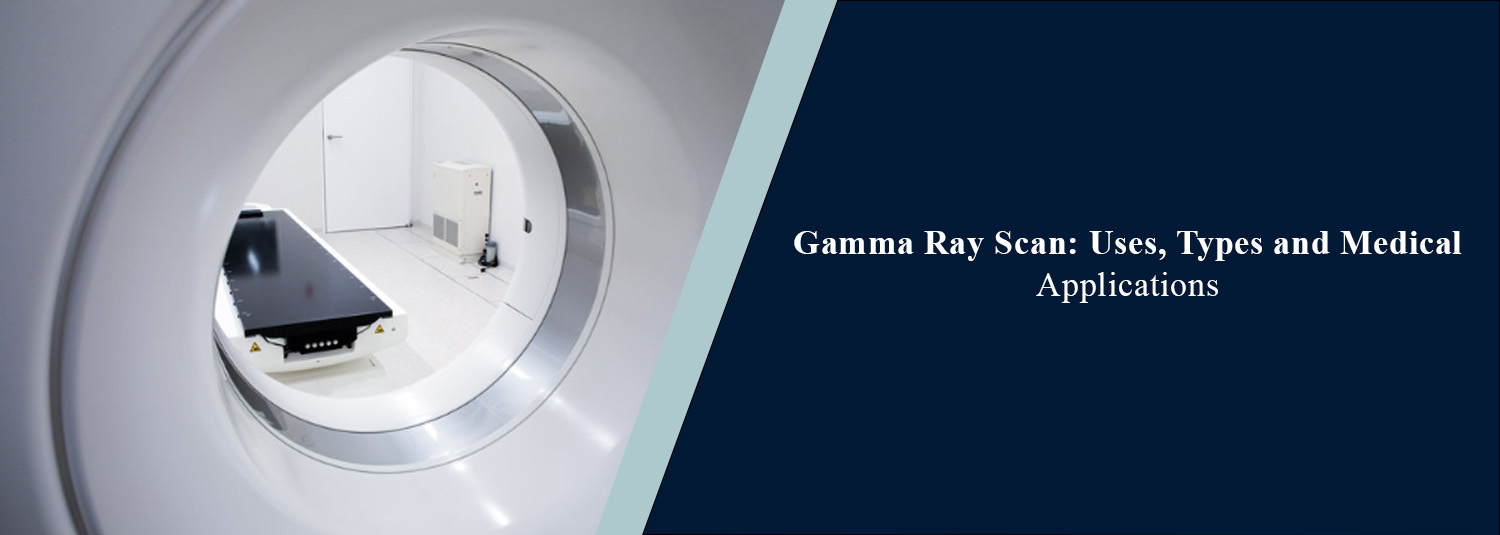
Gamma Ray Scan: Uses, Types and Medical Applications
Talk to Health Expert

Dr. Nikunj Jain
Co-Founder and HOD - Nuclear Medicine ,MBBS, DRM, DNB, FEBNM, FANMB, Dip. CBNC
Nuclear medicine imaging tests are
based on the use of a small amount of radioactive material, or radiotracer, to
produce pictures of the organs and tissues. A gamma ray scan is one of these
types of tests. A nuclear medicine scan may give information about the function
of certain organs and tissues, whereas other types of scans (such as most
conventional types) just show structure. Evaluation of several health
conditions, such as bone, kidney, thyroid, heart, liver, and gallbladder, and
other organs makes use of gamma camera scans. In Molecular Diagnostics and Therapy, nuclear medicine imaging is used to diagnose and track the progression
of various diseases and conditions over time.
What Is a Gamma Ray
Scan?
A nuclear medicine scan in which a
radioactive substance (radiotracer) is injected into the body is called a gamma
ray scan. The tracer can be added to a vein, swallowed, or given in other
suitable ways depending on the type of examination. When the radiotracer gets
to the organ or tissue being studied, it gives off energy as gamma rays. This
energy is picked up by a special machine (gamma camera) and displayed as an
image on a computer. A gamma camera does NOT emit radiation – it picks up
radiation emitted by the radiotracer in the body.
How Does a Gamma
Camera Scan Work?
The exact procedure is dependent on the
type of gamma scan. Typically, a low dose of the radiotracer is given
initially. The patient will then have to wait for a certain length of time, and
the tracer will then have to be distributed to the region being studied. The
patient typically lies on an examination couch as the gamma camera is brought
close to the body during imaging. The camera captures the radiation of Gamma
rays from the tracer and produces images that reflect the distribution of the
tracer. In some tests, the gamma camera is stationary. In some, the camera
spins around the body to produce detailed three-dimensional images (SPECT
imaging).
Common Types of Gamma
Scans
For a variety of organs and body
functions, there are various types of gamma scans. Commonly used nuclear
medicine scans are:
Bone Scan: A bone scan may be ordered if doctors need to learn more about the
bones when they suspect any abnormal bone activity.
Thyroid Scan: Tests use a thyroid scan to see what is happening and how the thyroid
looks. It can be used with a radioiodine uptake test to help diagnose some
thyroid disorders.
Renal Scan: A kidney or renal scan may be ordered to help determine kidney
function, blood flow, and the work done by the kidneys, and may be used to help
diagnose some urinary system disorders.
Cardiac Nuclear Medicine Scan: Heart scans may be used in the assessment of Coronary artery disease and
other heart diseases and can help provide information regarding blood flow to
the heart muscle.
Hepatobiliary Scan: A type of nuclear medicine study that can help determine the function
of the liver, gallbladder, and bile ducts.
What Are Gamma Scan
Uses?
Diagnosis, evaluation, and monitoring
may be done using gamma scans. They can assist with doctors' examinations of
the following:
- Assess
how an organ is functioning
- Identify areas of abnormal activity
- Evaluate certain diseases at a cellular or
functional level
- Assess blood flow to specific organs
- Monitor changes during or after treatment
- Provide additional information when
conventional imaging does not answer the clinical question
In some instances, changes in
biological activity can be seen with a nuclear medicine test prior to the time
that some changes are evident in other imaging tests. The value of any one of
the situations, though, relies on the patient's symptoms, clinical history, and
question at hand.
What Is the
Difference Between a Gamma Scan and an X-Ray?
X-ray imaging captures an image with
X-rays passing through the body to primarily image the structures of the body.
A gamma scan, however, involves having a radioactive tracer and instead refers
to the energy emitted from it. This indicates that nuclear medicine imaging may
give functional data on the functioning of a specific organ or tissue.
Sometimes, nuclear medicine images can be combined with CT images (as in
SPECT/CT) to provide both functional and anatomical information.
How Should You
Prepare for a Gamma Scan?
The preparations vary depending on the
type of nuclear medicine procedure. Certain scans will need to be done on a
"fast" or an "empty" stomach, and this is something you
should ask your doctor about. Some drugs or past treatments also may impact
specific tests. Patients should prepare according to the directions given by
their health care provider. Any current medications, medical problems,
allergies, pregnancy or possible pregnancy, and breastfeeding should also be
known to the doctor or technologist.
Is a Gamma Ray Scan
Safe?
A small amount of radioactive substance
is used in gamma scans. The radiation varies depending on the type of test, the
radiotracer, and the patient's situation. The goal of health care workers is to
use the minimum dose of radiation to achieve a diagnostic result. The majority
of nuclear medicine tests are non-invasive and are not intrinsically painful
(unless there is a shot involved). Pregnant and/or nursing women should notify
their physicians before the procedure is performed to take the appropriate
precautions.
Why Choose Molecular
Diagnostics and Therapy for Nuclear Medicine Imaging?
Molecular Diagnostics and Therapy
offers diagnostic services with the aid of modern imaging and nuclear medicine
technologies. Gamma camera scans can offer valuable functional data that could
be useful when assessing various forms of disease or disorder affecting health.
A suitable scan is indicated depending on the symptoms, medical history, and
the information required by the doctor. In some cases a gamma scan is not
enough to make a diagnosis on its own, but must be combined with clinical
information and other tests that are relevant.
Conclusion
One of the major uses of the gamma ray scan is to help gather vital data about the function of organs and tissues in the body, and it is a major contributor to nuclear medicine. There are various types of gamma camera scans, which can assess the condition of bones, thyroid, kidneys, heart, liver, and other parts of the body. These tests rely on radiotracers, gamma cameras, and computer-based imaging to aid in diagnosis and monitoring of treatment. Molecular Diagnostics and Therapy provide cutting-edge research and diagnostics for deriving relevant information for informed medical decisions.
Frequently Asked Questions
In News
Get Our Mobile App
for Easy Access
Book tests, view reports, and manage your health records on the go. Experience convenient healthcare with Molecular Diagnostics and Therapy.
- ✔ Book tests & home collection
- ✔ View reports instantly
- ✔ Track health history
- ✔ Get notifications & reminders
- ✔ Easy appointment management