How Does PET-CT Help Detect Hidden Diseases?
Talk to Health Expert

Dr. Nikunj Jain
Co-Founder and HOD - Nuclear Medicine ,MBBS, DRM, DNB, FEBNM, FANMB, Dip. CBNC
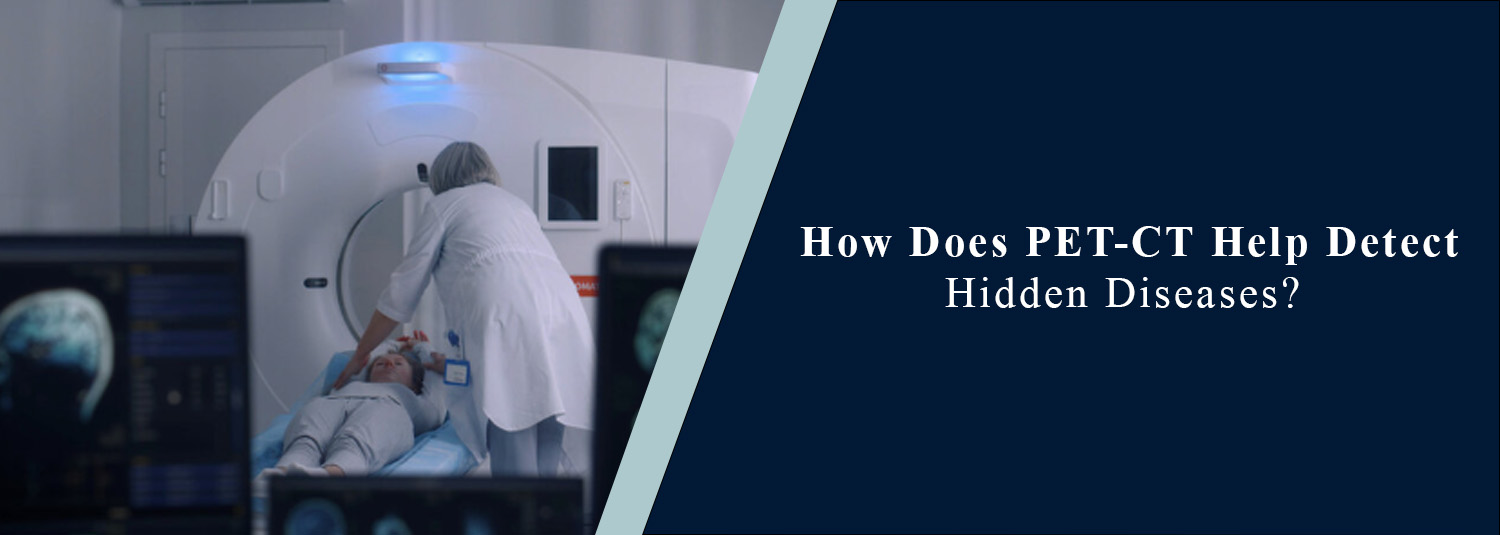
Many serious illnesses don't show signs until a later date. Some diseases (e.g., cancer, infection, inflammation, and some neurological diseases) may cause symptoms that appear over time and can be missed at a regular health check-up. When the first signs appear, it can be quite advanced! That's why advanced diagnostic imaging is important in helping to detect potential health issues early on.
The PET CT scan is one of the most powerful imaging technologies of today. PET CT scans are used to identify abnormal metabolic activity within the body, a different observation than conventional imaging, which principally demonstrates the condition of the body's structure. This enables a physician to detect diseases earlier when no major structural changes have taken place.
From unexplained symptoms to looking for hidden infections to lung cancer with a PET-CT scan, the advanced diagnostic test offers valuable information needed for early diagnosis and planning of more effective treatment. Molecular Diagnostics and Therapy provides patients with state-of-the-art PET-CT technology, backed by experienced nuclear medicine physicians, that provides accurate imaging and reliable reporting for a holistic approach to patient care.
What Is a PET CT Scan?
PET CT is a highly advanced imaging technique that combines Positron Emission Tomography (PET) and Computed Tomography (CT). The PET part records where there is higher metabolic activity, while the CT part creates detailed images of organs, bones, and tissues. A small dose of radioactive tracer is put into the blood during the exam. This tracer is taken up by the active cells and can show up prominently on the scan if it accumulates around a different (abnormal) area. With this combination, doctors can find out about a disease at a much earlier stage than the majority of traditional imaging systems.
Why Are Hidden Diseases Difficult to Detect?
Several medical conditions develop without any warning. Early cancers, chronic infections, autoimmune diseases, and inflammatory diseases may have few or no symptoms at first. Sometimes, even with the disease, routine blood tests or conventional imaging can be normal. PET CT may detect hidden abnormalities not seen by the X-ray, which may not be detected by the CT alone, as it takes a look at cell activity.
Detecting Cancer at an Early Stage
One of the hallmarks of cancer is an increased growth rate in addition to increased cell division. The result is that they need more glucose, and the radioactive marker added to the glucose during a PET-CT scan lets the doctor know they are using more glucose. This is because PET CT is a widely useful and helpful tool in the diagnosis of different types of cancer like lung cancer, lymphoma, colorectal cancer, breast cancer, head and neck cancers, melanoma, and several other cancers. Early detection may make it possible for treatment to be started earlier, which can have a more positive impact on treatment success.
PET CT Scan for Lung Cancer
A lung cancer PET CT scan is one of the most frequently used PET CT procedures. This exam is used to find worrisome lung nodules, to assess if the lung cancer has spread to lymph nodes or other body parts, and to appropriately stage the cancer for therapy before beginning.
A PET scan can also help differentiate active cancer from scar tissue or other healthy lung structures that have similar patterns on a regular CT scan in the event of a lung cancer diagnosis. This information is crucial to identifying the most effective treatment.
Detecting Cancer Spread
A significant advantage of a PET scan is that it can be used to locate cancer when it has spread from its original site. Cancer cells can spread to the lymph nodes, bones, liver, brain, or other organs long before they are known. Doctors may find early evidence of metastatic disease with PET-CT because the scan looks at the whole body, allowing them to better tailor the surgical, chemotherapy, radiation, or targeted treatment plan.
Identifying Hidden Infections
Not all obscure diseases are malignancies. In a few infections, fever persists, or laboratory tests are outside the normal range, and the infection is not easy to find. A PET-CT scan can help determine the sites of active infection, while also revealing areas where increased metabolic activity (inflammation) is occurring. PET-CT may be used when other diagnostic tests are inconclusive, and doctors aren't sure where the infection is coming from.
Evaluating Inflammatory Diseases
In addition, PET-CT scans may be used to identify several autoimmune and inflammatory diseases. The inflammation of blood vessels or joints, or internal organs from the disease process, may be noticeable when examining. This aids physicians in detecting disease activity, assessing the severity, and monitoring response to treatment.
Monitoring Treatment Response
PET-CT may be helpful not only with the diagnosis, but also for measuring the effects of treatment. Doctors can also have a repeat PET-CT scan after chemotherapy, radiation, or targeted treatment to see if there is less abnormal metabolic activity. This way, the treatment plan can be adjusted early (if needed) and helps to prevent ineffective therapies.
Who May Need a PE-CT Scan?
A PET-CT scan may be suggested for anyone who experiences unexplained weight loss, fever that does not go away, certain lumps or masses, abnormal results of a biopsy, high levels of tumour markers, or a suspected recurrence of cancer. It can also be used for patients who have a lung cancer PET scan prior to surgery or following cancer treatment as a follow-up. Clinical decision making regarding whether or not an examination should be conducted depends on the patient's symptoms, medical history, and clinical findings.
Preparing for a PET CT Scan
Patients are typically instructed not to consume food for several hours prior to the exam. The blood sugar level might be monitored before injection of the radioactive tracer, as the level of glucose could impact the results of the scan. Patients lie quietly, waiting about an hour while the tracer spreads around the body. The actual scanning time can be from 20 to 40 minutes. Detailed directions for patients to follow are provided at Molecular Diagnostics and Therapy to ensure the proper preparation for imaging, which yields correct results.
Understanding PET CT Scan Cost
The PET CT scan cost may vary depending on several factors, including the type of radioactive tracer used, the body region being examined, the complexity of the study, and the diagnostic centre performing the scan.
Conclusion
A PET-CT scan has revolutionized the way modern medicine is used for diagnosis and can reveal certain diseases even during routine examinations. PET-CT offers functional and anatomical data in one scan, from detection of early tumour spread, the ability to detect hidden infections, to the assessment of inflammatory disorders and monitoring of treatment responses.
PET scans (and lung cancer PET scans) are particularly effective tools that are used to diagnose, stage, and monitor lung cancer and can assist in helping doctors make accurate treatment decisions. Advanced imaging systems, seasoned nuclear medicine experts, and accurate reporting ensure Molecular Diagnostics and Therapy provides reliable PET-CT services that can help facilitate early diagnosis, treatment planning, and patient outcomes.
Frequently Asked Questions
In News
Get Our Mobile App
for Easy Access
Book tests, view reports, and manage your health records on the go. Experience convenient healthcare with Molecular Diagnostics and Therapy.
- ✔ Book tests & home collection
- ✔ View reports instantly
- ✔ Track health history
- ✔ Get notifications & reminders
- ✔ Easy appointment management