Whole-Body MRI: Benefits, Limitations, and Who Should Consider It?
Talk to Health Expert

Dr. Nikunj Jain
Co-Founder and HOD - Nuclear Medicine ,MBBS, DRM, DNB, FEBNM, FANMB, Dip. CBNC
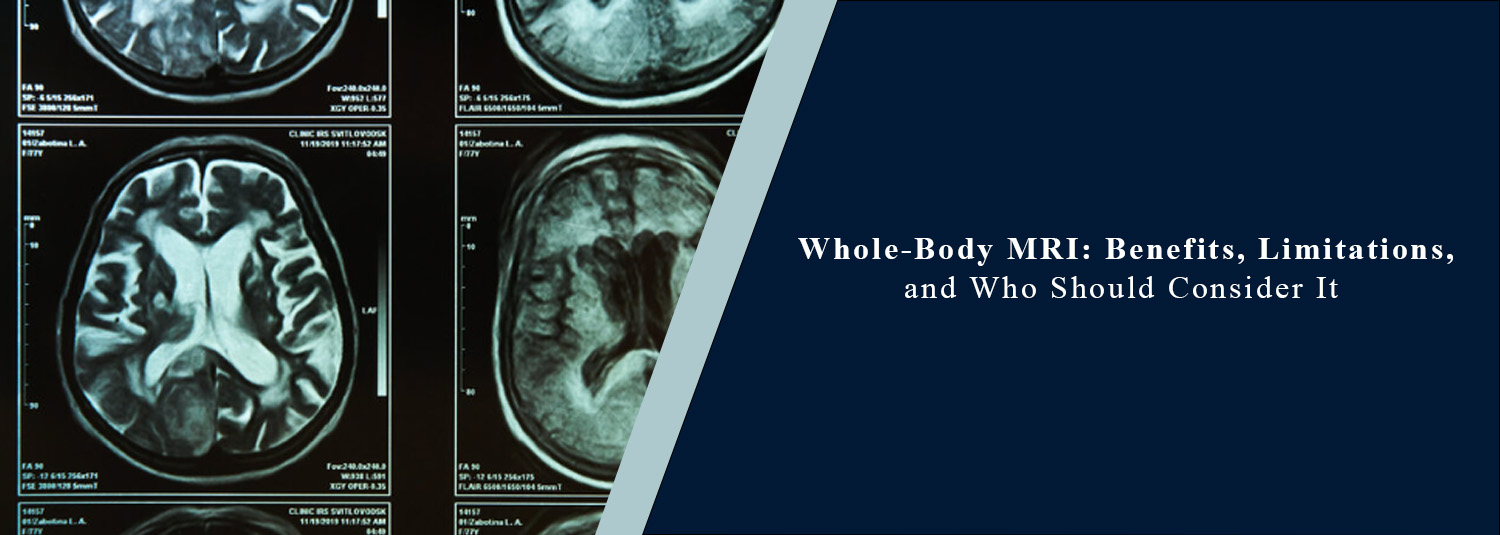
Advancements in medical imaging have been a game-changer in terms of disease diagnosis and monitoring. Today's most advanced imaging test is the whole-body MRI test, which can provide excellent, detailed images of different organs, soft tissues, bones, and blood vessels without the use of ionizing radiation. Many are starting to realize the value of preventive health care and want to see if they should undergo a whole-body MRI test.
An MRI is different than a computed tomography scan (CT scan), which is based on X-rays, because the MRI uses a strong magnetic field and radio waves to produce extremely detailed analyses of the body. This is so beneficial for exploring the soft tissues, muscles, brain, spine, joints, and a number of internal organs.
When looking for a whole body MRI near me, it is essential to know the pros, cons, and indications for a whole body MRI scan to make an informed decision. At Molecular Diagnostics and Therapy, state-of-the-art MRI scan services are provided by utilizing progressive imaging technology, which contributes to the reliability and accuracy of the diagnostic results.
What Is a Whole-Body MRI?
Whole Body MRI is a type of MRI scan in which several sections of the body are scanned in a single imaging session. It is not organ-specific and allows a complete view of the body to be seen, which can help to detect abnormalities that would otherwise be undetectable.
Considerably safer than many imaging tests that use radiation, MRI is a preferred test in some medical conditions and follow-up imaging. Whole-body MRI is used as a part of preventive health care, sometimes for cancer screening in certain high-risk individuals, to investigate unexplained symptoms, and in the monitoring of chronic illnesses.
How Does a Whole-Body MRI Work?
An MRI uses a very powerful magnet with radio waves to produce very detailed cross-sectional images of the body's internal structures. The patient is examined on a powered table that transports them inside the MRI scanner. The machine takes pictures of various sections of the body while the patient is immobilized in the position. The examination duration is approximately 0.5 - 1.5 hours. Sometimes whole-body MRIs are done without the use of a contrast dye because improving the quality of the image is necessary.
Benefits of a Whole-Body MRI
A major benefit of a Whole Body MRI test is that it can be used to look at multiple organs during the same scan. MRI offers an excellent amount of detail of the soft tissues and can be used to identify abnormalities in muscles, ligaments, nerves, the brain, spine, liver, kidneys, pelvis, and other tissues that may not be apparent in other radiology tests.
The major added value is that there is no radiation involved in MRI. Unlike repeated CT scans, repeated MR scans are not harmful to patients with ionizing radiation, so in many cases, scans can be repeated over the course of a long time. In some cases, especially for certain diseases, perhaps whole-body MRI is able to alert the sufferer to the disease before they notice any symptoms, and thus provide an opportunity for diagnosis and treatment earlier. Expert radiologists offer optimal imaging and dependable reporting with the latest in MRI technology at Molecular Diagnostics and Therapy.
Who Should Consider a Whole-Body MRI?
Not everyone healthy should have a full-body MRI test. Its use, though, is reserved for certain circumstances. Whole-body imaging may be beneficial for some people to evaluate as part of a medical assessment with a high family history of some cancers.
Those with inherited cancer syndromes may also need regular MRI scans of their whole bodies. Whole-body MRI scans are ordered when a doctor thinks there is something unusual but cannot explain it from his or her other tests and examinations, including blood tests. Also, if the patient is experiencing ongoing pain, neurological signs, or some unusual abnormalities, a whole-body MRI might be ordered.
Also, it can track the progression of cancer patients and patients of chronic diseases such as inflammatory diseases or multi-organ diseases. Always make decisions based upon medical referral and not self-referral.
Limitations of Whole-Body MRI
While the whole-body MRI test is very useful, it also has several limitations. MRI is very sensitive and can sometimes detect benign areas that are not associated with illness. The incidental findings sometimes necessitate more investigations, leading to greater anxiety and healthcare costs.
Additionally, MRI is not as useful as a CT scan for some types of lung disease and for finding small calcium deposits. Some patients with implants (e.g., metallic, pacemaker) may not be appropriate candidates for MRI unless the implant is MRI-compatible. The examination also involves a complete lack of movement for a prolonged period, which is not easy for those who are very claustrophobic or have any type of persistent pain.
Whole-Body MRI vs CT Scan
A whole-body MRI test is similar to a CT scan in many respects, but they are both used for different purposes. MRI gives a better picture of soft tissues and has no radiation. Reference to the use of this method particularly pertains to applications with respect to the brain, spinal cord, muscles, joints, and various internal organs.
An X-ray is, however, far quicker to obtain and usually preferred during an emergency, such as an injury, bleeding in the gut, or evaluating a stroke, for instance, or for detailed imaging of the lungs. Spend time with your doctors to determine which option is better, depending on the patient's symptoms, medical history, and diagnosis needed.
When comparing CT scan cost, or looking for a CT scan near me, consider that there is more to it than just price. The choice of imaging test depends to a great extent on the clinical question your doctor is posing.
Preparing for the Examination
Depending on the MRI examination protocol, the patient may need to get ready for the test. Patients should make the radiology team aware if they have a pacemaker, any implants, have had surgery previously, or are pregnant before the exam.
Typically, individuals need to remove metal objects before getting into the MRI room, including metal earrings, rings, necklaces, pendants, hearing aids, and watches. Sometimes the function of the kidneys may be assessed prior to the use of contrast. When imaging is ordered promptly by the instructions given by the imaging centre, it helps to ensure that the images are taken to the correct standard and safety.
Understanding the Results
The details of the MRI scan test are then sent to a radiologist who examines each image and issues a comprehensive report. A report is then presented to the referring physician, and the results are reviewed with him in conjunction with the patient's symptoms, physical examination, laboratory testing, and medical history. The results of an MRI scan may not indicate cancer or the sign of any serious disease. Several abnormalities may need further assessment before a diagnosis can be confirmed.
Choosing the Right Imaging Centre
Whole-body MRI produces a ton of images, and it's crucial to have an experienced diagnostic centre. Immediate, high-quality MRI imaging along with excellent radiologic skill and reporting should aid in confidence of diagnosis and decrease the need for repeat examinations. At Molecular Diagnostics and Therapy, the latest in MRI scan test technology, along with skilled professionals and detailed diagnostic reports, are all facets of delivering superior patient care.
Conclusion
A whole-body MRI test is an advanced imaging technique where detailed information is obtained on multiple organs in a non-radiating manner. When directed by a physician, it may be beneficial in certain high-risk patients, cancer screening, unexplained symptoms, and thorough medical evaluation.
It is not meant, however, as an automatic screening test for all, and some restrictions must be taken into consideration. Depending on the medical condition being diagnosed, in certain cases the CT scan may be the preferable method. If you are looking for a whole body MRI near me, need an advanced MRI scan test, or are comparing it to a ‘CT scan ', speak with your doctor to decide which imaging method is suited to your needs. At Molecular Diagnostics and Therapy, we use high-quality technology and highly trained radiology specialists to deliver the precise MRI imaging needed to facilitate early detection and improved outcomes in healthcare.
Frequently Asked Questions
In News
Get Our Mobile App
for Easy Access
Book tests, view reports, and manage your health records on the go. Experience convenient healthcare with Molecular Diagnostics and Therapy.
- ✔ Book tests & home collection
- ✔ View reports instantly
- ✔ Track health history
- ✔ Get notifications & reminders
- ✔ Easy appointment management