Lung Cancer: Types, Symptoms, Causes, and PET-CT Role in Diagnosis
Talk to Health Expert

Dr. Nikunj Jain
Co-Founder and HOD - Nuclear Medicine ,MBBS, DRM, DNB, FEBNM, FANMB, Dip. CBNC
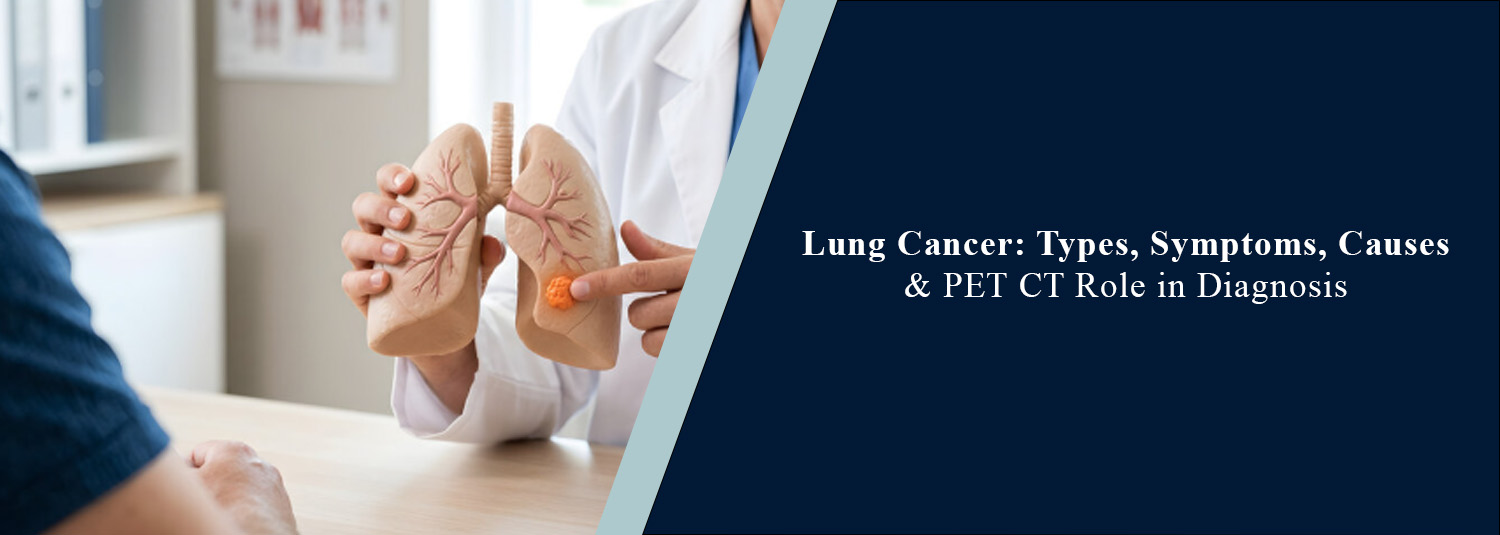
Lung cancer is a serious condition that
occurs when there is an uncontrolled growth of abnormal cells in the lungs. Can
involve breathing, spread to surrounding tissues and sometimes travel to other
organs. Understanding lung cancer symptoms and also getting a matching
diagnosis will help the physician gauge the phase of the cancer and also choose
therapy that may be appropriate.
Diagnostic tests are very useful in
assessing lung cancer. PET-CT may also aid a doctor in determining the tumor's
extent, assessing for possible spread, and assessing for treatment response
(when clinically indicated). Molecular Diagnostics and Therapy provide
diagnostic imaging services to assist in the evaluation of selected cancers,
which involves appropriate investigations.
What Are the
Different Types of Lung Cancer?
There are two principal types of lung
cancer, non-small cell lung cancer (NSCLC) and small cell lung cancer (SCLC).
These types vary in their treatment, their rate of growth, and their form of
growth.
Non-Small Cell Lung
Cancer
The most prevalent subtype is non-small
cell lung cancer (NSCLC). Has a number of subtypes. Adenocarcinoma is a common
type of cancer that tends to happen along the outside edges of the lungs, and
can affect smokers or someone who has never smoked. Squamous cell cancer
typically occurs in the cells in the passages where air flows through the lungs
and is primarily linked to smoking. Another less common kind is the large cell
type and can grow rapidly in various regions of the lung. Knowing the exact
subtype can help physicians determine the type of treatment and other testing
that might be indicated.
Small Cell Lung
Cancer
The small cell lung cancer (SCLC) type
of lung cancer is rare and tends to grow and spread faster than non-small cell
lung cancer. Lightly associated with smoking. It can grow early, so it is
especially important to have accurate staging when doctors are planning the
treatment.
What Are the Symptoms
of Lung Cancer?
Symptoms of lung cancer can vary
according to the location of the tumour, its size, and its stage. It is
important to note, however, that some of these symptoms can resemble the
symptoms of common types of respiratory infection and may last an unusual or
extended period of time, so if the symptoms persist in this way, it should be
evaluated by a medical professional. It's important to know what to look out
for, such as making little headway with a long-standing cough, changes in a
long-standing cough, bloody cough, chest pain, shortness of breath, and
frequent chest infections. Some may also find their voice turns hoarse or their
appetite dwindles, and have a constant feeling of tiredness and/or weight loss
due to no apparent reason.
Symptoms may occur in the areas where
the lung cancer has spread, if it has spread outside of the lungs. For
instance, when it affects the bones, it can be painful; in the case of
involvement of the brain, there may be headaches or neurological changes.
Individuals do not always suffer from these symptoms in the event they have
lung cancer. If blood is coughed up, the person is very short of breath, or a
recurring problem with symptoms remains unexplained, it's a health emergency.
What Causes Lung
Cancer?
Lung cancer occurs when the cells in
the lungs start to grow in an uncontrolled way due to errors in their DNA.
Smoking is the top risk factor, and being exposed to tobacco smoke can raise
the risk even if the person isn't a smoker. Other risk factors are exposure to
radon gas, asbestos, air pollution, and some chemicals used at work. Other risk
factors may include genetic predisposition. In non-smokers and those without
obvious risk factors, however, lung cancer can still develop. Exposure to less
tobacco smoke, alcohol, and other environmental factors may decrease risk but
may not eliminate it when it comes to developing lung cancer.
How Is Lung Cancer
Diagnosed?
This process can involve multiple
steps. The doctors will decide which tests to carry out, based on the symptoms
the patient has had, their medical history, any smoking history they have, and
results from their physical examination. A chest X-ray may be done to find any
abnormalities within the chest. Sometimes a CT scan may be performed to get a
clearer image of the lungs and chest. If cancer is suspected, then a biopsy is
usually required to confirm that there is cancer present and what type of
cancer there is. This can be done depending on the location of the tumour with
either a bronchoscopy or needle biopsy.
Other laboratory tests may help to
identify if there are any changes which may affect your treatment. This is
especially useful for some non-small cell lung cancer patients. Once diagnosed,
the stage of the cancer is determined by the doctors. This can help discover if
the cancer has spread within the lung, spread to surrounding lymph nodes or
spread to distant organs.
What Is the Role of
PET-CT in Lung Cancer Diagnosis?
PET-CT is a fusion of modalities:
Positron Emission Tomography (PET) and Computed Tomography (CT). During many
cancer exams, a radioactive tracer named fluorodeoxyglucose (FDG), which can
help pinpoint regions that have heightened glucose activity, is given. The CT
scans provide the doctors with anatomical information that can assist them in
identifying areas of the brain with atypical activity. In multiple scenarios,
PET-CT can be helpful in the staging of lung cancers. It might even help to
identify the development of abnormalities in specific lymph nodes and the
involvement of any parts of the body. This information may be a factor in the
choice of treatment options (surgery or alternative treatment).
Conclusion
In certain types of cancer, potentially
when indicated by the clinical situation, Molecular Diagnostics and Therapy
provide diagnostic imaging. A PET-CT scan can help give information regarding
the spread of lung cancer and if the body's other organs or tissues are
affected by the cancer. If your physician recommends a PET-CT scan, he or she
will want a copy of all the imaging reports, biopsy results, and treatments you
have received and given to the doctor. Check the preparation information for
the exam requirements (they may vary from this).
The diagnostic method will vary depending on the type of cancer suspected or confirmed and clinical information required. Asking about the patient's scan results as part of a conversation with the treating specialist ensures that the results are taken into account along with other data collection, in informing the plan of care.
Frequently Asked Questions
In News
Get Our Mobile App
for Easy Access
Book tests, view reports, and manage your health records on the go. Experience convenient healthcare with Molecular Diagnostics and Therapy.
- ✔ Book tests & home collection
- ✔ View reports instantly
- ✔ Track health history
- ✔ Get notifications & reminders
- ✔ Easy appointment management