Polycystic Ovary Syndrome vs Polycystic Ovarian Disease: Differences, Symptoms, and Diagnosis
Talk to Health Expert

Dr. Nikunj Jain
Co-Founder and HOD - Nuclear Medicine ,MBBS, DRM, DNB, FEBNM, FANMB, Dip. CBNC
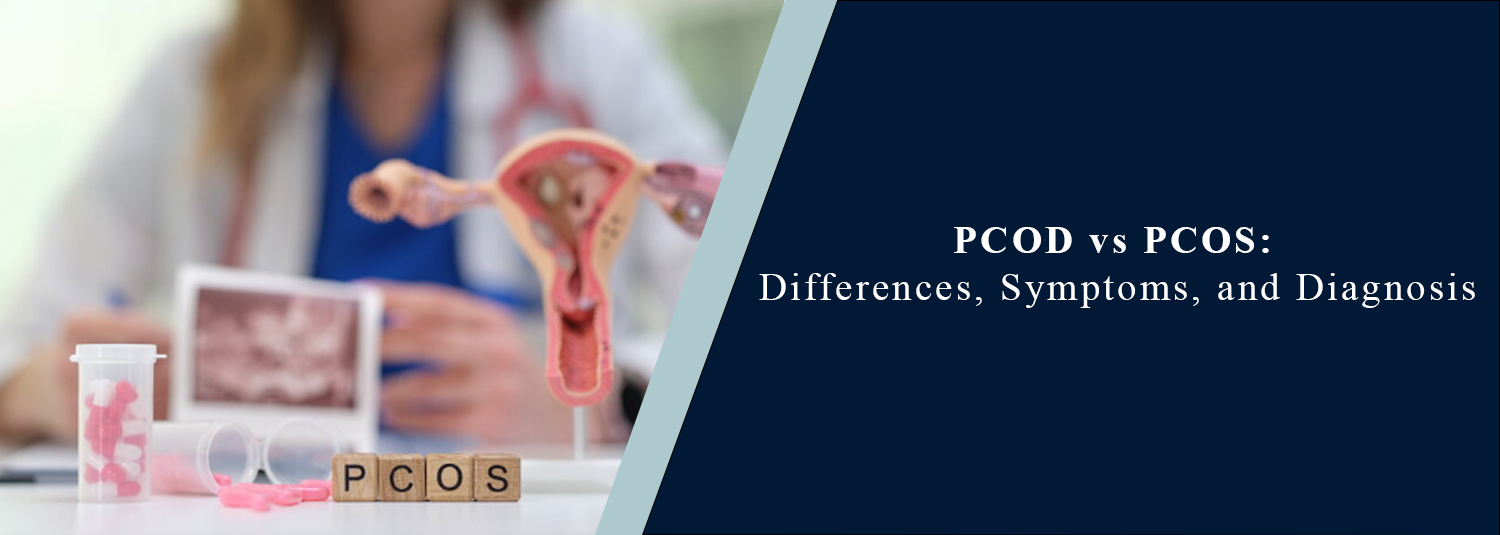
Women's reproductive health, hormonal disorders are on the rise, and among the hormones, PCOD and PCOS are often confused together. The two terms are often used synonymously; however, they are not identical. Learning methods of differentiation between PCOD and PCOS and their symptoms and diagnosis is the key to managing these conditions at the earliest stage and promoting health in the long term. At Molecular Diagnostics and Therapy, awareness and early detection are considered key pillars in helping women take control of their health.
Understanding PCOD and PCOS
Polycystic Ovarian Disease (PCOD) is a disease in which the ovaries produce immature or half-developed eggs that eventually evolve into cysts. Over time, these cysts can accumulate, leading to full ovaries and hormonal issues. PCOD is generally considered mild and is believed to be caused by lifestyle choices, such as poor diet, lack of physical activity, and stress.
Polycystic Ovary Syndrome (PCOS), on the other hand, is a more complex endocrine and metabolic disorder. PCOS cases have ovaries that produce excessive amounts of androgens (male hormones), and this could hamper the development and release of eggs in ovulation. Not only can this hormone imbalance affect reproductive well-being, but it also has the potential to spread to other metabolic processes, including insulin resistance and overall well-being.
Key Differences Between PCOD and PCOS
Although both disorders involve the ovaries along with hormonal disorders, they differ to a great extent. PCOD is predominantly an ovarian malfunction disorder as compared to PCOS, which is a syndrome that encompasses diverse body systems, including endocrine and metabolic systems.
PCOD women are able to ovulate, making their cycle irregular. On the contrary, PCOS in women normally culminates in irregular or no ovulation, hence making it difficult to conceive. The second danger of PCOS is a higher risk of developing long-term health complications such as type 2 diabetes, heart disease, and infertility.
The other significant distinction is that of hormonal imbalance. PCOD exhibits slight variations in hormones, compared with PCOS, which has an ample supply of androgen with severe consequences such as excessive hair growth and acne.
Symptoms of PCOD and PCOS
The common symptoms in both PCOD and PCOS are a few, and this may confuse one in differentiating the two without their treatment by a qualified medical professional. Irregular menstrual cycles are one of the most apparent ones. Women might have delayed periods, missed periods, or have excessively heavy or light bleeding.
Increase or retardation in weight gain or loss is also prevalent, especially in PCOS. This is usually associated with insulin resistance, or a situation whereby the body cells fail to react efficiently to insulin, and hence an increase in blood sugar.
Unusual increase of hair on the face, chest, and back (a condition, which is known as hirsutism) is more prevalent in PCOS because of the high levels of androgens. Oily skin and acne are also common symptoms, particularly in younger women.
Both conditions can cause hair thinning or loss of scalp hair, but more predominant in PCOS. Also, women with PCOS can exhibit dark spots on the skin surface, especially around the neck or armpits, which is a symptom of insulin resistance.
The symptoms in PCOD tend to be mild and might include irregular periods on occasional occasions and little hormonal imbalance. Conversely, PCOS symptoms are more acute and chronic, and can impinge upon various health issues.
Diagnosis of PCOD and PCOS
The diagnosis of PCOD and PCOS must include a combination of clinical history, diagnosis, and tests. The symptoms can be mistaken for any other illness; a thorough analysis is required.
During the initial visit, doctors normally evaluate physical signs such as weight changes, acne, and hair growth patterns by studying the history of menstruation. Androgen, estrogen, and insulin levels are the hormones that are normally assayed in the blood. Tests come in handy in establishing hormonal imbalance and underlying metabolic issues.
The other major diagnostic test is also known as ultrasound imaging. It allows doctors to examine the ovaries to identify whether they possess over one cyst and the sizes and shapes of such cysts. PCOD is a condition of enlarged ovaries with multiple follicles, with a large number of immature follicles within the ovaries, and PCOS is known as a string-of-pearl formation in cysts.
In PCOS, diagnosis is usually carried out based on some criteria, which include irregular ovulation, elevated androgen levels, and polycystic ovaries, which may be seen with ultrasound. This worldwide strategy helps in the correct diagnosis and treatment. In Molecular Diagnostics and Therapy, high-quality diagnostic devices and professional analysis collaborate to make sure that they are rightfully identified at the right time.
Importance of Early Diagnosis
PCOD as well as PCOS must be identified at an early stage to control them. In most instances, PCOD may be cured using lifestyle changes (balanced diet, physical exercises, and stress relievers); in PCOS, a more holistic approach, which includes medication and follow-up, may be required.
The complications that can occur due to unmanaged PCOS include infertility, type 2 diabetes, hypertension, high blood pressure, and risk of heart disease. Therefore, it will be critical to be aware of the symptoms and visit a doctor.
Managing the Conditions
PCOD and PCOS treatment methods are similar, and the disease cannot be completely cured, though it can be treated using proper methods. Another aspect is lifestyle change, which is useful in reducing symptoms and preventing complications. The hormones can be raised to the needed optimal level through normal weight, a nutrient-rich diet, and physical exercise.
Medical treatments can include hormone therapy to manage menstrual cycles, methods of managing insulin resistance, or treatment of acne or excessive hair growth. The determination is done based on the extent of the disease and the health goals of a person, such as fertility planning.
Conclusion
PCOD and PCOS are contingent conditions with some differences but similarities, affecting the reproductive and hormonal systems of women. Unlike PCOD, which may be milder and amenable to lifestyle change, PCOS, in its turn, is a complex syndrome requiring a careful attitude to medical treatment. This understanding of their differences, symptoms, and effective diagnosis will empower women to be responsible for their health to prevent any other complications. Very early intervention and making informed decisions are the solutions to the conditions management, as well as overall health.
Frequently Asked Questions
In News
Get Our Mobile App
for Easy Access
Book tests, view reports, and manage your health records on the go. Experience convenient healthcare with Molecular Diagnostics and Therapy.
- ✔ Book tests & home collection
- ✔ View reports instantly
- ✔ Track health history
- ✔ Get notifications & reminders
- ✔ Easy appointment management