MRI Scan: Advanced Imaging for Accurate Soft Tissue Diagnosis
Talk to Health Expert

Dr. Nikunj Jain
Co-Founder and HOD - Nuclear Medicine ,MBBS, DRM, DNB, FEBNM, FANMB, Dip. CBNC
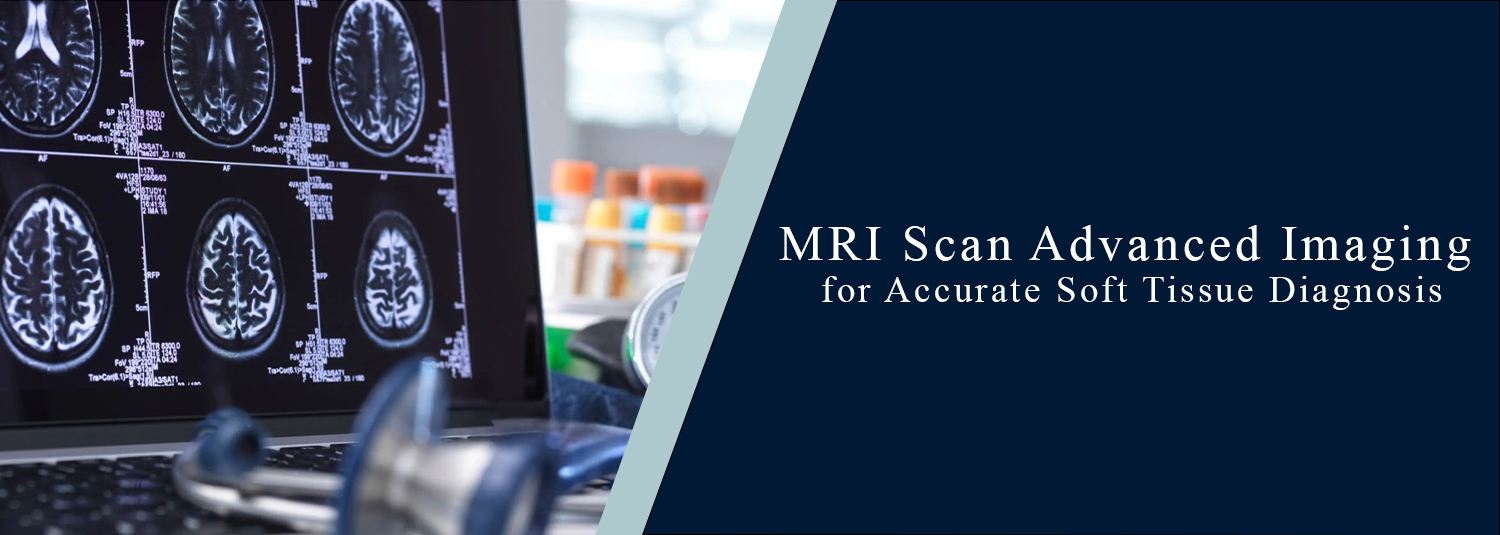
Medical imaging has played a vital role in modern health care. It allows physicians to locate, diagnose, and monitor numerous conditions. MRI is one of the most advanced imaging techniques. MRI can create extremely detailed images of soft tissues and organs, among other internal body parts.
MRI scans are different from the rest of other imaging procedures since they do not involve the use of harmful radiation. They apply magnetic fields and radio waves to create clear images of the body. This makes MRI non-invasive and highly effective in the diagnosis of issues in the brain, spine, joints, and muscles, as well as organs.
MRI is a valuable and useful tool since it has the ability to detect abnormalities with a lot of accuracy when other tests fail to.
What Is an MRI Scan?
MRI is a non-invasive type of imaging that examines the body in detail. The MRI machine is a machine that makes detailed images of organs and tissues with the help of a powerful magnetic field and radio waves.
The patient is told to lie on a table that moves into a large circular scanner during the scan. The machine generates the cross-sectional images in detail, allowing the doctors to observe them layer by layer.
MRI particularly excels in imaging of the soft tissues that can be difficult to visualize using X -rays or CT. Its high resolution allows MRI to identify subtle issues and early signs of a disease.
How Does an MRI Scan Work?
MRI technology works by aligning hydrogen atoms present in the body using a high field of magnets. When radio waves are applied, these atoms produce signals as they return to their original position. These signals are picked by the MRI machine and transformed into detailed pictures by advanced computer software.
The images demonstrate the interior of organs, muscles, ligaments, nerves, and blood vessels. Physicians are able to view these structures from a variety of angles, thus assisting them in diagnosing complicated diseases. MRI testing can take from 20 to 45 minutes, depending on the location of the body being examined.
Common Uses of MRI Scans
MRI scan assists in the diagnosis of most health issues due to its bright imaging of soft tissues. It is frequently used by doctors to diagnose diseases in the brain, spinal cord, joints, and organs.
Brain and Nervous System Imaging
MRI is regarded as one of the most credible methods of brain disorder diagnosis. It can detect brain tumours, strokes, multiple sclerosis, and issues with brain structure.
MRI can also be proposed by doctors to patients who have long-term headaches, seizures, memory problems, or nerve problems.
Spine and Musculoskeletal Imaging
MRI is used to investigate the spine, joints, muscles, and ligaments. It is able to detect ruptured discs, spinal cord lesions, tears in the ligament, and joint issues.
The technique is particularly effective in the case of sports injuries and chronic back aches.
Organ and Soft Tissue Evaluation
MRI is able to scan the interior organs such as the liver, kidney, pancreas, uterus, and prostate. It can be very useful in the detection of tumours, cysts, inflammation, or structural issues in these organs.
MRI is also applied in the diagnosis of cancer and treatment follow-up, as it provides highly detailed images of soft tissue.
Types of MRI Scans
MRI exams are of various types, some of which are tailored to specific parts of the body.
These specialized MRI scans help doctors obtain detailed information about specific organs and tissues.
Advantages of MRI Imaging
There are various benefits of MRI scans over other imaging techniques, particularly when soft tissues are under examination.
It has one of the greatest advantages, and that is that MRI is not radiation-based, which makes it safe in regard to repetitive imaging. The technique is also very accurate in giving very detailed pictures that assist doctors in locating small issues.
The images of various angles in an MRI scan can also be captured in a wide angle, allowing doctors to study the complex structures more precisely. Such detail increases the confidence in diagnosis and assists in treatment.
Another benefit is that MRI is able to detect the early signs of the disease, and it is significant since it can be addressed in time, and favourable results can be obtained.
Preparation for an MRI Scan
There is generally very little preparation required before performing an MRI scan, although there are certain precautions that should be taken. Before entering the MRI room, patients are normally requested to take off metal objects such as jewelry, watches, and electronic equipment.
Certainly, a contrasting dye can be injected in some cases to clarify some tissues or blood vessels. Allergies, kidney issues, and implants such as pacemakers should be reported to the doctor by the patient.
Wearings should be made comfortable, and a patient can be requested to change into a hospital gown before the test.
Safety of MRI Scans
MRI is a very safe scan among all other diagnostic scans available in modern medicine, as it doesn't involve radiation. But the patient should not wear metal objects because they will disturb the magnetic field used in the scan.
People who have implants or metal fragments or who use electronic instruments should inform their doctor before going into an MRI scan. MRI scans are safe for people of any age group, whether adults or children, and the plus point is that the procedure is completely painless.
Some people might experience some discomfort because of the close proximity of the scanner. But the diagnostic centre usually supports patients to make sure they feel comfortable.
Importance of MRI in Early Diagnosis
Early and timely diagnosis is the basis of good therapy. MRI tests assist physicians in locating issues in an early stage, in some cases, earlier than the symptoms worsen.
MRI is highly useful in planning the treatment of such problems as brain tumours, spinal cord disorders, joint injuries, and soft tissue cancers. Since MRI provides highly detailed images, physicians can locate precisely the location of the issue, its size, and its extent.
This data is significant both in the selection of the most effective treatment and in the monitoring of the progress of the patient by the passage of the time.
Conclusion
MRI scans are one of the most advanced imaging technologies available in modern medicine. They are necessary in investigating most of the medical issues because they produce very detailed images of the soft tissues.
It can be a neurological or spinal issue, an organ problem, or even cancer; an MRI plays an important role in successful diagnosis and treatment.
The MRIs have become the choice of many physicians since they do not involve any radiation and provide high image quality.
Such a sophisticated diagnostic centre as Molecular Diagnostics and Therapy provides a high quality MRI scans, modern equipment, and experienced doctors with which patients can be diagnosed correctly and provided with reliable treatment.
Frequently Asked Questions
In News
Get Our Mobile App
for Easy Access
Book tests, view reports, and manage your health records on the go. Experience convenient healthcare with Molecular Diagnostics and Therapy.
- ✔ Book tests & home collection
- ✔ View reports instantly
- ✔ Track health history
- ✔ Get notifications & reminders
- ✔ Easy appointment management